


We met him at Klong Toey slum, where we first got to know him five years ago. It was during the height of the coronavirus pandemic when we covered the mission of the Bangkok Community Help Foundation, co-founded by Friso Poldervaart, a Dutch expat.
Since that day, the foundation’s broad range of initiatives has assisted an estimated four million people.
Today, we speak with Friso about the foundation’s projects, his reflections on the stigma surrounding the residents of Klong Toey slum, and his personal journey from a small town in the Netherlands to the heart of Bangkok’s largest slum. He also shared his achievements in serving the community.
The Centre of Dreams
What began as an emergency response during the COVID-19 crisis has since evolved into a far-reaching social movement.
The Bangkok Community Help Foundation’s early focus on food relief and hygiene support has grown into a portfolio of programs, including education scholarships, elderly care and environmental initiatives, such as exchanging plastic bottles for cash.
It also created an initiative to reduce PM 2.5 airborne pollution and helped residents of Chiang Rai during the disastrous flood crisis in 2024, which is a project outside the Klong Toey community.
“There’s nothing that we wouldn’t do to help someone else,” Friso said, explaining the foundation’s wide-reaching approach. “That’s maybe why, when you ask, ‘Do you have a very narrow focus?’. No, we don’t.”
At the core of these efforts is a bold vision, to develop people and, through that, contribute to the development of Thailand as a whole.
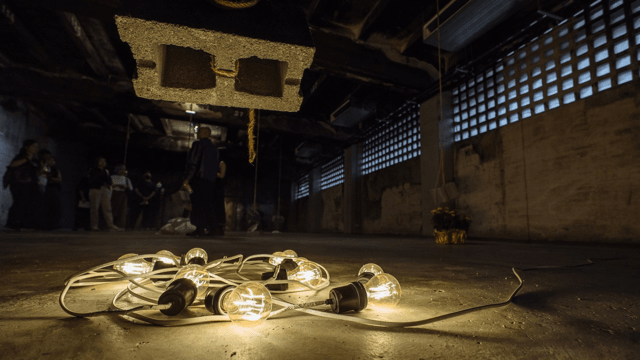
Among the foundation’s most recent initiatives is the Center of Dreams, Bangkok’s first dedicated homeless shelter, where skills development and job opportunities are also provided.
“It’s all about getting people on their own two feet. We’re here to help them, yes, but we are not here to take care of them their whole life,” Friso emphasised.
Reflection on Thailand’s social issues
At just 33 years old, Friso has lived here long enough to have gained a deep understanding of the challenges and complexities of Thai society. He sees education reform and elderly care as urgent national priorities.
“It’s really time to do something, the imbalance is very visible,” he said of Thailand’s aging population, whereas there are fewer and fewer newborns.
“If you don't do anything, that imbalance will just grow, and then, at some point, you'll have a big problem”
He added that, so far, the foundation has helped hundreds, if not thousands, of elderly people in various communities who are bedridden, sick and have nowhere else to turn.
“If we don’t help these people, who will? You could say their families should take care of them,” then addressing his own point, “But their families are not always around. They also have others to care for, children, relatives. So, it becomes our job to try and give these people a little bit of comfort.”
He told us about one of the many questions he has been asked repeatedly since he began helping people during the pandemic, ‘Why are you doing the government's job?’
Friso explained that it's not about who does the work, but rather what can be done. “When they receive our help, they don’t care whether it’s from the government, from me, from you, or from him. What they care about is that they got the help,” he said
He hopes that, someday, the government will either offer support or take inspiration from their work and say, ‘That’s a good idea, we should do the same.’
Social stigma
Friso seems to understand the Klong Toey slum at a profound level, perhaps even better than many Thais.
He observed that the people living here often feel deeply misunderstood. This area continues to carry a strong social stigma, with lingering perceptions that it is dangerous and plagued by drugs, crime and alcohol, and that its people are lazy.
“There are companies in Bangkok that will reject your job application simply because your address is in Klong Toey. So yes, the stigma very much exists,” he revealed.
He said the Klong Toey slum today is far better than it used to be, adding “This is a developing area. People here are eager to learn, to work and to be part of society, they just don’t always get the opportunity”
He emphasised that members of this community are already woven into the fabric of everyday life.
“When you fill up your BMW with fuel, who’s pumping it? When you order food, who delivers it? It’s the people who live right here,” he said.
“We must stop looking down on people. We need to embrace them and try to understand why they’re struggling. They’re not so different from us, they may have just been dealt a different hand in life’s poker game.”
A journey from the Netherlands to Bangkok
Born and raised in Drunen, a small farming town in the Netherlands, Friso came to Thailand at the age of 11. From that very first visit, he fell in love with the country and felt an immediate sense of belonging.
“That’s the moment I got infected with what they call ‘Thailand fever’, and it never let me go,” he recalled. “I already knew that, when I grow up, I want to move to Thailand. I want to live here.”
After graduating from college at the age of 18, Friso left the Netherlands and relocated to Thailand, where he has lived ever since. He admitted that having spent his entire adult life in Thailand, he would hardly know what to do if he returned to his home country, as he lacks experience there.
In addition to his work with the Bangkok Community Help Foundation, Friso also runs a creative agency, Digital Distinct, producing films for a wide range of clients. He started the business when he first arrived in Thailand, and it remains his main source of income.
Grateful for the opportunities and sense of belonging he has found in Thailand, Friso feels a deep responsibility to give back.
“This country has given me so much. It’s my duty to contribute in return, to put in my best efforts to help society”
Even though his heart is fully Thai, he is well aware that he will never truly be considered Thai. Yet, by serving the Klong Toey community, he feels that he has come as close to Thai society as possible.
"I feel completely integrated here. That is my big win, and I receive so much love," he said. With a broad smile, he added, "This is my home."
By Att Boonyatus
Bangkok Community Help Foundation
Bangkok Bank: 105-5-06287-9