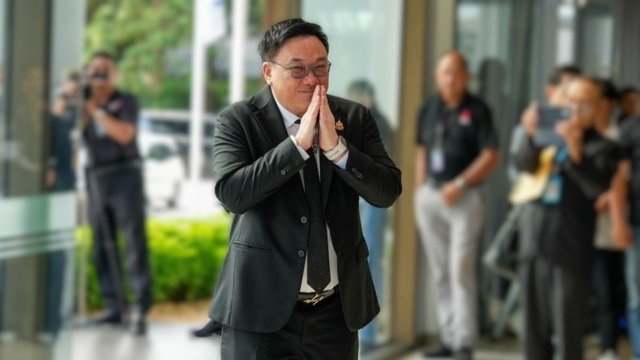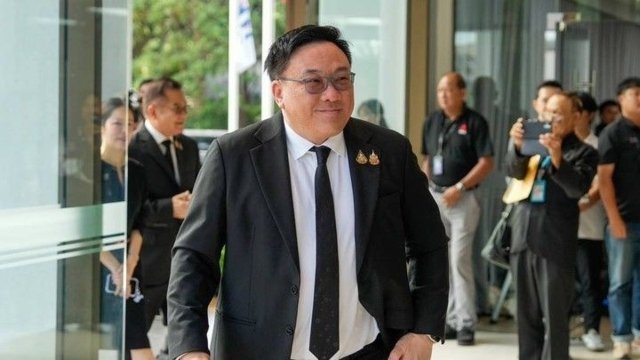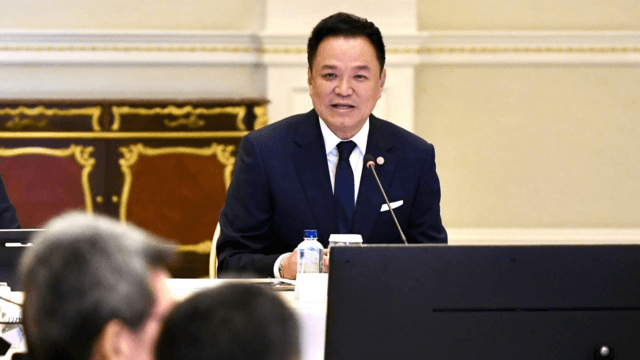



The ruling Pheu Thai party is close to completing the draft of a bill to amend the Constitution regarding the ethical standards expected of political office holders and politicians. The bill would clearly define what acts constitute gross ethical misconduct, to prevent misinterpretation and abuse of the charter.
“Suppose you read the Constitution, which states ‘there is no behaviour regarded as a gross violation of ethics’. “ What does that mean?” asked PM Office Minister Chusak Sirinil, the government’s chief legal advisor.
He said that the Pheu Thai party wants to define “gross ethical misconduct” clearly, for accurate interpretation.
Chusak said that, once an independent organisation like the National Anti-Corruption Commission (NACC) resolves that a complaint against a politician has grounds for a case of gross ethical misconduct, the commission has no authority to rule the politician in question at fault, as the decision would rest with the Supreme Court’s Criminal Division for Political Officer Holders.
Former prime minister Srettha Thavisin was found guilty of gross ethical misconduct by the Constitutional Court, for appointing a former convict, Pichit Chuenban, to a ministerial post, and he was stripped of his position as a result.
Some political activists have taken advantage of the vague definition of ethical standards and use the NACC and the Election Commission as tools through which to file complaints against their political opponents either, to discredit them or to ruin their political careers.