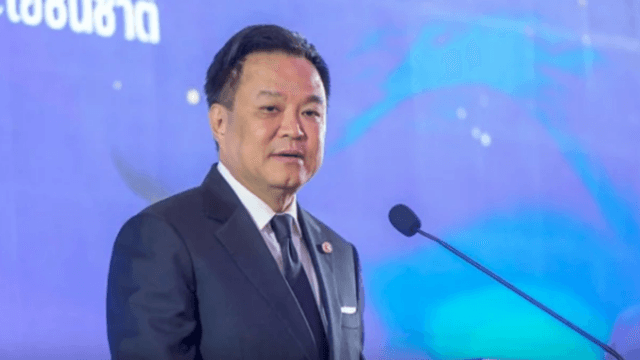
Deputy House Speaker Pichet Chuamuangphan yesterday abruptly ordered the closure of a House meeting debating a report by a House panel on ways to draft an amnesty bill for political offenders, pre-empting a vote.
The report was undertaken by a panel led by Pheu Thai MP Chusak Sirinil, to explore ways to end political division and to forge national reconciliation through the granting of an amnesty to all political offenders, including those who committed offences in violation of sections 110 and 112 (the “lèse majesté” law) of the Criminal Code.
Addressing the House meeting yesterday, Chusak acknowledged the sensitivity of the two sections in the report, discussing the granting of amnesty to those convicted of charges under section 110 or 112, which may lead to more political conflict.
He said that the House panel’s proposal for a full or conditional amnesty for all political offenders is not, however, binding on the cabinet.
During the debate yesterday, MPs of the Bhumjaithai and Democrat parties voiced their strong objection to the inclusion of Section 112 in the amnesty bill, whereas the opposition People’s party fully supports its inclusion, claiming that political conflicts in Thailand will not end if Section 112 is excluded from the bill.
Pheu Thai party-list MP Noppadon Patama told the House that he does not agree with the inclusion of offences under Sections 110 and 112, because they concern national security. He said he hopes, however, that the issue can be settled among the MPs of all parties.
Democrat party-list MP Jurin Laksanawisit said that several draft amnesty laws have been proposed over time, but none of them had advocated amnesty for those who commit offences under sections 110 or 112.
He said that any amnesty must lead to reconciliation, not more conflict. It must not be intended to benefit a specific individual or lead to repetition of similar offences in the future and should exclude corruption offences and those under sections 110 and 112.
The opposition chief whip, Pakornwut Udompipatskul, demanded that members of the House panel, who had not yet spoken, should be allowed to do so before there is a vote on the report.
The Deputy House Speaker, however, chose to close the meeting without a vote.