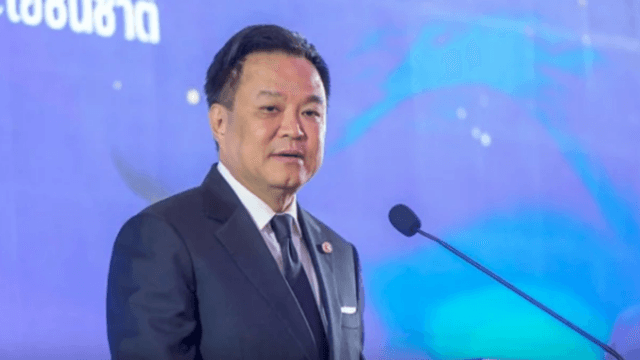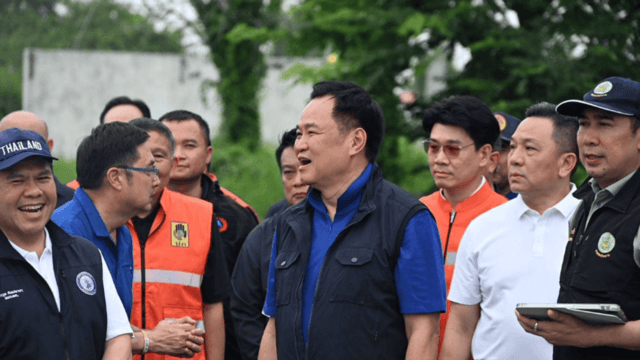



Kittirat Na-Ranong, former deputy premier and finance minister, was chosen today by the independent selection committee as chairman of the Bank of Thailand’s board.
Kittirat, 62, who has a close relationship with the ruling Pheu Thai party, was selected over two other candidates: Kulit Sombatsiri, former permanent secretary of energy, and Surapol Nitikraipot, president of the Thammasat University Council.
The selection was made as two activist groups rallied at the Bank of Thailand headquarters today, protesting against the Finance Ministry’s nomination of Kittirat for the position.
The independent selection committee, chaired by Sathit Limpongpan, held the selection today after last week’s meeting was postponed due to protests.
Followers of the late and renowned monk Luangta Maha Bua, forming one of the two protest groups, expressed concerns over Kittirat, who is closely connected with the ruling Pheu Thai party, fearing that his appointment could pave the way for political interference in the affairs of the central bank.
The other reformist group, led by Phichit Chaimongkhon, submitted a list of 51,000 supporters and a letter addressed to the selection committee, demanding the resignation of the committee’s chairman, claiming that he is unfit for the role.
The group also threatened to file a complaint with the Constitutional Court, questioning the ethical standards of Finance Minister Pichai Chunhavajira for his nomination of Kittirat, arguing that the nomination mirrors former Prime Minister Srettha Thavisin’s controversial appointment of convicted Pichit Chuenban as Minister in the Prime Minister’s Office.
Former BOT governor Veerathai Santiprabhob posted on Facebook on Sunday, stating that the Thai people must not allow the central bank to fall under political control.
“This is not just a matter of the central bank, but it concerns the future of the nation. The names of candidates do not matter. What matters is whether a candidate has close connections with political entities and a similar view on interfering in the central bank’s affairs for political purposes. This is not appropriate,” he wrote.
“If we allow the political camp to dominate the central bank, it will endanger the stability of the Thai economy, undermine the credibility of the central bank, and weaken all major economic institutions,” said Veerathai.
“In the future, we may see more open-ended populist policies. No one will care about fiscal discipline because there will be policies for short-term interests to meet political ends,” he added.
Read more :With Kittiratt card, govt threatens BOT's independence