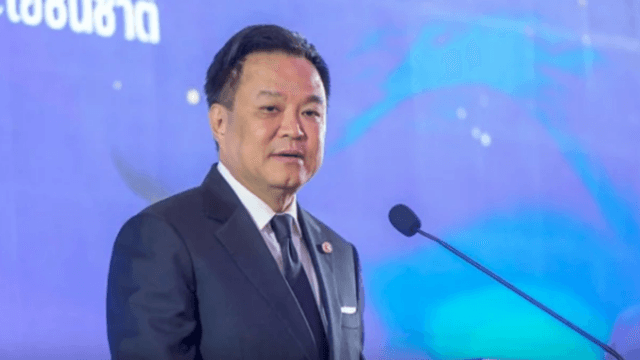


Deputy Prime Minister Borwornsak Uwanno has defended the MoU on critical minerals between Thailand and the United States, saying that the document does not constitute a “blank cheque” because the US has promised to lift non-tariff barriers on many Thai products.
A top legal expert, specialising in constitutional law, Borwornsak said that the MoU, which was signed by Thailand and the US on the sidelines of the ASEAN Summit in Kuala Lumpur on October 26th, is not a contract and, therefore, not legally binding in a way which may have an impact on Thai economic, social, trade or investment stability, nor does it require approval from the Thai parliament under Section 178 of the Constitution.
He also cited the confirmations from Pakorn Nilpraphan, secretary-general of the Council of State and the Foreign Ministry that the MoU on critical minerals, or rare earth elements, is not legally binding and can be terminated by either participant.
“It is just a letter of cooperation and not a contract,” said the deputy prime minister, adding that, if the MoU is to be implemented, such as if a US company wants to explore or extract critical minerals in Thailand, it will have to comply with the Thai law.
He also said that similar MoUs have been signed by Malaysia, Australia, Japan and many other countries and he asked “ Why not Thailand?”
He noted that Commerce Minister Suphajee Suthumpun had taken a positive step, by linking the MoU with the trade deal with the US and their promise to lift non-tariff barriers on a number of Thai exports to the US market.
“It is not a blank cheque. Nothing is free in this world,” Borwornsak was quoted as saying.