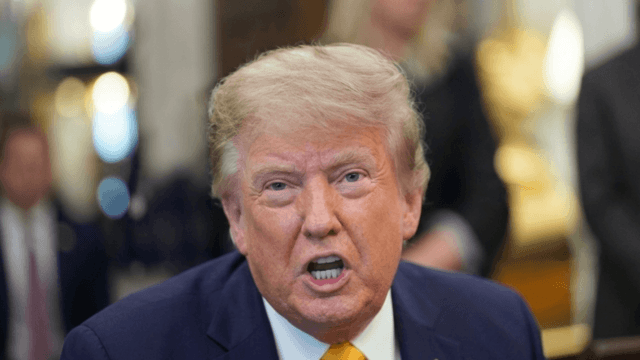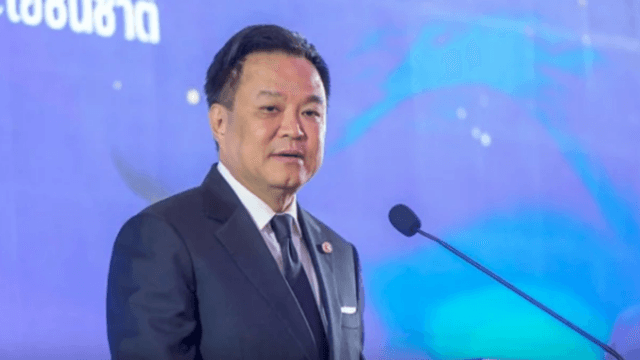



Last weekend, President Donald Trump called it a “roadside accident” during a phone call with Prime Minister Anutin Charnvirakul.
He was referring to the landmine incident on Nov 10 at Huay Santamaria, which made many Thai people angry and hurt.
For us, they were not just soldiers.
They were someone’s son, husband, or father. More importantly, they were protecting Thailand’s border when they were injured.
Trump’s description of a “roadside accident” was wrong because landmines do not happen by chance. In this case, Cambodian soldiers planted the mines to hurt or kill people.
This was not the first time, either. During a press conference on Dec 7, Foreign Minister Sihasak Phuangketkeow reiterated that there had been seven previous landmine explosions along the volatile border.
Each time, Thailand asked Cambodia to remove the mines. Nothing was done.
Truth be told, calling it an “accident” also ignores the fact that these mines were placed deliberately and that Thailand warned about them multiple times.
Cambodia did not act. Both sides also agreed in a joint declaration on Oct 26 in Kuala Lumpur, witnessed by Trump and Malaysia’s Prime Minister Anwar Ibrahim, to cooperate in demining the common border. But nothing came to fruition.
Trump’s comment hurts a million times more because it came from the United States, not to mention that Trump is a US president.
Lest we forget, Thailand and the US have been friends for more than 190 years.
Thailand was the first Asian country to establish ties with the US back in 1833. The two countries have fought together, trained soldiers together, and trusted each other.
In addition, they hold the region’s military exercises for allies and friends every year. For more than four decades, they have jointly hosted the region’s largest military exercise to improve Washington’s interoperability.
As friends, the president should listen to both sides before making judgments. Many Thais feel Trump only heard Cambodia’s version and did not check back with Thailand.
Ahead of the call, Washington dispatched a senior official to Bangkok and Phnom Penh to update the situation.
Anutin and Sihasak repeatedly said that Thailand wants a secure border, a ceasefire, and military leaders from both sides to talk and find peaceful solutions. But peace needs to be based on truth, not on ignoring what really happened.
Thai people are now asking tough questions, such as whether the US still respects Thailand as an equal partner, whether their “oldest and greatest” relationship in Asia still matters, and whether Thai lives can be dismissed so easily.
These questions come from disappointment, not hatred.
It is hoped that the US will have an open mind in examining the causes of rising tensions and the responses.
If Trump wants to be known as the world’s foremost peacemaker, he has to listen more. It is imperative that he ensures he knows the real situation on the ground and the sentiments involved.
Simply uttering comments, as he has frequently done, would only further bruise bilateral ties.
ASEAN foreign ministers will hold a special meeting next Monday in Kuala Lumpur to discuss the situation.
The outgoing ASEAN chair, Anwar, has an arduous task in getting the two conflicting members to stop fighting and end hostilities. The bloc’s reputation is at stake as an organisation that can resolve its members’ conflicts without outside intervention.
ASEAN was formed in 1967 to prevent conflicts from recurring among former warring states at the time.
It also aims for the peaceful settlement of disputes among members to ensure they do not spill over and harm regional peace and stability.