Chinese President Xi Jinping’s upcoming three-nation visit to Vietnam, Malaysia, and Cambodia demonstrates China’s commitment to reinforcing regional partnerships in Southeast Asia.
This diplomatic push comes at a critical juncture, as the U.S. intensifies trade protectionism and geopolitical competition reshapes global alliances.
At a high-profile conference last week, Xi outlined his country’s comprehensive strategy to enhance ties with neighboring countries, which he said are now at their best in modern history.
He emphasized the importance of building a "community with a shared future" with neighboring nations, focusing on mutual trust, economic integration, and security cooperation. China will also manage differences appropriately, prioritizing dialogue and consultation.
Xi’s first stop in Hanoi on April 14–15 marks his second visit to Vietnam in under two years, reflecting the rapid normalization of relations despite lingering maritime disputes in the South China Sea.
Both nations have made progress and are now negotiating the draft Code of Conduct (COC) alongside ASEAN members.
Key issues include the geographical scope, legal relationship between the COC and the non-binding 2002 Declaration on the Conduct of Parties in the South China Sea (DOC), dispute resolution, and the establishment of mechanisms to prevent clashes over resources or military patrols, among others.
In recent years, Vietnam and China have accelerated cross-border infrastructure projects, including rail connectivity—upgrading the Hanoi–Nanning railway to streamline trade—and expanding supply chain resilience in manufacturing, electronics, and agricultural exports.
Vietnam’s participation in the Comprehensive and Progressive Agreement for Trans-Pacific Partnership (CPTPP) can offer best practices in multilateral trade forums.
China applied to join the bloc three years ago, indicating Beijing’s desire to align with high-standard trade frameworks. Meanwhile, both nations are members of the Regional Comprehensive Economic Partnership (RCEP), the ASEAN-led free trade agreement comprising the 10-member bloc, China, Japan, South Korea, Australia, and New Zealand. Last year, their bilateral trade reached US$230 billion.
Vietnam will soon negotiate tariff rates with the U.S. to protect its trade interests.
To ensure continued economic growth, China–Vietnam bilateral ties are expected to remain steady. Xi’s stopover in Hanoi is essentially aimed at ensuring that their relations remain stable and predictable.
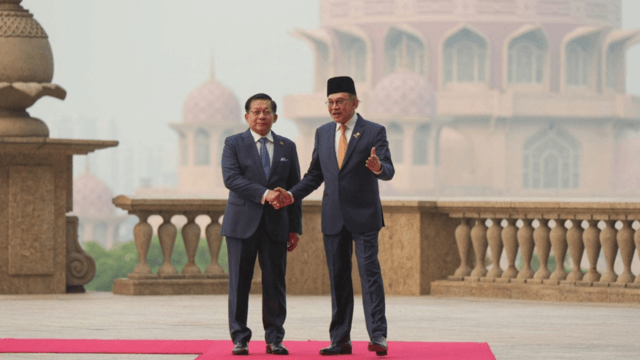
Xi will then proceed to Malaysia on May 15–17, the current chair of ASEAN. Under Prime Minister Anwar Ibrahim, Malaysia has emerged as a linchpin in China’s regional strategy due to its growing capacity in the semiconductor sector and its leading role in the Islamic world.
Furthermore, the country hosts more than 30 joint projects under China’s Belt and Road Initiative, including the East Coast Rail Link (ECRL) and the Melaka Gateway port.
Malaysia and ASEAN are finalizing an upgraded “China–ASEAN Free Trade Agreement 3.0” (ACFTA), which aims to further reduce tariff rates and streamline customs procedures for e-commerce and digital trade.
Under Anwar’s leadership, Malaysia has also positioned itself as a mediator between China, ASEAN, and the Middle East. At the upcoming 47th ASEAN-related summits on May 25–27, Kuala Lumpur will host the ASEAN–GCC Plus China Summit on the sidelines. It will focus on energy cooperation and promote regional trade.
In addition, China has invested in Malaysia’s semiconductor testing and packaging facilities. For example, Huawei’s recent US$3 billion joint venture with Malaysian firm Green Packet aims to localize 5G chip production.
Xi will wrap up his three-nation trip in Cambodia shortly after the country celebrates its traditional New Year. Among ASEAN members, Cambodia remains one of China’s closest partners.
Over the past two decades, China has significantly contributed to the country’s infrastructure—roads, bridges, and the Phnom Penh–Sihanoukville Expressway.
Western-educated Prime Minister Hun Manet has continued the same policy course as his father, Hun Sen, which is designed to deepen all aspects of ties with China.
Lest we forget, the US imposed a 49 percent tariff on Cambodia—the highest in ASEAN. Recently, both countries have strengthened their naval cooperation. China also funded the upgrade of the Ream Naval Base.
Xi’s tour reinforces China’s role as a stabilizing force in Southeast Asia. Undoubtedly, Beijing is presenting itself as an alternative to growing American protectionism and self-righteousness.
It is imperative that China and its smaller neighbors maintain their strategic balance without compromising their much-valued autonomy. With that, a community with a shared future can be realized.