


As a veteran UN human rights rapporteur, Tom Andrews should have demonstrated a deeper appreciation of the sensitivities surrounding the Thai-Cambodian border conflict.
Fresh from taking on his new assignment in Cambodia after years of scrutinising the military regime in Naypyidaw, he appeared eager to make his mark early.
As events unfolded, however, his comments on the situation along the contested frontier proved counterproductive.
It is rare for the Foreign Ministry to issue such a strong rebuttal to the views of a UN mandate holder. Yet Andrews drew an unusually sharp response from the ministry.
At issue was his assertion that the recent fighting had resulted in 650,000 internally displaced persons (IDPs) in Cambodia.
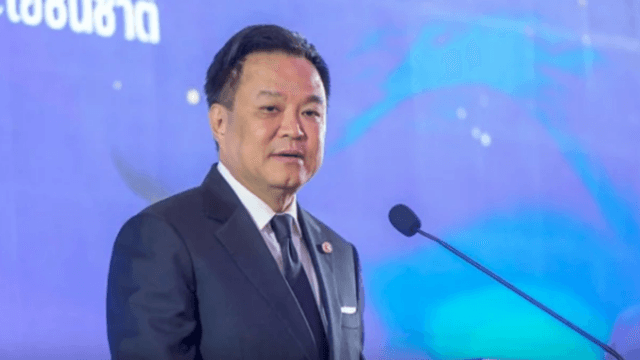
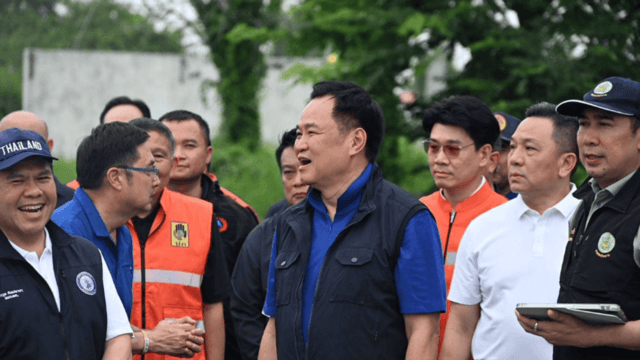
Both Prime Minister Anutin Charnvirakul and Deputy Prime Minister and Foreign Minister Sihasak Phuangketkeow moved quickly to challenge the figure.
Sihasak was succinct in arguing that Andrews appeared to rely heavily on information provided by the Cambodian side, including figures related to returning migrant workers, without adequately reflecting Thailand’s perspective or the broader impact of the conflict on Thai communities.
He countered that a significant number of those counted had crossed back into Cambodia after residing for decades in areas that Thailand considers its territory.
Furthermore, he pointed out that approximately 400,000 Thai villagers were displaced by the conflict, which Andrews did not mention.
He also highlighted that there was no reference in the report to the losses suffered by Thailand, the people who were killed, or the hospitals and schools that came under attack, even though it was the Cambodian side that initiated the conflict.
“For the report to be balanced, Thai losses must be included,” stressed Sihasak.
Moreover, on the issue of returning Cambodian migrant workers, Sihasak maintained that the departures were not the result of any Thai government policy, but that the workers “were coerced to return home by Phnom Penh.”
For the record, in June 2025, Senate President Hun Sen publicly urged Cambodian workers in Thailand, both documented and undocumented, as well as Cambodian students, to return home. He reiterated that they faced potential discrimination, mistreatment or expulsion amid deteriorating bilateral relations.
Subsequently, Prime Minister Hun Manet also declared that the government was prepared to receive returning workers, while various ministries promised job opportunities and economic aid.
It is notable that Andrews took up his new responsibilities only recently and made an early visit to Cambodia.
Around the same time, Naypyidaw released photographs of a meeting between Daw Aung San Suu Kyi and Arnaud de Baecque, head of the International Committee of the Red Cross delegation in Myanmar.
As the former UN Special Rapporteur on the human rights situation in Myanmar, Andrews would undoubtedly have taken a keen interest in such developments.
However, having long been barred from entering Myanmar because of his outspoken criticism of the military regime and its human rights record, he could only observe from afar.
By now, he must be aware that the current border situation is rooted in a long and complicated history, shaped by political, legal, security and humanitarian factors.
Therefore, any assessment or conclusion requires a careful examination of competing narratives. Given Andrews' profile and experience, his remarks should be more measured.
Sihasak, who served as president of the UN Human Rights Council from 2010 to 2011, is well acquainted with the workings of the UN system. His concerns should therefore not be dismissed lightly.
As such, Andrews' reports and public statements carry considerable weight, as they can influence perceptions, policies and developments on the ground.
None of this diminishes Andrews' long record of advocacy on human rights issues. To be fair, he also touched on transnational cybercrime networks, detained activists and overcrowded prisons in Cambodia.
However, his transition from Myanmar to Cambodia demands a more nuanced understanding than ever before. Andrews still has ample time to demonstrate that he has what it takes to hold this position.
His future reports and public comments will be judged by their accuracy, impartiality and appreciation of the realities faced by all parties involved.