


Thailand is planning a major overhaul of its penalties for serious crimes following public outrage over high-profile convicts who committed murder after securing early release.
“We are considering a draft ministerial regulation on the enforcement of criminal punishment and measures to prevent repeat offences,” Police Lt-Colonel Prawut Wongsrinil, director-general of the Corrections Department, said earlier this month.
The push for penal system reform was sparked by a recent incident in Chon Buri, where two former convicts confessed to murdering two young Russian siblings for their rented motorbike.
Public anger grew when investigators revealed that the suspects had killed a family of three in June for their pick-up truck, just two months after one of the suspects, Thana Kerdthong, had been released from prison.
The brutal repeat offences have also triggered calls to revive capital punishment, fueled not just by demands for harsher penalties but also a deep-seated distrust in the penal system. The public is coming to realise that a life sentence in Thailand rarely means spending one’s natural lifespan behind bars.
High-profile examples include mafia boss Laota Saenlee, who was found guilty of drug trafficking after his syndicate was caught with 20 kilograms of crystal meth and a large cache of military-grade weapons in 2016.
His release on August 14 after serving less than a decade of his life sentence drew loud public condemnation.
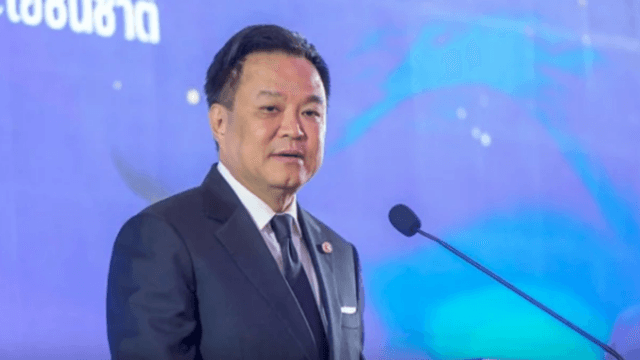
In response, Justice Minister Rutthapon Naowarat announced plans for stricter enforcement of penalties for serious offenses.
“We have set up a committee to lay down a clear framework on the minimum term that must be spent behind bars by those sentenced to life imprisonment or the death penalty,” Rutthapon said.
Assoc Prof Pokpong Srisanit, a law lecturer at Thammasat University, commented that the state’s policy of routinely granting early pardons has eroded public faith in the Thai justice system while fostering a climate of insecurity.
If the Justice Ministry’s plan becomes law, serious criminals will no longer be able to walk free so quickly. The draft regulation blocks any possibility of early release before convicts have served a strictly defined minimum sentence.
Corrections Department chief Prawut explained that inmates sentenced to death would have to serve a minimum 25 years under the new legislation. Those sentenced to life will have to serve at least 20 years before they are eligible to seek a pardon or any other form of early release.
“The draft is still under review, so the details are not final yet,” Prawut noted, adding that the guidelines aim to prevent serious criminals like Laota and Thana from walking free prematurely. “These rules will not apply to non-serious offenders.”
Dr Namtae Meeboonsalang, from the Office of the Attorney-General, said enforcement of the minimum sentence rule will significantly lower the risk of violent criminals escaping with light punishment.
“A minimum-imprisonment clause is standard in countries like France, the United States and the United Kingdom,” he noted, adding that it balances public safety concerns with genuine opportunities for convicts to rebuild their lives.
Rules currently in place
Currently, the Corrections Department offers sentence reductions for good behaviour – a policy aimed at turning inmates into “quality citizens”.
Under the behaviour system, inmates are sorted into six tiers: excellent; very good; good; mediocre; minor-rule breakers; and serious-rule breakers.
Prisoners in the top three tiers earn sentence reductions ranging from three to five days per month.
Well-behaved inmates who have completed a significant portion of their sentence can earn an additional reduction in days if they participate in community services, including dredging public canals and sewers. They also earn pocket money for their work.
The current law also allows prisoners to apply for a reduced sentence after serving just one-third of their term.
Drug kingpin Laota benefited from these provisions because he was over 70, had no prior convictions or criminal record, and maintained good behaviour while in prison.
His life term was first commuted to 50 years by royal pardon, then reduced further through other provisions, allowing him to walk free at the age of 86 earlier this month.
Death penalty in name only
Dismayed at the routine reduction of life sentences, the public is also confronting the reality that Thailand’s death penalty no longer carries lethal consequences.
While capital punishment remains on the statute books, the state has not carried out an execution since 2018.
There are 480 convicts on death row in Thailand, according to Corrections Department data as of June. They include Sararat Rangsiwuthaporn, also known as “Aem Cynanide”, who made headlines in 2023 as Thailand’s first recorded female serial killer. She was accused of poisoning 14 people to death in order to steal their money or valuables to fund her gambling habit.
Since switching from firing squads to lethal injection in 2003, Thailand has carried out just seven executions.
The reform roadmap
The draft legislation will be examined by the Corrections Department board and the committee tasked with improving the penalty system and preventing repeat offences, before being sent to the Justice Ministry.
“Once it receives the ministry’s nod, the Cabinet will review and approve it. It will then be published in the Royal Gazette before taking effect,” Prawut said.
By Thai PBS World’s General Desk