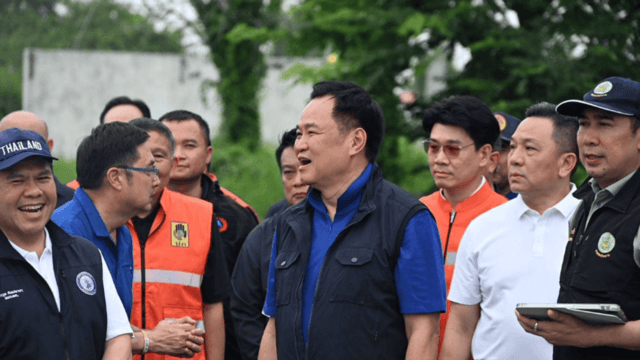



ML Kornkasiwat Kasemsri has entered the Bangkok gubernatorial race as an independent candidate, unveiling a “safe city” platform focused on artificial intelligence, disaster preparedness and anti-crime measures.
Kornkasiwat, deputy leader and prime ministerial candidate of the Palang Pracharath party, launched his campaign yesterday and introduced his team of advisers, including former finance minister Thirachai Puvanatnaranubala, former ‘yellow-shirt’ leader Panthep Puapongpan and Pol Lt Gen Piya Tavichai, former deputy commissioner of the Bangkok Metropolitan Police.

Running under the slogan ‘How ready is Bangkok to become a global safe city?’, Kornkasiwat said the capital had endured repeated crises from both domestic and international pressures and requires strong leadership to protect its residents.
“Bangkok must become a refuge people can trust,” he said. “The next governor must act as a commander, not a housekeeper.”
He pledged to transform Bangkok into an internationally recognised safe city by deploying AI systems to identify fugitives wanted under Thai and Interpol warrants through facial-recognition technology linked to the city’s CCTV network.
Bangkok could expand its surveillance network with up to 500,000 cameras installed through cooperation with private businesses, without direct city expenditure, he claimed.
He also vowed to intensify anti-drug efforts, including random drug testing in Bangkok schools under a ‘white school’ programme.
On disaster preparedness, he proposed upgrading older buildings to withstand earthquakes of up to magnitude 7 and introducing comprehensive emergency drills. He also called for a direct emergency alert system linked to residents’ mobile phones.
To handle flooding, he promoted a “sponge city” concept, featuring permeable sidewalks, water-retention parks and AI-controlled pumping stations designed to manage rainfall more efficiently.

He also proposed the dredging of canals, improving water quality for future tourism development, and the reduction of waste dumping into waterways.

Other proposals include the use of firefighting drones for high-rise emergencies, AI-managed traffic systems at 578 intersections across Bangkok, an integrated ticketing system for all public transport networks and anti-corruption measures allowing residents to monitor city budget spending.