A viral online post mentions that a Bhumjaithai candidate “remembers every vendor’s name in the market”. That is probably one of the reasons why the Blue tide swept most of Thailand on Sunday.
It could be a deep-rooted political culture that the People’s Party, Bhumjaithai’s main competitor, has yet to fathom. Or it could be part of a tricky political strategy, which, as difficult as it is, was successfully pulled off by the winner. But here’s the bad news:
Bhumjaithai has only just begun.
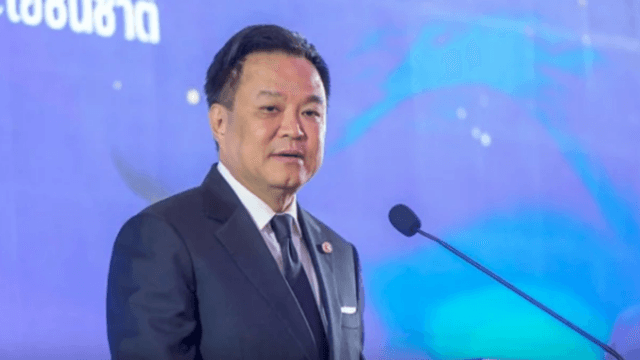
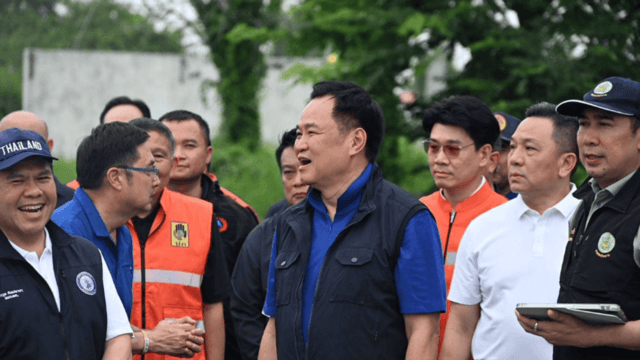
Anutin Charnvirakul, over the past two days, looked like an ordinary boy who suddenly became a rock star, not quite knowing what to do with a sudden, new-found fame. Or he is a rural footballer plucked out of a village to play for Real Madrid.
The life ahead is so unpredictable. It’s a life Bhumjaithai never experienced before. Until very recently, Bhumjaithai could call itself anything but a national party. It is now, and things will be so much different, very promising but also very treacherous.
That he has been a stopgap prime minister doesn’t mean he is well-prepared. To start with, he and his party always used to be beneficiaries of ugly and unhealthy political horse-trading but it will be the other way around this time.
The stopgap status, while blessing, deprived him of a chance to test the real thing. It allowed him to put impressive “outsiders” in key Cabinet positions, which turned out to be a major factor of the virtual Blue landslide.
It will not be the same from now on, with Anutin having to deal with parties he needs to add to his would-be government’s parliamentary strength.
One of the most immediate problems he’s facing is Kla Tham. The party is led by controversial Thammat Prompao whose image will not boost the new government’s and could prevent others from joining.
Kla Tham won more seats than expected on Sunday, making it an unexpected kingmaker which is certainly easy to negotiate. Just like Bhumjaithai, Kla Tham relied on rural “loyalty” where it counts. This is a strategy largely ignored by the favourite People’s Party, which appeared to count on sentiments or fevers of the brand, not personal connections.
A former pro-democracy activist who is now a political analyst and commentator, Nuttaa Mahattana, said the personal connections coupled with rising popularity of Bhumjaithai combined to become a powerful thrust sending Blue candidates to Parliament in a very large, unexpected number.
That popularity of Bhumjaithai came from the border tension, global trade problems, and the breath of fresh air provided by the Anutin’s stopgap Cabinet in the form of the three musketeers (Suphajee Suthampun, his commerce minister; Sihasak Phuangketkeow, his foreign minister; and Ekniti Nitithanprapas, his finance minister), Nuttaa said.
The compliment can also be a warning. Reading between her lines, she could be saying that if old-fashioned political bargain barred the trio from Anutin’s future Cabinet, or he again put the wrong men on the wrong jobs in other government positions, he would have to pay a very big price.
And the Thai-Cambodian military conflicts cannot last forever. Or even if they are to continue for a long time, the day will come when Thai voters treat it as business as usual. In other words, even nationalism has its political lifespan.
All the strategies and lucks that propelled Bhumjaithai to a jaw-dropping election victory on Sunday are difficult to succeed or materialise. But as hard as they are, what lies ahead is a lot harder. Anutin has to succeed where the Orange has failed.
He will have to put ideals into practice.
And he will even have to outdo the Orange when it comes to selling dreams.
So, what dreams should he be promoting? Remembering every vendor’s name is easy. Promoting LGBTQ is easy. Cancelling school uniform is easy. Deregulating cannabis is easy.
What is nearly impossible is making the biggest and second biggest parties join hands. Not for their own sakes but for the sake of the motherland.
Like John Lennon said, “You may say I’m a dreamer, but I’m not the only one.” How about gunning for something that even the Orange doesn’t dare to dream of?
The “tradition” that the two biggest parties must stand on the opposite sides of the political landscape is ridiculous. They are the will of the nation, for crying out loud. The numbers of people trusting them are more than those trusting the other politicians in the country.
Anyone thinking otherwise and saying they are ready to die for democracy is pretentious. Democracy is sounding out the will of the people to get the best interest out of that for a country. On Sunday, close to 15 million Thais voted for either Bhumjaithai or the People’s Party.
That is saying something.
Yes, some who voted for Bhumjaithai did not want the Orange, and vice versa. And yes, there are extreme ideological differences.
But there is no law or rule preventing a leader from putting qualified people from the other side in the government. If Bhumjaithai and the People’s Party can really work together in this regard, it will “out-ideal” any ideal ever sold in Thailand.
And truth is that those ideological differences are the biggest reason why Thailand has become the “sick man of Asia”, economically. Don’t believe what some people say, that this or that party is to blame for the problem.
We have to blame it all on the political divide, not any particular group, otherwise the country will not go anywhere.
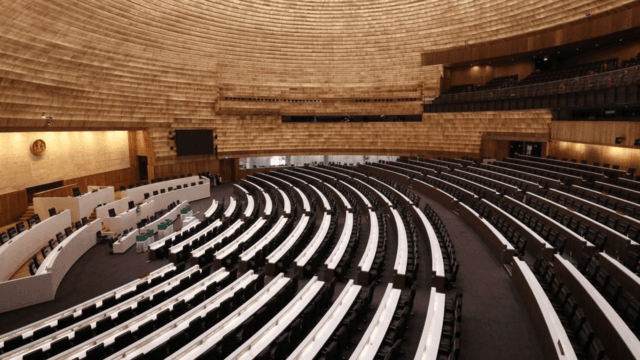
Looking at the post-Sunday election map and this is certainly the best opportunity. In the past, the “colours” were regionally concentrated. Red dominated the North and Northeast and Yellow was in the South, for example. Today, Blue spreads out almost evenly thorough out Thailand, with Bangkok a remarkable exception.
As for the Orange, what Pavin Chachawalpongpun, an anti-establishment scholar living in Japan, wrote the other day was quite eye-opening. He virtually said that it was okay to dream, but only as long as you don’t lose touch.
Some Orange fans are now, apparently out of sheer bitterness, saying that provincial people have made poor choices so they now have Anutin to contend with. That was exactly how Bangkokians generally thought when nothing they did could stem the popularity of Thaksin Shinawatra among poor, rural people.
“Winning all seats in Bangkok but thrashed in the overall election. Instead of finding out exactly why, (some) Orange supporters are calling provincial people stupid. Haven’t they learned anything from the past?” Pavin wrote in an online post.
He might be offering a good explanation for the Orange humbling defeat. But maybe what the People’s Party should do most is looking at a much more recent past. Party leader Natthaphong Ruengpanyawut ruling out cooperating with Anutin is what should be rethought.
The attitude is old politics. Biggest parties refusing to work together and devaluing or demonising each other is old-fashioned, no matter how “sophisticated” you want the people to think of you or how idealistic you want to portray yourself.
Bangkok versus Provinces is always there politically. It flies in the face of Songkran, which demonstrates profound bonds or linkage between the two.
Look what divisive, cutthroat politics has turned Thailand into. One party is proudly claiming it has completely swept Bangkok and another party has hit back by saying that we have completely swept 20 or so other provinces, too.
That kind of bluffing or competition is absolutely unhealthy and definitely counter-productive, continuously leading to detrimental court cases, fiery street protests and hate speeches tearing families, friendships and other relations apart.
Anutin made a history on Sunday, and Natthaphong proved a generally graceful loser at the same time. But the former can make a far greater history, and the latter can become far more graceful.
All they have to do is talk, not with their interest, but Thailand’s, at heart.