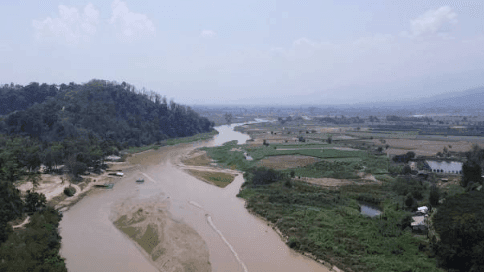



Many venders selling food and drinks to tourists from their rafts on the Kok River, in Chiang Rai’s Muang district, are complaining that they barely had any customers over the Songkran break, which they blame on contamination of the river with arsenic and other heavy metals, discharged by upstream gold mining activities in the Shan state of Myanmar.
One of them, Suchanart Phothong, told Thai PBS reporters that she has been selling food and drinks from her raft, near the Nong Dan Bridge, for more than 30 years and claimed that, during the Songkran festival in the past few years, many tourists would visit the floating food market to eat and enjoy a dip in the river, adding that she used to earn up to 30,000 baht a day.
This year, she complains that most tourists have disappeared, because of reports that the river is polluted and officials have advised the public against using water from it.
She disclosed that several of her fellow vendors have already closed their shops and moved elsewhere, adding that she does not know how long she will remain there.
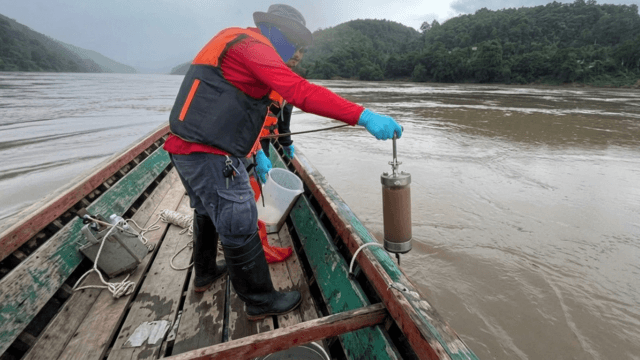
Testing of water samples taken from the river shows levels of arsenic above safe levels.
Environmental groups are urging the government to approach the Myanmar administration about tightening controls on the extensive mining activities in Shan state, which are operated by Chinese investors.
In addition to the Kok River, the Sai River, which originates in Shan State and flows through Chiang Rai, is contaminated with heavy metals.