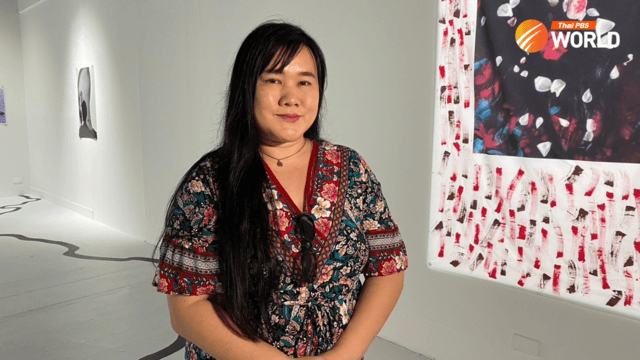
“I don't feel like one ‘succeeds’ in being an activist, because it's an ongoing process. I'm still learning and I still have to see where else my voice will be impactful or is needed.”
This is Cindy Bishop’s personal reflection, as she looks back on her journey as an advocate for gender equality and women’s rights. Above all, she advocates for equal opportunities for women and an equal right for them to be safe when they are walking down the street.
In fact, being an advocate was something the famous Thai supermodel and actress never planned to become.
Standing up for women
It all began in 2018, when Cindy recorded a video of herself complaining about why women are often told to dress modestly, to prevent sexual harassment during Songkran festivities. The video was posted on her Instagram account, along with the hashtag #DontTellMeHowToDress, which rapidly became an online social movement, sparking conversations about sexual harassment and, most importantly, the victim blaming attitude prevalent in Thai society.
Since then, Cindy has launched a series of projects, namely the #DontTellMeHowToDress exhibition, which featured clothes worn by abuse survivors, to debunk myths that women fall victims to sexual assault because of their choice of clothing. She also wrote a children’s book “My Body, My Rules” to teach young children about body autonomy and respect.
Her strong advocacy eventually led to her being appointed as UN Women’s Goodwill Ambassador for Asia-Pacific in 2020.
Six years on, Cindy’s movement has had a significant impact on Thai society, with people becoming much more aware that sexual harassment and victim blaming are wrong. Nowadays, it only requires social media to call out against sexual abuse, whether it comes from a news story or a scene in a Thai soap opera.
“I've seen some amazing work being done in this area of gender equality, specifically pushing back against sexual harassment and victim blaming, and everyone is speaking about it,” she says.
Despite tremendous achievements, Cindy prefers not to call it a ‘success’. The Thai supermodel believes that she still has a lot to learn and that a lot of work still needs to be done. Two such issues that she thinks still need to be addressed are domestic and online violence.
“So, how do we bring everybody into the conversation? How do we engage with law enforcement? How do we appeal to the government to put policies in place that are better going to protect women?”
Though Cindy feels grateful to see the Thai media placing more emphasis on female empowerment, she hopes that the social issue will not be treated as a trend.
“Yes, there is a lot of hype in the media about the empowerment of women, with so many commercials and campaigns. Great! But let's make sure it's sustainable. Let's make sure it's really creating the impact we want in the lives of women.”

The meaning of feminism
Although the awareness of gender equality and women’s rights have increased in recent years, the term “feminism” remains under debate. Cindy herself has also noticed how such terms are often accompanied by negative connotations, especially the way feminists are frequently perceived as angry women who are just out to attack men.
“If a woman becomes too visible when she speaks out, whether she's an activist or a celebrity, she gets bullied to the point where she decides to close her mouth,” she observes.
One aspect that contributes to the negativity relating to feminists is the ‘cancel culture’, where even an ordinary netizen can become a target of online attacks, just because they said something perceived to be “wrong” or which goes against people’s (political) beliefs or (conservative) leanings. Cindy feels, therefore, that everyone needs to take a step back, be more respectful and give each other space to have differences of opinion.
“I think everyone needs to just breathe, relax and take some time to listen to each other a little bit more. If we can do that, I think a lot of problems would be solved.”
As Thai society is placing more importance on gender, Cindy noticed that people have been very focused on women’s rights, to a point where men are being left out of the conversation. Cindy believes that men are needed to push for these changes, while insisting that advocates, like herself, are not here to take anything away from men.
“There are so many more examples of positive male allies. This is why we need to shift our tone,” Cindy explains, while giving huge credit to her husband, who she says is her strongest supporter.
“I can tell you, without a doubt, I would not be here doing as much as I am today if he wasn’t in my corner, pushing me and telling me to go for it. So, these are the men who we need to bring back into the conversation, because we are in this together.”

Leadership and mental well-being
After reaching milestones in her advocacy, Cindy is now taking us back to the basics - mental well-being - which she says is the most important aspect when it comes to quality leadership. This will be the main theme for this year’s H.E.A.L. Summit, taking place this October and of which Cindy is proud to be a part.
She explains that, in a fast-paced world, many people, including leaders, are burning out. As a result, people are now placing much more importance on self-care, healing and finding a work-life balance.
“If you're not well, emotionally, physically, spiritually, holistically, you're not going to lead well,” she explains. “I feel that, in our society, we are being distracted. We're burnt out, we're getting taken away from our best and are impacted by things that are out of our control. There are, though, so many things that we can be doing to keep us aligned, keep us on purpose and be the most impactful we can be.”
As a woman juggling between work and family, Cindy admits, however, that maintaining the right balance and her well-being is not always easy. This all comes down to one skill that everyone needs to have - self-awareness - knowing their strengths, weaknesses, where they can improve and what they have to accept.
“So, I have the vision of being in a boat and I'm sailing. Sometimes the seas are very nice and calm, and sometimes a storm hits you, but your job is to just make sure your boat doesn't capsize,” he explains.
Speak up and don’t be ‘small’
As to what empowering Thai women means to Cindy, she explains that it's making sure that their voices are heard, telling them that they have more than enough to share with the world and, most importantly, to keep doing what they believe in.
“I think women have been conditioned to be quiet and not to make a fuss and, when we do make a fuss, we're branded as angry feminists or too confident. Now, I think it's our time to show, not just to our daughters and young girls, but our sons and young men too, that there are places in society for everyone, male or female or in between.”
By Nad Bunnag, Thai PBS World