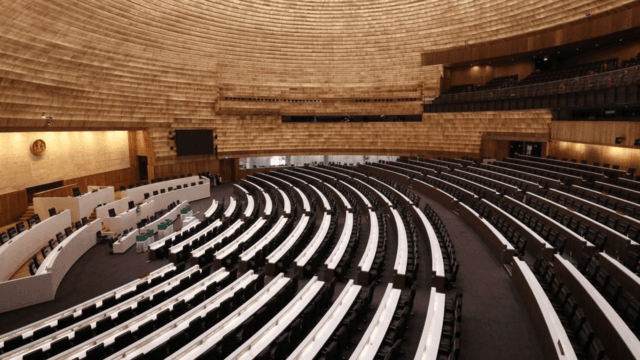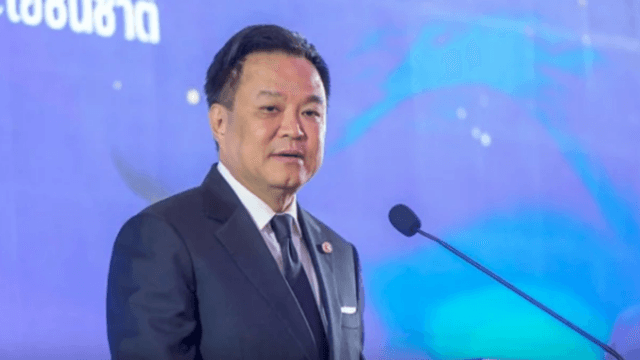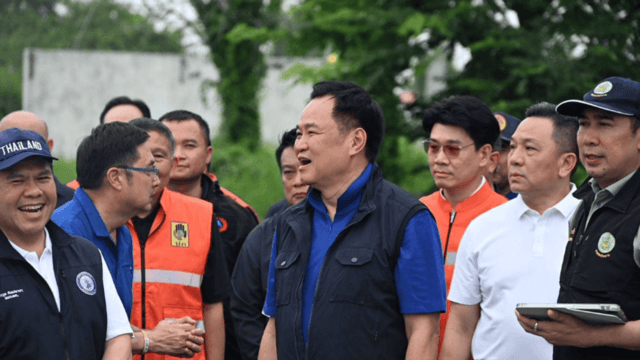



Voting in the general election, another major milestone in Thai politics, began nationwide at 8am today and about 53 million eligible Thai citizens have until 5pm to cast ballots for their preferred political parties, candidates and who they want to become the country’s 33rd prime minister.
This is a ‘three-in-one’ poll, because it is the first time in Thailand’s political history that voters are also exercising their rights in a national referendum on whether to rewrite the nation’s highest law, The Constitution.
Each voter will receive three ballot papers. A pink one for political parties in the party-list election, a green one for candidates in the constituency election and a yellow ballot for the referendum on the Constitution.
The referendum question reads: “Do you agree that a new constitution shall be written?” Voters have three choices: “Agree”, “Not agree” or “No comment”.
For the 2026 general election, of the 64,953,661 Thai population, 52,922,923 are eligible to vote - 25,278,046 men and 27,644,877 women.
Under the current Constitution, the election uses a two-ballot system to elect 400 constituency MPs and 100 party-list MPs, bringing the total number of MPs in the House to 500.
The Election Commission reports that 3,526 candidates are contesting 400 constituency MP seats.
For party-list MPs, 1,570 candidates from 57 political parties have been registered, along with 94 prime ministerial nominees from 43 political parties.
Nineteen parties have nominated the maximum of three prime ministerial candidates, while 12 parties have nominated two candidates each and another 12 have nominated one.
With 19 hopefuls vying for a seat in the House, Bangkok constituency 30 has the most candidates standing.
The oldest candidate in the country is 90 years old.
As the most populous province, Bangkok has the highest number of constituencies at 33, followed by Nakhon Ratchasima with 16, Khon Kaen and Ubon Ratchathani with 11 each, Chiang Mai, Chonburi, Buri Ram and Udon Thani with 10 each and Songkhla, Nakhon Si Thammarat and Si Sa Ket with nine each.
Trat, Ranong, Samut Songkhram and Sing Buri have only one constituency seat each, while the remaining provinces have between two and eight.
With two polling events being held on the same day, ostensibly to save costs, this general election-referendum will be Thailand’s most expensive, with a total budget of 8.97 billion baht. 6.7 billion baht for the election and 2.2 billion baht for the referendum.
This figure is about 3 billion baht higher than the two previous general elections, which cost 5.80 billion baht in 2019 and 5.94 billion baht in 2023.
By contrast, the general election in 2005 cost just 3.5 billion baht.