George Carroll’s career in education began at the age of thirteen, assisting his mother at her learning centre in Wisconsin.
After pursuing his studies in Boston and working at Boston College, he relocated to Thailand in 2003.
Since then, George has dedicated himself to the field of education, recently founding his own school. He is the creator of a unique phonics program and the ‘Carroll Method’, a play-based approach to learning that skillfully balances pragmatism with a sense of moderation.
Play-based learning
“Children learn through play. That is what's natural for them”, said George.
He added that there are deliberately few chairs at his school, because children need to move.
When they are up and moving around, they are engaged and excited about being in school and learning, which is exactly how education should be.
“So, we don't have this expectation that very young children are going to sit still for six hours. That's not reasonable.” He emphasised that youngsters should be actively exploring.
Some Thai parents expect the opposite though, asking “why can't my kids sit still?” They don't feel comfortable with the idea of play-based learning, as they feel the focus should be on academic performance rather than play.
George admitted that it's a tough sell to convince Thai parents that play is a good way of teaching. One reason is that, in Thailand, play-based learning has a bad reputation, because it has been done incorrectly.
It's not about letting kids run amok and play - it's guided play, he says, noting that "Play based learning is actually a lot of work on the back end, behind the scenes."
The teachers have to put a lot of time and effort into planning their lessons, setting up environments and making sure that the play is engaging.
He explained that this allows teachers to interact with students and really test their comprehension, to see whether they have truly understood the lesson and grasped the concepts.
To equip children with creative and innovative minds, he explained that you have to let them go out there, make mistakes, break things and take action.
It is about learning through those failures, overcoming them and building self-confidence, believing that, "Even if I fail, I'm still going to succeed eventually." That's what children need for the future.

Critical thinking skills
One of the most essential skills for any child in today’s world is critical thinking, a human skill with which AI simply cannot compete.
AI is trained on vast datasets, to predict pattern outcomes, so it remains unable to truly think like a human being.
George explained that, while you can ask ChatGPT any question and it will provide an answer, the AI does not actually know whether that information is true or even whether the answer is a good one.
The ability to distinguish what is right or wrong requires critical thinking.
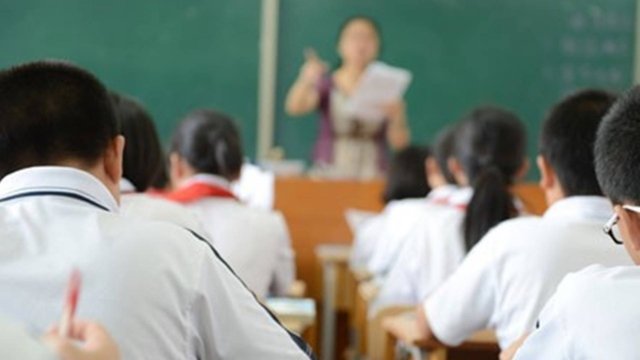
To cultivate this essential skill in our children, we must move away from the traditional teacher-centred classroom.
Instead, we must embrace a student-centric approach that empowers learners to think for themselves.
“You don't want your kids growing up accepting what's presented to them as the sole authority, and I think that's where Thai education is under preparing its students,” he opined.
He argued that, when children are trained only to copy their teachers and rely on rote memorisation, they become easy targets for TikTok influencers or news sources that may not reflect their society’s or their family's values.
Having been conditioned to obey authority, they may blindly follow anyone with a platform.
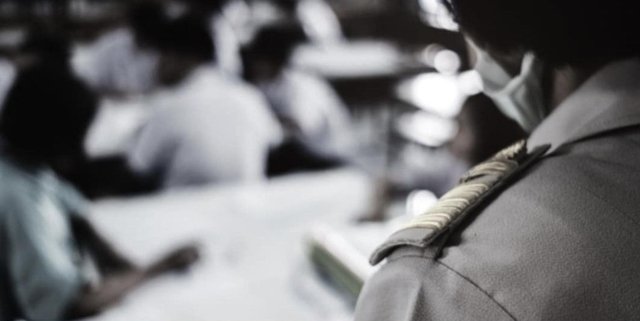
This lack of scepticism has real-world consequences, such as, for example, falling for scammers who dress like police officers.
“I see people fall for that scam all the time, because they're trained to accept authority without any critical thinking,” George observed, emphasising that “You really need this skill. It's really, really important.”
By Att Boonyatus