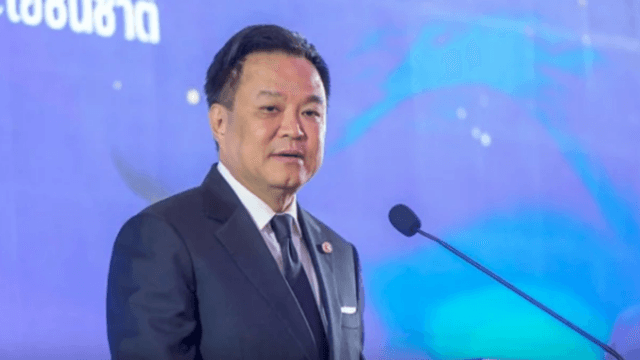



Commerce Ministry is running various projects to support upcycling businesses, adding value to products and services and promoting sustainability, according to Poonpong Naiyanapakorn, the director of the Trade Policy and Strategy Office (TPSO).
These projects include developing knowledge, supporting entrepreneurs and improving Thai products through innovation and technology, to align with global trends, he said, adding that this helps Thai entrepreneurs to stay competitive and sustainable.

Poonpong Naiyanapakorn, the director of the Trade Policy and Strategy Office (TPSO)
In 2023, Thailand produced 26.95 million tons of waste, averaging about 73,840 tons per day. This leads to environmental and health issues, as well as financial burdens on the country.
According to the 2024 Global Waste Management Outlook, by the UN Environment Programme (UNEP), global municipal waste will reach 3.8 billion tons by 2053, increasing waste management costs from US$250 billion in 2020 to US$640 billion.
Poonpong explained that, as waste management costs rise, upcycling offers a solution by adding value to waste. It transforms discarded materials into eco-friendly products, improving their quality, value and functionality. Upcycling is a key element of the Circular Economy, promoting the efficient use of resources.
The global upcycling market is expected to reach US$9.7 billion next year, according to Grand View Research, because more people are aware of environmental issues, increasing the demand for eco-friendly products, including those which have been upcycled.
The market is growing at an average rate of 5.6% per year and the market for upcycled raw materials is expected to be worth over US$512 million by 2032, growing by 6.4% annually.
This growth is supported by new technologies and innovations, such as artificial intelligence, which make upcycling more efficient and cost-effective. They are helping to improve the upcycling process and reduce production costs in various industries.

In Thailand, upcycled products are becoming more popular and recognised. For example, one brand is making clothing and accessories from plastic bottle caps. Moreover, toys are being made from discarded rubber trees, wood scraps, sawdust and other natural materials that are readily available locally.
Upcycling differs from recycling and reuse in its approach. ‘Upcycling’ transforms old materials into new, higher-value products. ‘Recycling’ breaks down materials to create new items, while ‘reuse’ simply involves using items again for their original purpose.