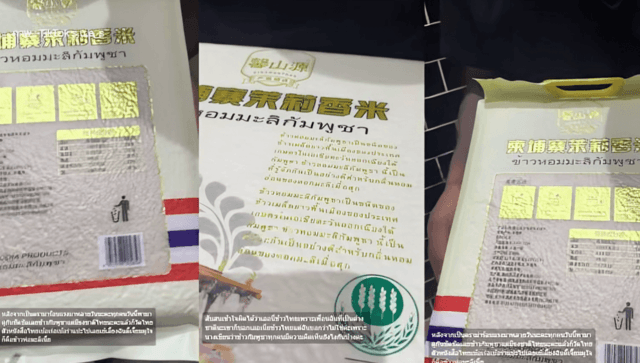



The Thai Rice Exporters Association has expressed concern that Thailand may lose its Hom Mali fragrant rice market in the US to Vietnam, because the new 36% reciprocal tariff imposed by the US will drive the price of Thai rice to about US$1,400 per tonne, from the current price of US$900-US$1,000/tonne, said association president Chukiat Opaswongse.
He pointed out that Vietnamese fragrant rice is currently priced between US$600 and US$700 per tonne and, even though Vietnam faces a 46% reciprocal tariff, the price of its grain will still be much lower than Thai rice.
Last year, Thailand exported 850,000 tonnes of Hom Mali to the US, compared to Vietnam’s 40,000 tonnes.
Chukiat said, because of the wide price differential, US rice importers may switch to buying Vietnamese fragrant rice, adding that US rice importers have already imported about 100,000 tonnes of Thai Hom Mali rice, ahead of the reciprocal tariffs imposition by the US.
He urged authorities concerned to work to help Thai rice exporters and speed up trade negotiations with the US.
People’s Party Deputy Leader Sirikanya Tansakul said today that the US imposition of reciprocal tariffs on Thai exports is not only intended to reduce the huge US trade deficit with Thailand, but is aimed at reaching a trade surplus with Thailand and encourage US investors to relocate production back to the US.
The size of the tariff increase on Thai goods will depend on negotiations between Thailand and the US, she said.
“If we do not do anything, or if the negotiations are a failure, Thailand’s GDP growth this year may be reduced by 1% or more. If we manage to negotiate a lower tariff of 25%, our GDP growth may shrink by 0.8%, or 0.3% if the tariff can be negotiated down to 10%,” said Sirikanya.
Thai exports likely to be hardest hit by the increased tariffs are communications equipment, computer disc drives, car tires and electrical appliances.
Sirikanya said that the US tariff measure may also cause foreign investors to delay or cancel their investment plans in Thailand until the dust has settled.
She also urged the government to look into the service sector, in which US companies have long enjoyed a trade surplus with Thailand.