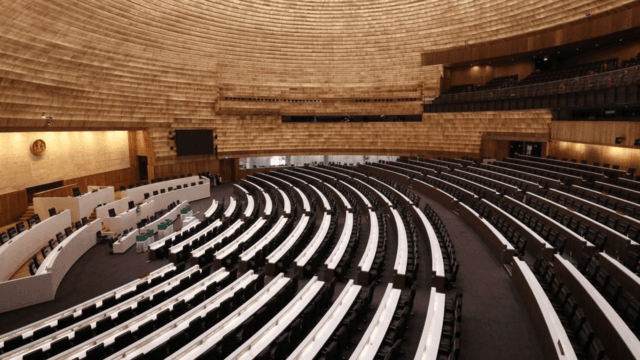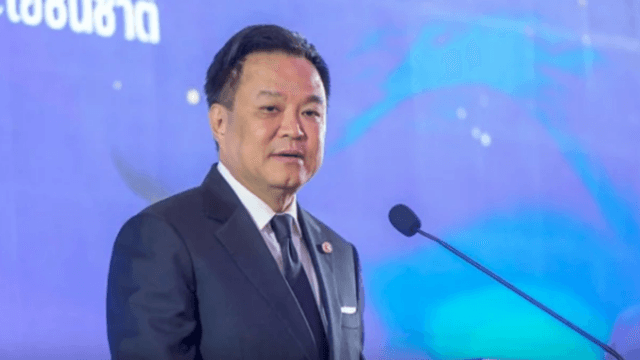



Prime Minister Anutin Charnvirakul assured opposition MPs that his entire cabinet, himself included, will closely monitor the disbursement of the 400 billion baht borrowing under the Executive Decree, to ensure that the money is spent worthily and effectively, after the House of Representatives passed the Decree by 285 to 141, with 52 abstentions.

In his closing speech, after a daylong debate on the decree, the prime minister told parliament that the 400 billion baht borrowing is not part of the national budget and, therefore, carries a 1.2% interest rate.
He thanked the finance permanent secretary for his explanations to opposition MPs, addressing their concerns over the borrowing and what and how the money is to be spent, adding that he has instructed all relevant agencies to compile the recommendations made during the debate by opposition MPs for consideration.

During the debate yesterday, Democrat Party leader Abhisit Vejjajiva explained why he disagrees with the 400 billion baht additional borrowing.
Firstly, he said that the promulgation of the decree by the government is unjustified because it is not an urgent issue and that enactment of any law should be the responsibility of parliament.
Secondly, he claimed that the borrowing will not resolve the problem, adding that the government should have cut energy costs and reduced the cost of living.
Thirdly, he said the borrowing will raise Thailand’s public borrowing to its limit of 70% of GDP. He wondered how and where the government will secure funding in the future when there is an urgent need for it because the public borrowing has already reached the limit.
Fourthly, Abhisit claimed that the 200 billion baht of the borrowing, to be used to implement the plan for Thailand’s transition from fossil to clean energy, did not go through the proper screening process. He also warned that the permission for so many data centres to be set up in the country could increase the consumption of fossil fuel-based energy.
The Democrat party leader also said that he believes that the borrowing will not help to promote economic growth and the people will continue to be affected by the energy crisis.