


The Trade Policy and Strategy Office (TPSO) has adjusted the inflation rate projection for the whole year from 1.5–2.5% to 1.8–2.2%, mainly due to the conflict in the Middle East, which has driven up fuel prices and the production costs of finished food products.
Nantapong Chiralerspong, director-general of the TPSO, said yesterday that the Consumer Price Index for September was 102.93, representing a 2.82% rise over the same period last year. He noted that the increase has continued for six months, mainly due to fuel prices remaining higher than the previous year.
He added that production costs for finished food products, such as eggs, fresh chicken meat, fresh vegetables, and fresh fruit, also increased.
He disclosed that inflation in the food and non-alcoholic beverages category (including rice, meat, flour, seafood, fish sauce, shrimp paste, instant coffee, sugar, and confectionery) increased by an average of 3.07% for September. The inflation rate for the non-food and drinks category rose by an average of 2.67%.
Regionally, Nantapong said the southern region recorded the highest inflation rate at 3.32%, followed by the central region (3.03%), the northeastern region (2.72%), the northern region (2.67%), and Bangkok and its vicinity (2.57%).
As for the inflation rate trend for October, he predicted it will continue to rise, mainly driven by fuel prices. Citing diesel prices, he noted an increase to 42.19 baht/litre on October 2, up 34.58% compared to the same period last year.
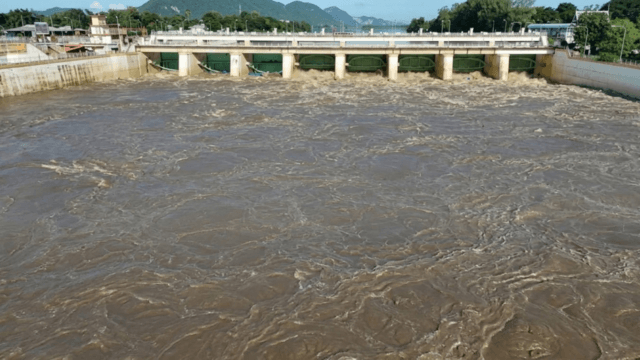
He said current flooding will drive inflation up slightly by 0.1%, as the impact is not as widespread as in 2011.
Meanwhile, the reduction in electricity prices from September to December, to 3.86 baht/unit, down from 3.95 baht/unit in the previous four months, will help cause inflation to drop slightly, he said.