By Thai PBS World Feature Desk
Beneath the gilded spires and steady chants of Wat Pho—Bangkok’s Temple of the Reclining Buddha—there’s another world that most visitors never really notice.
In early 2026, a network of long-closed museum spaces quietly reopened inside the temple grounds. More than 1,400 objects are now back on display, though “display” is probably not the best word to describe their placement.
These pieces are spread across basements, old pavilions, and tucked-away halls. You don’t move through them in a straight line so much as drift between them.
It can feel slightly disorienting at first. You come up against a staircase that doesn’t look particularly important, or a corridor that seems more like staff access than anything public—and then suddenly you’re in a room full of porcelain or ceremonial goldwork.
Into the quiet
The largest collection is placed beneath the Somdet Wor Pho Tor Library, in the King Rama IX 6th Cycle Birthday Celebration Museum.
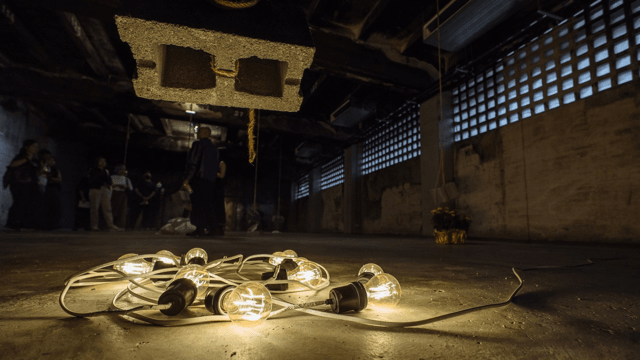
Above ground, it’s all reading rooms and quiet order. Then you go downstairs and the air changes—cooler, dimmer, a bit sealed-off.

Down here, the objects are packed fairly tightly, almost like storage that has been carefully turned into display. Mother-of-pearl ceremonial bowls sit beside European cut glass. Porcelain tea sets are lined up near ivory carvings and royal offerings used in merit-making rituals.
A few pieces stand out without trying to: an alms bowl tied to the coronation of King Chulalongkorn in 1873, and a ceremonial writing set from the reign of King Vajiravudh.
But nothing here feels like it’s meant to stand alone. These objects were never intended to be seen in isolation.
When objects start talking to each other
In the Ceramics and Glassware Exhibition Room at the Phra Monthop Pavilion, things open up a little.
The room doesn’t really behave like a timeline. Chinese Qing dynasty porcelain sits next to Thai Benjarong ware, and then suddenly there’s European glass—Austrian, German, Czech.

Instead of being separated by origin or date, everything is arranged more like a conversation. Trade, influence, imitation, adaptation—it’s all implied rather than explained.

One of the more interesting parts of Wat Pho’s collection is that it isn’t entirely frozen. The mother-of-pearl inlay pieces—more than 200 of them—include ceremonial objects that still rotate in and out of use.
Roughly 40 are still brought out for ritual occasions, then returned. Alms bowls, trays, and offering sets from the reigns of Rama V and Rama VI continue to move between museum piece and living instrument of devotion.
There’s also a funerary offering called “kee muk” — a teapot associated with aristocratic mourning in the 19th century. It isn’t highlighted dramatically. It simply sits there, part of the continuum.

Trade routes, tea sets, and small adjustments
The porcelain section makes the temple’s wider geography feel tangible. Crackle-glazed bowls from China and export wares from Jingdezhen travelled across trade routes before being absorbed into Thai ritual life.
Some tea sets from the reign of Rama V were commissioned in China but designed specifically for Siamese court use, later distributed among monks and officials. Over time, distinct patterns emerged—like the so-called “Siam Four-Cup Set,” which feels both formal and domestic.
Even incomplete sets are preserved. Not as mistakes, but as traces of how these objects were actually used.
Repairing what time left behind
Elsewhere, European cut glass and manuscript cabinets add yet another layer.
One cabinet, damaged by termites and later restored by Thailand’s Fine Arts Department, still shows traces of earlier lacquer work beneath the repairs.

During conservation, hidden imagery began to emerge—motifs influenced by Romance of the Three Kingdoms
.
Nothing about it feels fully settled. Interpretation is still ongoing, which gives the space a slightly open-ended quality.
If you go
Wat Pho Museum is open daily and free to enter.
- Somdet Wor Pho Tor Library basement
- (King Rama IX 6th Cycle Birthday Celebration Museum)
- 8:30am–4:30pm
- Ceramics and Glassware Exhibition Room, Phra Monthop Pavilion
- 8am–6:30pm
It’s best experienced slowly, without trying to map everything too neatly. The museum works better when you allow yourself to get a little turned around—moving between rooms that feel less like exhibits and more like fragments of a larger, still-living system.
Photo credit: Wat Pho Muesuem