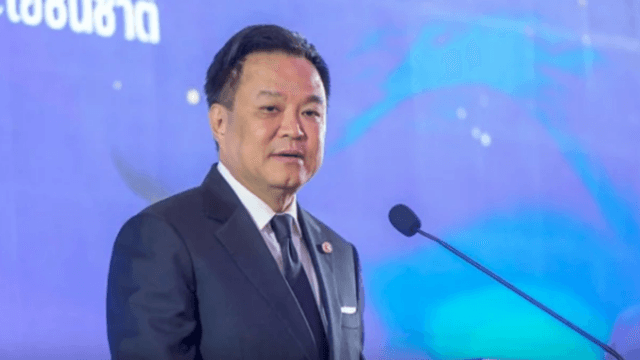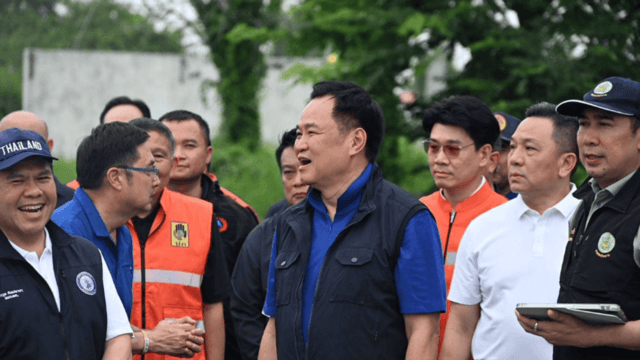



Thai Foreign Minister Sihasak Phuangketkeow is attending the ASEAN Foreign Ministers' Meeting in Manila under a cloud of renewed fighting in the Middle East and a deep divide over Myanmar's return to the diplomatic fold.
The six-day meeting, which started yesterday, is being attended by counterparts from the United States, China, Japan, Russia and numerous other countries.
Thailand's Foreign Ministry posted on its social media accounts that the meeting is aimed at strengthening regional stability and security, addressing emerging challenges and reinforcing ASEAN's critical role in driving regional cooperation.
It is believed that talks over Myanmar, a member state formally excluded from such summits since its military junta seized power in 2021, could ratchet up tensions.
In May, ASEAN leaders emerged from an emotional meeting in Cebu that ended with Philippine President Ferdinand Marcos calling for a "fine-tuning" of the bloc's long-stalled five-point plan to end Myanmar's civil war.
"What's important is that there is engagement... continuous engagement not only with the Myanmar authorities but also with other Myanmar stakeholders," Philippines ASEAN spokesperson Dominic Imperial told reporters on Monday.
Thailand, which shares a long border with Myanmar and hosts millions of Myanmar's displaced people, has led the push for full reintegration.
Last week, Thai Foreign Minister Sihasak Phuangketkeow told AFP that Myanmar military leader Min Aung Hlaing would visit Thailand in August. The news came days after Bangkok hosted a meeting that brought Myanmar's foreign minister together with a group of ASEAN counterparts.
"It's best to bring Myanmar back into the fold. We believe that, after five years, we need to talk, we need to listen and they need to explain," Sihasak said.
Others in the bloc have, however, bemoaned the lack of progress on the long-stalled five-point peace plan that has formed the basis of engagement.
Malaysian Foreign Minister Mohamad Hasan told reporters in May that his country remained opposed to high-level talks while "oppression is still taking place."
US Secretary of State Marco Rubio was scheduled to land in Manila yesterday morning, as the rekindled war with Iran placed traditional American allies under economic strain.
The import-dependent Philippines declared a national energy emergency in March and has been forced to cast an ever-wider net for fuel, including purchases of oil from Russia, whose Foreign Minister Sergei Lavrov is scheduled to arrive today.
Before departing Washington on Monday, Rubio said he was open to the possibility of holding sideline meetings with both Lavrov and China's top diplomat, Wang Yi, whose attendance Beijing officially confirmed only on Monday.
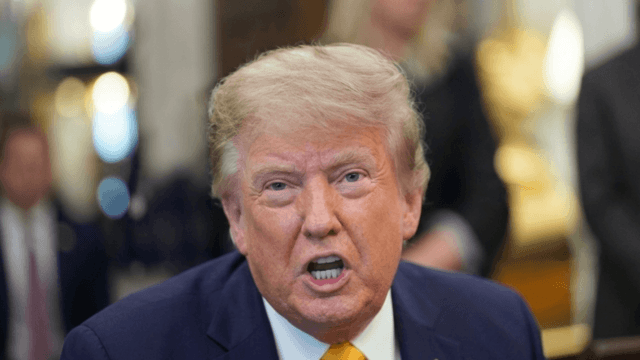
A meeting with Wang would come days after US President Donald Trump accused Beijing of meddling in US elections.
The week is also expected to see renewed efforts to strengthen regional energy security, including the ongoing push for ratification of the bloc's Framework Agreement on Petroleum Security fuel-sharing scheme.
In May, members signed off on a push for an ASEAN Power Grid, aimed at connecting national electricity networks to enable cross-border power trading.
Rubio will meet President Marcos as part of a strengthened US partnership with the Philippines, with the disputed South China Sea certain to be on the agenda.
Chinese and Philippine ships regularly clash in the crucial waterway, which Beijing claims almost entirely, despite an international ruling that its assertion has no legal basis.
The Philippines has previously said it hoped to conclude a Code of Conduct between ASEAN and China before ending its year as the bloc's rotating chair, but analysts have suggested any deal Beijing would be willing to sign would be toothless.