As the first ASEAN member to establish ties with Vietnam during the Vietnam War in 1973, Malaysia recognized the potential of this country early on. Kuala Lumpur understood that overall regional stability and cooperation would depend on Vietnam’s integration with ASEAN.
Despite differences in ideology and economic systems, Malaysia pragmatically laid the groundwork for further interactions between Hanoi and ASEAN.
The two-year head start in establishing diplomatic relations among ASEAN members has given Malaysia a special place in its historical ties with Vietnam.
This explains why Malaysia became Vietnam’s first strategic partner, reflecting the trust and confidence shared between their governments and leaders.
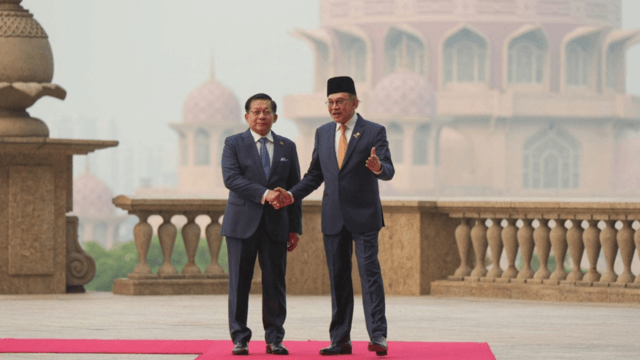
The visit by Vietnam’s General Secretary To Lam to Malaysia on Nov 21-to 23 is significant as it comes at a time when two leading ASEAN nations are navigating rapid geopolitical shifts, especially with the incoming U.S. President-elect Donald Trump.
Both Vietnam and Malaysia have applied to become BRICS members. Last month, they, along with Indonesia and Thailand, were granted BRICS Partner status.
Malaysia’s early recognition of Vietnam was a pragmatic decision but with strategic implications aimed at maintaining regional stability and fostering cooperation despite Cold War tensions and ideological differences between ASEAN members and the communist governments in Indochina.
This move laid the foundation for Vietnam’s closer ties with ASEAN. Vietnam’s balancing strategy is evident in its ties with all countries, big or small while Hanoi continues to maintain strong regional partnerships.
This visit highlights Vietnam’s ASEAN-centric approach, positioning both nations as key players in counterbalancing external influences in Southeast Asia.
It is noteworthy that both countries have a penchant for staying ahead of global trends.
Vietnam and Malaysia employ a balanced strategy to manage ties with major powers like China and the U.S. while maintaining excellent regional partnerships.
To Lam’s visit is expected to significantly boost Hanoi’s ASEAN-oriented approach and its “bamboo diplomacy.”
As the incoming ASEAN Chair in January, Malaysia is planning to host the first ASEAN-GCC summit with China in May, immediately after the 47th ASEAN Summit.
Last year, ASEAN and GCC leaders met in Saudi Arabia for the first time. During Vietnam’s ASEAN chairmanship in 2022, Vietnam and the US planned a summit with the Mekong lower riparian countries to commemorate the upgrade of the Lower Mekong Initiative to the Mekong-US Partnership under the first
Trump administration. However, this was postponed due to the COVID-19 pandemic. Looking back, both countries also have contributed to regional stability and prosperity.
In 2020, Vietnam was the Asean chair and concurrently served as a non-permanent member of the United Nations Security Council, while Malaysia was the chair of Asia-Pacific Economic Cooperation (APEC) forum.
During the trip, both countries will sign a Memorandum of Understanding on Enhancing Trade Promotion between Malaysia External Trade Development Cooperation and Vietnam Trade Promotion Agency and a Memorandum of Understanding between PETRONAS and PETRO Vietnam in the field of renewable energy.
According to the latest investment figures, Malaysia is currently the second-largest ASEAN investor in Vietnam and ranks 11th among major global investors, with investments worth around USD 13 billion.
For two-way trade, Malaysia is Vietnam’s second-largest ASEAN trading partner, reaching USD 10.63 billion during the first nine months of this year.
Both sides hope to achieve a trade target of USD 18 billion in the future.
Their economies also benefit from various regional free trade agreements, particularly the Comprehensive and Progressive Trans-Pacific Partnership (CPTPP) and the Regional Comprehensive Economic Partnership (RCEP), which provide access to new areas of cooperation such as the digital economy, circular economy, green economy, high-tech agriculture, and the sharing economy.
Beyond trade and investment, the two countries are enhancing their defense and security cooperation, including promoting the defense industry and training.
Most importantly, as claimants in the South China Sea disputes, they have maintained close diplomatic consultations and exercised restraint to avoid escalating tensions.
To Lam’s visit could further strengthen their positions on peace and security in the disputed maritime area.
Both countries, along with their ASEAN counterparts, are currently negotiating the third reading of the single draft of the Code of Conduct in the South China Sea. They want to see an effective code of conduct.
During discussions, the focus on emerging sectors such as the digital economy and renewable energy could lead to joint initiatives that benefit both nations and set a precedent for other ASEAN members.
Additional areas of cooperation under consideration include aviation and tourism agreements, as well as promoting education, labor, agriculture, culture, food security, energy security, and sports.
Furthermore, Malaysia will assist Vietnam in promoting and developing the halal food industry. These initiatives aim to increase Vietnam's economic resilience amid global uncertainty.