Experts warn Thailand’s draft Clean Air Bill will become a paper tiger if stripped of the “polluter pays” principle that would hold companies accountable for health-harming emissions.
“We need to use both the carrot and the stick,” said Chulalongkorn University law lecturer Assoc Prof Kanongnij Sribuaiam, who is vice president of the House committee drafting the bill.
The draft – consolidated from seven earlier versions submitted to Parliament – currently includes 104 articles.
They cover air pollution management and control, citizens’ right to clean air, air-quality standards, emissions prevention and control, creation of agencies to implement the new law, the establishment of a “Clean Air Fund” to incentivise corporate responsibility, and legal penalties under the “polluter pays” principle.
However, concern is growing that the bill could be altered under government pressure, after one committee member officially expressed reservations about the Clean Air Fund clause.
The member in question comes from the Council of State, the government’s legal advisers, and represents the Cabinet, Kanongnij said.
“If the fund is removed in the second or third readings, air pollution will remain at crisis levels, continuing to afflict the public with respiratory diseases, cancer, and more,” warned Assoc Prof Witsanu Attavanich, an economics lecturer at Kasetsart University who also serves as the panel’s spokesman.
Thailand’s smog crisis is responsible for 32,000 premature deaths every year, according to the State of Global Air 2020 report.
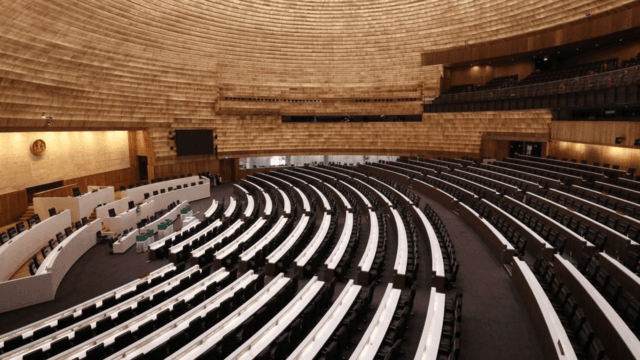
Long overdue, the clean air bill is ‘currently on the House of Representatives agenda – although a recent debate on the draft had to be abandoned due to low MP attendance.
The essence of the bill
At the bill’s core is the Clean Air Fund, intended to finance economic instruments that encourage polluters to clean up their operations. Designed in line with international standards and practices, it includes tools such as pollution taxes, emission trading schemes, subsidies and refunds, and usage fees.
“Using legal penalties alone is not enough in the battle against pollution,” said Witsanu.
In Thailand, PM2.5 – fine dust responsible for causing problems including heart disease and cancer – has reached crisis levels, taking a growing toll on people’s health and on the economy. PM2.5 particles penetrate deep into the lungs, passing into the bloodstream and contributing to respiratory and cardiovascular diseases.
Witsanu explained that financial penalties or other such measures could persuade people to become more environmentally friendly and deter polluting practices.
Beyond punishment, the bill imposes rights and responsibilities: every person has the right to clean air, to access air-quality information, to participate in decisions about polluting projects, and to legal recourse against polluters. At the same time, all citizens share the responsibility for protecting air quality.
The bill aims to hold polluters accountable – be they individuals, companies or investors/financiers. Even those who pollute Thai air from neighbouring countries would face scrutiny and potential action under its provisions.
The bill prescribes civil, criminal and administrative penalties, with fines as high as 50 million baht. Alternative dispute and compensation mechanisms are also built in to reduce litigation delays.
Under the bill, local administrative organisations will be responsible for managing air quality in their provinces. Their executives would act as “clean air officers” with the authority to inspect facilities, suspend operations, order remedial measures, or take legal action. Provincial governors would retain oversight power, intervening if local measures failed to solve problems.
The bill would also create air-quality standards and launch a monitoring network to identify zones that fail to meet them. It would target agricultural burning – a major source of pollution in Thailand – by imposing a traceability system, so large companies can be held responsible if their contracted farmers light fires that generate air pollution. Additionally, the bill includes trade and diplomatic provisions to regulate imports/exports of goods linked to cross-border pollution.
The Thailand Clean Air Network is staging a flash mob demonstration at Bangkok’s Krung Thep Aphiwat Central Terminal on September 30 to raise public awareness and advocate for the inclusion of the Clean Air fund clause.
Gearing up for low-emission zones
In response to growing air quality concerns, highlighted by a Supreme Administrative Court ruling in favour of a Chiang Mai resident over PM2.5 exposure, the National Environment Board recently designated Bangkok, Chiang Mai, Chiang Rai, Lamphun and Mae Hong Son as pollution-control zones during the November to March dry season.
Bangkok Governor Chadchart Sittipunt welcomed the move.
“This is a positive step as it gives the Bangkok Metropolitan Administration [BMA] greater power to adopt stricter pollution control measures,” he said.
Pornphrom Vikitsreth, adviser to the governor, said introducing low-emission zones in the capital was one of three urgent actions at the top of the BMA’s to-do list.
“The maximum black smoke emission level for diesel vehicles will be lowered,” he said. Currently, vehicles that exceed the 30% limit can stay on the road if repaired within 30 days. Under the new plan, however, they will be taken off the road immediately.
These measures will likely take effect in November, coinciding with the dry season when pollution typically worsens.
Chadchart also reported progress in talks with the Industry Ministry on installing a continuous emission monitoring system (CEMS) for factories. Less than a dozen factories in Bangkok currently have CEMS in place.
“If we impose higher emission standards, CEMS will be installed in another 200 plants,” the governor said, adding that the system would enable effective monitoring to pave the way for improved emissions control.
Chadchart said that successful battle against PM2.5 would bring multiple benefits and boost public confidence, adding that reducing particulate matter by 1 microgram per cubic metre of air could generate economic benefits worth more than 10 billion baht.