The opposition-leading People’s Party has launched a full-frontal assault on Anutin Charnvirakul’s government, taking the rare step of forming a shadow cabinet to scrutinise government actions and present alternative policies.
Shadow cabinets are a rare phenomenon in Thai politics. The People’s Party’s version marks only the third “alternative government” since Thailand became a constitutional monarchy in 1932.
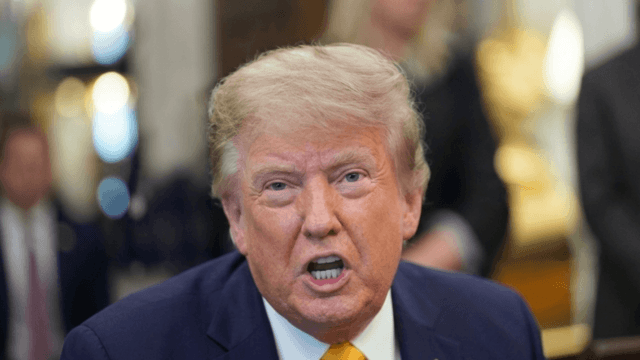
Party leader Natthaphong Ruengpanyawut said the shadow cabinet will examine every Cabinet resolution to ensure it serves the public interest, not vested interests.
Offering alternatives
“Our shadow cabinet will also offer suggestions and superior policies that demonstrate how a government truly connected to the people would work for the benefit of all citizens,” he said at a press conference held after the new body’s first meeting on Wednesday (April 29).
Natthaphong, who heads the shadow cabinet, said it would offer “greater flexibility” by collaborating with MPs, the private sector, and the public on national agendas. The administration can then decide whether to adopt the shadow cabinet’s proposals. “If the government rejects beneficial advice, the people will judge those decisions at the next election,” he said.
Natthaphong, awaiting his official appointment as opposition leader, insisted the new body is not a springboard to power like the Democrat Party’s 2008 and 2011 versions, which fostered head-to-head confrontations with government ministers. Rather than individual portfolios, the shadow cabinet – launched last Sunday (April 26) at the party’s general assembly – will form teams to work on four national agendas. The teams will meet once a week to cover security, the economy, quality of life, and legal reforms, explained deputy leader Veerayooth Kanchoochat.
“We want Thai citizens to realise that our nation could be better,” he said. “We don’t want people to lose hope over Thai politics and the economy.”
Born in the UK
Shadow cabinets are a key component of the Westminster parliamentary system, acting as a “government-in-waiting” to provide a structured alternative to the ruling administration. While the concept originated in the 19th century, the term “shadow cabinet” first appeared in the UK press around 1910, becoming more established throughout the 1920s and reaching full institutional status by the latter half of the century, according to the Institute for Humanities, an online social science platform.
Shadow cabinets subsequently emerged in other Westminster-style democracies, including Australia, Canada, New Zealand. India has experimented with shadow cabinet mechanisms at both the state and national level.
Thailand first flirted with the idea in 1996, when former premier Chuan Leekpai’s Democrat Party formed an “alternative government” to counter the General Chavalit Yongchaiyudh administration.
When Chuan returned to power after Chavalit’s resignation following the 1997 financial crisis, a fledgling political party known as Thai Rak Thai, founded and led by businessman-turned-politician Thaksin Shinawatra, introduced a “shadow cabinet” packed with prominent technocrats and scholars. Thai Rak Thai held no parliamentary seats at the time, but Thaksin unveiled his shadow cabinet ahead of the 2001 election as an alternative to the Chuan Leekpai government’s strategy for recovery from the financial crisis.
Thai Rak Thai won by landslide, securing 325 out of 500 seats in the House of Representatives.
Thailand’s first
Political historians agree that the kingdom’s first official shadow cabinet was formed in 2008 by Abhisit Vejjajiva’s Democrat Party. With Abhisit as shadow prime minister, the body was launched to challenge Samak Sundaravej’s People Power administration, which was widely regarded as a proxy for Thaksin. Shadow ministers directly mirrored their counterparts in the government.
Abhisit’s Democrats also formed the country’s second shadow cabinet, after Thaksin’s sister Yingluck led Pheu Thai to victory in the 2011 election, securing 265 seats against 159 for the Democrats.