


Maintaining the central bank’s independence and coordinating monetary and fiscal policy effectively will pose the biggest challenges to the newly appointed governor of the Bank of Thailand (BOT).
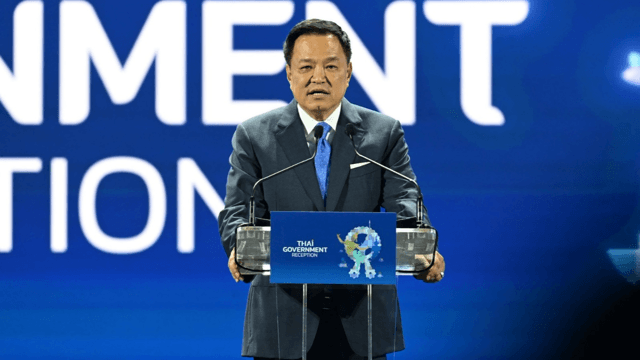
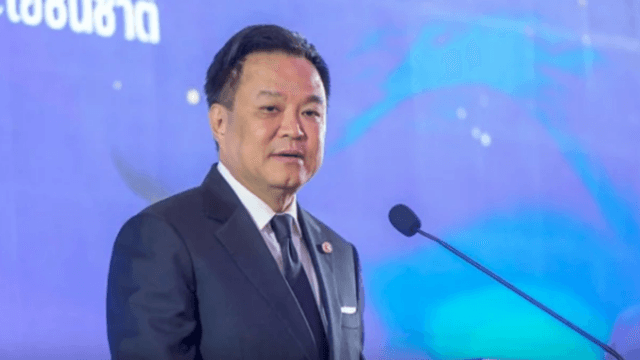
Vitai Ratanakorn, 54, was named the next BOT governor by the Cabinet on July 22.
He will take the reins from Sethaput Suthiwartnarueput, whose five-year term ends on September 30.
Vita’s appointment comes amid heightened tensions between the BOT and the government regarding interest rate policy.
The BOT maintains that its current policy rate of 1.75 per cent is appropriate, but the government has been pushing relentlessly for a deeper cut to support the weakening economy.
The yield on five-year government bonds dropped by 5 basis points after Vitai’s appointment, as investors anticipate a more dovish monetary policy, according to Ariya Tiranaprakij, deputy managing director of the Thai Bond Market Association (ThaiBMA).
A recent ThaiBMA survey indicated that the markets expect the next rate cut in October, soon after Vitai takes office.
On July 22, the stock market closed sharply down by 16.38 points, or 1.36 per cent, at 1,191.75 points.
Some analysts attributed the sell-off to profit-taking after recent gains, rather than to the appointment of the new BOT governor. Others remained unsure of the key drivers behind the market’s move.
“The Thai stock market seems to have followed the cliché ‘buy on rumors and sell on news’.
After Vitai's confirmation, the market softened, and the interest rate market shed more yields in anticipation of a dovish Monetary Policy Committee,” said Kobsidthi Silpachai, head of capital markets research at Kasikorn Bank.
“While the baht currency has weakened, the change is not substantial,” he added.
Debate on central bank’s independence
The BOT has earned a reputation for its independence, defying political intervention, garnering confidence both domestically and internationally for its prudent monetary policy management.
Some segments of society, however, have expressed reservations. Seventeen academics penned an open letter to Cabinet ministers, urging them to carefully consider the BOT’s independence in the selection process.
While the letter did not name candidates, it implied a preference for BOT deputy governor Roong Poshyananda Mallikamas over
Vitai, as the latter lacks direct experience in monetary policy and central banking.
Vitai, formerly president of the Government Savings Bank (GSB), was perceived as more aligned with the government’s views.
“It is unfair to presume he will compromise the central bank’s independence,” says Somchai Jitsuchon, research director at the Thailand Development Research Institute (TDRI), who did not sign the letter.
“Give him time to prove himself.” Nonetheless, Somchai expressed concern over Vitai’s lack of experience in central banking and macroeconomics, noting that his background is primarily in business management and microeconomic fields.
Somchai also observed that Vitai has not emphasized financial stability, instead focusing on economic growth and micro-level issues such as resolving the household debt crisis.
Somchai noted, however, that Vitai could learn quickly if he is attentive to macroeconomic briefings provided by BOT officials.
Vitai has stated on his Facebook page that he intends to remain independent from political influence.
Notably, opposition to his appointment has not been as intense as last year, when a larger group of academics and former BOT employees vocally opposed the candidature of former finance minister Kittiratt Na-Ranong, citing his close political ties to the ruling Pheu Thai Party and the threat to the BOT’s independence.
Kittiratt had to pull out of the fray after the Council of State deemed him ineligible, and Somchai Sujjaponse, former permanent secretary at the Finance Ministry, was appointed as BOT chairman.
Sakon Varunyuwatana, former dean of Thammasat University’s Economics Faculty, who was vocal in his opposition to Kittiratt’s candidature, has accepted Vitai’s appointment, stating: “We have to honor the selection procedure.”
BOT governor’s influence on policy
The Monetary Policy Committee (MPC) consists of seven members, with the BOT governor having one vote. As a full-time central bank executive on the committee, the governor can exert considerable influence.
“Should the governor influence the secretariat team in framing information presented to other committee members, decisions on the key rate could be swayed,” says the TDRI’s Somchai Jitsuchon.
Juggling monetary and fiscal policy
Calls for additional rate cuts have intensified following the BOT’s decision to reduce the one-day repurchase rate three times—beginning last year and continuing into this year—bringing it to the current level of 1.75 per cent per annum, which remains low by international standards.
“Interest rate cuts are a major tool at the central bank’s disposal, but soft loans and other measures can also be used to target specific industries,” says Sakon.
The real challenge lies in harmonizing monetary policy with government fiscal policy, especially as the central bank may need to retain flexibility while the government increases spending, he adds.
“Vitai’s appointment could help align monetary and government policies. His business experience in various financial institutions [as opposed to an academic background] may facilitate more efficient monetary transmission through the financial system,” says Kobsidthi.
Sirikanya Tansakun, deputy leader of the opposition People’s Party, echoes this view, stating that Vitai should ensure that both commercial and state-owned banks adjust their lending rates to match central bank cuts.
She points out that despite a total 0.75 percentage point reduction in the BOT rate from the last three rate cuts, banks have not reduced their lending rates to the same degree.
Immediate threats and long-term issues
Thailand faces a daunting array of economic challenges.
● Recent trade negotiations with the US have resulted in tariffs of 15 per cent for Japan, 19 per cent for the Philippines and Indonesia, and 20 per cent for Vietnam. Should Thailand face even higher US tariffs, it could spell disaster for the country’s export-driven economy.
“Trump’s tariffs may tip the Thai economy into recession if they render Thailand uncompetitive, and there is a risk of reversing foreign direct investment,” Kobsidthi warns.
● The country is faced with political instability since the prime minister’s suspension by a court order, and an acting PM at the helm. There is the risk of a government vacuum, leaving economic leadership solely in the hands of the BOT.
● There is a risk of deeper disinflation or outright deflation, as inflation has turned negative in recent months.
● Long-term issues include persistently high household debt, an aging population, and a contracting labor force, all of which weigh on Thailand’s economic outlook, according to Kobsidthi and other analysts.
New BOT chief's background
Vitai holds a bachelor’s degree in economics from Thammasat University, a master’s degree in political economy from Chulalongkorn University, a master’s degree in business law from Chulalongkorn University, and a master’s degree in finance from Drexel University in the United States. He previously worked at Phatra Securities and other private firms.
His major executive roles include serving as secretary-general of the Government Pension Fund and as president and CEO of the Government Savings Bank.