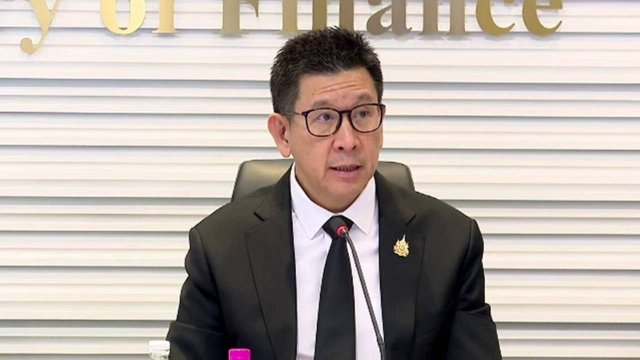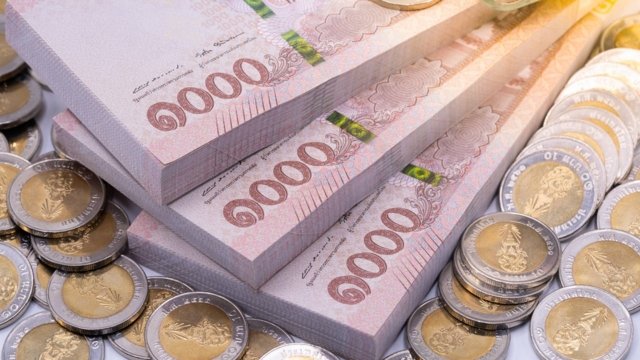



The Bank of Thailand has ordered two unnamed commercial banks to investigate suspicious cash withdrawals of 200 million baht in one case and 250 million in another, as well as unusual withdrawals of 500-baht banknotes, according to Vitai Ratanakorn, the Governor of Bank of Thailand.
He said yesterday that the two commercial banks concerned must be able to provide a clarification to the central bank about the two unusual transactions, which occurred about 10 days ago, as well as the reasons for the withdrawals.
He noted that it would be fine if the cash withdrawals were meant for legitimate business purposes. If the money trail is found to be suspicious, however, the central bank would refer the matter to the Anti-Money Laundering Office (AMLO), or the Election Commission if they are found to be related to the upcoming election.
In Thailand, vote buying has been widely practiced by unscrupulous candidates and political parties in local and national elections. In previous elections, this malpractice often took place 1-2 weeks before Election Day and the standard payment has been a 500 baht banknote for each bought voter.
Noting that the central bank has not yet invoked the law empowering it to order commercial banks to investigate suspicious cash withdrawals, Vitai said that, in about two months from now, the central bank is expected to issue regulation to limit the amount of cash that can be withdrawn per day to either 3 or 5 million baht.
Currently, commercial banks are required to report single cash withdrawals of more than two million baht to AMLO. He said that, in the foreseeable future, bank customers may be required to provide an explanation to their banks if they withdraw such large amounts of cash in a single day.
This restriction, he said, may help to curb the transfer of ill-gotten money related by scammers.
The central bank has issued an edict limiting the amounts of foreign currencies that can be bought by foreign exchange service outlets to 800,000 baht per person per day and 200,000 baht per person per day in border areas.
Vitai also said that an announcement will be made this month by the central bank requiring e-Money and e-Wallet platforms to be connected to the Central Fraud Registry (CFR), which will help in the disruption of illegal online money transfers.
The central bank is also in the process of issuing measures, expected to come into force on March 1st, to regulate online gold trading, under which gold traders are required to report transactions in excess of 20 million baht each to the central bank. The amount of gold a person can transact per day will be limited to a maximum of 50 million baht.
As Thailand is a net importer of gold, Vitai admitted that he finds the export of gold to a neighbouring country to be suspicious and possibly linked to scam operations.