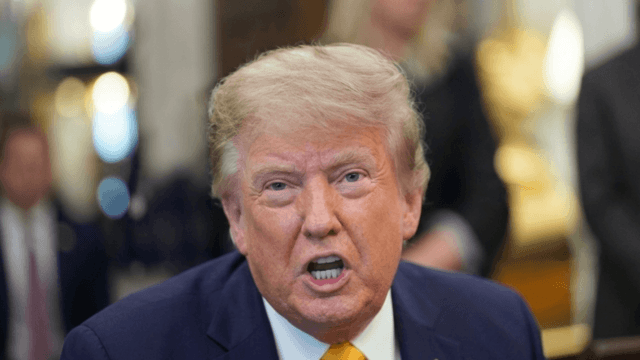
Within three months of taking office, US President Donald Trump signaled the start of a trade war with his aggressive tariffs on goods from many countries, raising concerns about global economic growth. The turmoil spread to stock markets around the world, reflecting widespread uncertainty.
Trump’s reciprocal tariffs have since dominated global headlines in 2025, including in Thailand.
The initial so-called “reciprocal tariffs” targeted imports from about 90 nations. These tariffs are set above a 10 per cent baseline tax on all exports to the US.
A shock for Thailand
Thailand was hit hard by the US move, as Thai exports faced tariffs as high as 36 per cent. Contrary to widely accepted wisdom, Trump boasted that his “Liberation Day” tariffs would be paid by the exporters and not American consumers.
The reciprocal tariff policy was designed to retaliate against countries deemed to be taking advantage of the US by imposing high tariff rates, manipulating currencies, and erecting non-tariff barriers against US goods, according to the Trump administration.
For instance, the US government accused Thailand of having an effective tariff rate of 72 per cent on US goods, a figure calculated from tariffs, currency manipulation and trade barriers faced by US exporters.
"Reciprocal. That means they do it to us and we do it to them," Trump said in his remarks on April 2 while announcing the new policy.
The reciprocal tariffs also aimed to reduce the US’s large trade deficit, which hit a record $918.4 billion in 2024. Thailand ranks 11th among US trade partners with a trade surplus of about $45 billion, according to the US Trade Representative (USTR) Office.
Thai-US trade relationship
According to the website of the USTR, Thailand is an important trading partner and ally of the United States, with diplomatic ties dating back to 1833 through the Treaty of Amity and Commerce.
The US and Thailand meet regularly under the 2002 bilateral Trade and Investment Framework Agreement to address outstanding bilateral issues and coordinate on bilateral, regional and multilateral matters. Significant trade barriers are detailed in the 2024 National Trade Estimate Report.
In 2024, US goods and services trade with Thailand were valued at around $88.3 billion, up 13.6 per cent ($10.6 billion) from 2023.
● US total goods trade (exports plus imports) with Thailand totaled $81.2 billion in 2024
● Goods exports to Thailand amounted to $17.9 billion, up 15 per cent ($2.3 billion) from 2023
● Goods imports from Thailand were valued at $63.3 billion, up 12.6 per cent ($7.1 billion) from 2023
● Goods trade deficit with Thailand was $45 billion in 2024, an 11.7 per cent increase ($4.8 billion) over 2023
● Total services trade with Thailand was valued at $7.1 billion in 2024
● US services exports to Thailand totaled $3.5 billion, up 12.9 per cent ($397 million) from 2023
● Services imports from Thailand were valued at $3.6 billion, up 27.2 per cent ($773 million) from 2023
● Services trade deficit with Thailand totaled $140 million in 2024, compared to a surplus of $236 million in 2023
The Thai Commerce Ministry noted that the US was Thailand’s largest export market, accounting for 18.3 per cent of total exports last year. This significantly contributed to Thailand’s hard currency earnings, strengthening its international reserves and providing a buffer against external shocks.
Tariffs and trade negotiations
On April 9 Trump paused the new tariff implementation, allowing a 90-day window for trade negotiations before the high tariff rates would take effect. US importers rushed to bring in Thai goods ahead of the new tariffs, resulting in double-digit export growth to the US market—12.8 per cent—in the first six months of the year.
Tariffs have evolved into a political tool for the Trump administration. When Thailand and Cambodia were involved in a military clash in July, Trump threatened to hike tariff rates on both countries if they did not cease fighting.
Trump leveraged tariffs to broker a ceasefire, and reduced tariff rates on Thailand and Cambodia to 19 per cent on August 1 after the peace deal. However, renewed conflict at the border in December prompted the Trump administration to threaten an end to ongoing trade talks and to increase tariffs again.
The US holds significant leverage over Thailand in trade negotiations. A Thai official disclosed that the US had presented Thailand with a long list of demands to satisfy American interests.
These included a zero tariff on US goods and purchase of US farm, industrial and energy products.
The previous Paetongtarn Shinawatra government had pledged to purchase Boeing planes and natural gas, while also agreeing to reduce tariff rates on other US goods to nearly zero for products covered under free trade agreements with other countries.
However, trade negotiations stalled and were suspended by the US in mid-November after Thailand announced it would suspend a peace declaration with Cambodia, citing violation of the agreement by Phnom Penh.
Trump’s tariff threats prompted US importers to accelerate purchases of Thai goods ahead of potential high tariffs, boosting exports in the first half of the year.
The subsequent reduction of tariffs to 19 per cent gave Thailand an edge over competitors facing higher rates. US importers shifted from some Chinese goods to Thai products, as Chinese goods were subject to a 45 per cent tariff rate.
Transshipments will face a 40 per cent tariff, and some observers believe China may be using Thailand and other countries as alternative routes for exports to the US to circumvent higher tariffs.
To date, there has been no progress in Thai-US trade negotiations regarding rules of origin for goods.
Impact on the Thai economy
Amid an economic slowdown and uncertainty in global trade spurred by Trump’s tariffs, the Bank of Thailand’s Monetary Policy Committee cut the key policy rate by 0.25 per cent to 1.25 per cent on December 17, aiming to support the economy.
The central bank projects economic growth for 2025 at 2.2 per cent, 1.5 per cent in 2026 and 2.3 per cent in 2027. Growth in the second half of the year decelerated due to manufacturing sector issues, fewer foreign tourists and floods in southern provinces, all of which may further impact the economy early next year.
“Economic growth next year will slow down due to decelerating consumption and the impact of US tariffs on exports,” according to the central bank statement.
“Looking forward, be aware there may be additional tariffs from the US,” the statement cautioned.
A leverage for peace-making
Trump is likely to continue using tariffs and trade negotiations as leverage to mediate peace deals.
“The US will use its leverage on tariff negotiations to force Thailand and Cambodia to go back to the peace declaration,” says Anusorn Tamajai, dean of the University of Thai Chamber of Commerce’s School of Economics.