


Thailand's Minister of Finance Ekniti Nitithanprapas today unveiled the "Bangkok Blueprint," a landmark multilateral framework designed to combat transnational financial scams that drain an estimated $1 trillion annually, or 3% of global GDP, from the world economy.
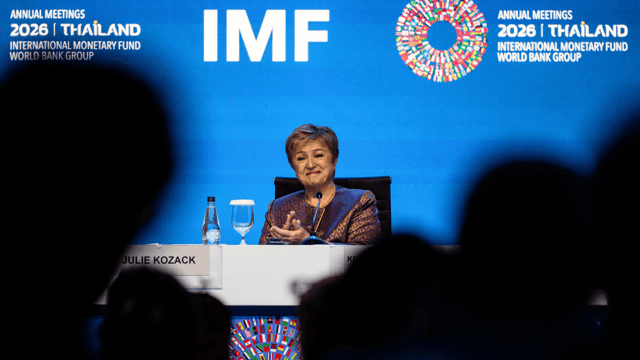
Speaking at the opening of a high-level panel titled "Bangkok Blueprint for Fraud-Resilient Financial Services" during the 2026 Annual Meetings of the International Monetary Fund (IMF) and the World Bank Group at the Queen Sirikit National Convention Center (QSNCC), Ekniti stressed that digital fraud has evolved from simple email phishing schemes into sophisticated operations powered by AI deepfakes.
With victims in one jurisdiction, perpetrators operating from another, and illicit funds laundered through third countries, traditional national responses are no longer sufficient, he noted.
The newly introduced framework establishes three core principles for international collaboration:
- Whole-of-System Approach: Combating fraud requires coordination across the entire digital ecosystem, including telecommunications providers, digital platforms, and financial institutions, rather than placing the burden solely on banks.
- International Cooperation: Building on Thailand’s role as the host of the Annual Meetings, the initiative calls for stronger cross-border partnerships and information sharing to eliminate jurisdictional blind spots.
- Practical Implementation: Designed for flexibility, the framework allows individual countries to adapt guidelines to their own legal systems while contributing data and lessons learned to global standard-setting bodies.
Complementing the framework, the release of "Bangkok Blueprint in Action" highlights practical case studies and policy lessons from Hong Kong, Malaysia, Singapore, and Thailand.
Domestically, Thailand has advanced its anti-fraud efforts through the "Connect the Dot" initiative, linking data across agencies to identify complex fraud patterns more rapidly.
Meanwhile, the Bank of Thailand (BOT) proposes five pillars for digital trust.
BOT Governor Vithai Ratanakorn joined the high-level discussion alongside international financial leaders, including IMF Managing Director Kristalina Georgieva, World Bank Group Managing Director and Chief Financial Officer Anshula Kant, National Bank of Rwanda Governor Soraya Munyana Hakuziyaremye, and Bank of England Governor Andrew Bailey.
Vithai emphasised that while digital finance drives economic growth, efficiency, and financial inclusion, it has simultaneously introduced new systemic vulnerabilities.
Global cyber fraud cases have nearly tripled over the past decade, with Asia accounting for 67%of worldwide fraud losses in 2024.
In Thailand, financial fraud losses fell from over 43 billion baht in 2024 to 32 billion baht in 2025, dropping further to over 9 billion baht in the first half of 2026, a decline attributed to tighter, synchronised law enforcement.
To secure the future of digital transactions, the BOT introduced its Safe and Inclusive Digital Finance (SIDF) agenda, anchored by a "Bangkok Blueprint" operational matrix built on five key pillars:
1. Strengthening Legal Foundations: Establishing clear national accountability and granting adequate regulatory powers.
2. Upgrading Fraud Management Lifecycles: Integrating safeguards from initial product design to active detection and fund recovery.
3. Leveraging Existing Frameworks: Enhancing the enforcement of risk management standards.
4. Expanding Collaboration: Fostering timely domestic and cross-border information sharing.
5. Promoting Consumer Protection: Ensuring long-term public trust in digital financial ecosystems.
Highlighting the growing threat of Authorized Push Payment (APP) scams and illicit money laundering where scam proceeds are frequently converted into gold, foreign currency, or digital assets like Tether (USDT), Vithai outlined recent regulatory measures.
The BOT has stepped up monitoring on cash withdrawals exceeding 5 million baht, tightened regulations on foreign exchange businesses, and collaborated closely with the Securities and Exchange Commission (SEC) to police digital asset ecosystems.
Furthermore, a new financial sector framework launched in September aims to prevent Thai financial institutions from being exploited by illicit networks.
"True resilience in digital finance requires synchronised execution, trust-based cooperation, and continuous international partnership," Vithai concluded. "As digital finance continues to innovate, security and resilience must evolve hand in hand."