


Sediment from the Salween River has been found to contain high levels of arsenic, posing a serious threat to benthic organisms that serve as food for fish and other aquatic species, according to the Pollution Control Department.
Tributaries of the Salween River, such as the Nam Yuam, Nam Pai and Mae Sam Laeb rivers, were also found to be contaminated with heavy metals above standard levels, the department said.
The department’s Chiang Mai office conducted a study of the water quality of these rivers between August 17 and 21 by collecting sediment from six locations for laboratory tests.
The test results showed high levels of arsenic at all six locations, posing a serious threat to benthic organisms in areas from Mae Sariang district to Sop Moei district of Mae Hong Son province. Arsenic levels were measured at 54-56 milligrams per kilogram.
The standard level of arsenic considered safe for benthic organisms is 10 milligrams per kilogram.
Threats to benthic organisms could affect fish populations in the rivers, causing their numbers to decline, although the fish remain safe for consumption.
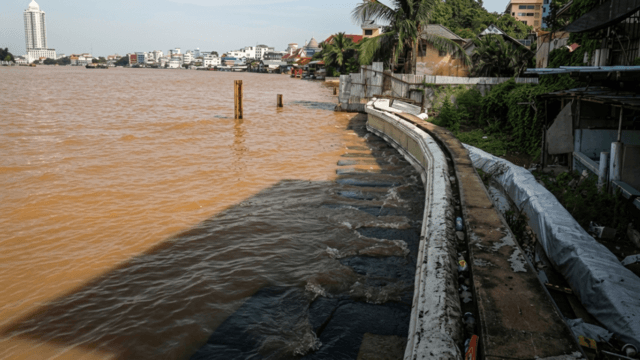
The Pollution Control Department also found that the Salween River and its tributaries had turned reddish brown. However, tests of sediment collected from the Salween River showed that levels of heavy metals were within standard limits, except for arsenic.
File photo: A Pollution Control Department staff member collects water from the Salween River for arsenic testing.