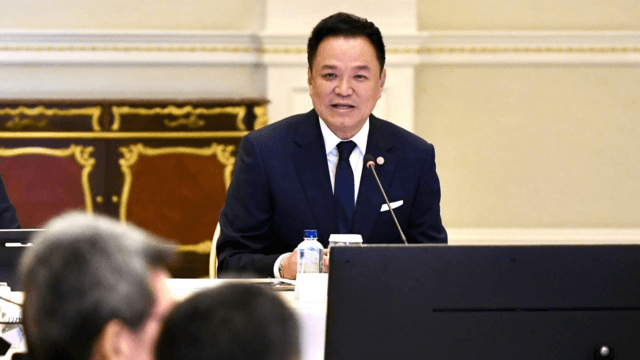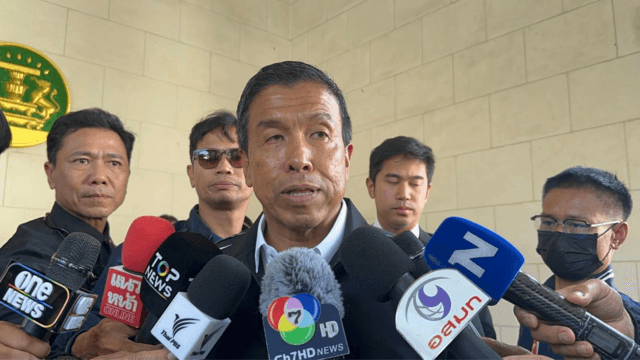



Last week’s ruling by the Constitutional Court, to remove Srettha Thavisin as prime minister, came as a major political surprise to most people, but for some political scientists it should also be seen as having a silver lining for Thai politics, which is fraught with political misdeeds and corruption.
Breached ethical standards
On August 14, the Constitutional Court voted 5:4 to remove Prime Minister Srettha Thavisin from office, after finding him guilty of gross ethical misconduct over his appointment of former convict Phichit Chuenban as prime minister’s office minister.
The court found the appointment to be a serious breach of integrity. This decision was based on the well-known fact that Phichit had been convicted of contempt of court, over a bribery attempt, by the Supreme Court’s Criminal Division for Political Office Holders and served a six-month prison sentence. This conviction means Phichit is ineligible to hold ministerial office.
The prime minister was fully aware of Phichit’s imprisonment and the potential qualification issues that could arise if he were appointed as a minister. So, Srettha consulted the Council of State.
“The prime minister should have used his judgment, because integrity is an important general principle. The appointment of Phichit, despite the fact that his name had previously been withdrawn from the cabinet list, indicates that the prime minister lacks “evident integrity” and breached ethical standards,” said the court.
On the same day, after hearing the verdict, Srettha said he respected the court’s ruling and, although he is disappointed with it, he insisted that he is a man of integrity.
Meanwhile, Parit Wacharasindhu, Party-list MP of the People’s Party, the reincarnation of the dissolved Move Forward Party, has expressed concern over and disagreement with the Constitutional Court’s ruling.
While he said that the party is supportive of the concept that politicians must have integrity and observe good political ethics, he pointed out that people have varying perceptions of ethical issues.
“If an act of ethical misconduct is not clear-cut corruption or an irregularity which is already covered by the law, a political ethical issue should be judged by the people,” claimed Parit at a press conference held in the aftermath of the court’s ruling.
Different perceptions of ethical issues
Many political analysts agree that the split decision among the nine constitutional judges, with four holding a different view from the other five, highlights the subjective nature of ethical judgments.
They point out that the fundamental question is how to establish a common standard with the Constitutional Court's role in adjudicating, based on constitutional law, precedent and rigorous ethical principles.
Past rulings have shown that some cases would not have had such severe consequences if the accused had been fully aware of ramifications of their actions, especially with regard to ethical issues.
Nonetheless, instead of strictly abiding by the law and upholding ethical standards, they opted to challenge the system, hoping to get away with it. The appointment of Phichit Chuenban, a former convict, is a perfect example.
Now, the Charter Court has set a clear legal precedent that immorality among politicians is unacceptable, as they are expected to adhere to higher ethical standards than the general public.
A new political standard
In the eyes of prominent law scholar Dr. Jade Donavanik, in spite of all the criticisms, the Constitutional Court's ruling has established a new, higher standard in politics.
Dr Jade believes that this is the start of a new dawn in Thai politics. He explained that “although this new standard has not yet become the norm, if the Court continues to issue similar rulings, it will establish a clear precedent.”
Ultimately, even if it is not explicitly stated in the constitution, it becomes customary law (through precedent), he added
Seventeen years have passed since the Constitutional Court delivered its first ruling. Since then, similar cases, including the dissolution of political parties and the disqualification of prime ministers, have occurred.
It seems, though, that the people involved are yet to learn from the mistakes of others. He explained that the development process is lengthy, due to the low moral standards in Thai society.
"The more society is indifferent to goodness, the longer it takes. Therefore, a timeframe of 10 to 20 years is normal.”