


Campaigning NGO iLaw has criticised the Election Commission (EC) for acting like a court by referring only 77 of 427 suspects in the 2024 Senate election fraud case to the Supreme Court.
It said the EC should have continued investigating instead of deciding that there was not enough evidence against the others.
The criticism came after the EC voted by a majority on Monday to refer 77 suspects to the Supreme Court’s Election Cases Division for further proceedings. The group comprises 26 sitting senators, 36 people eligible to vote in the Senate election and 15 other individuals.
No ministers, MPs or Bhumjaithai Party executives were among those referred.
iLaw said the outcome was not surprising, given that the current EC members were approved by the Senate and that the senators themselves have alleged links to political figures.
The organisation, however, said the decision to prosecute 26 senators showed that the EC’s investigation had uncovered evidence of fraud in the 2024 Senate election.
iLaw argued that the alleged scheme could not have involved only a small number of people, given its scale, and accused the EC of examining the suspects individually rather than looking at the overall pattern of the alleged scheme.
iLaw also accused the EC of overstepping its role by acting like a court.
It said the EC’s role was to investigate allegations of fraud in the Senate election and, where there was sufficient evidence, refer the cases to the Supreme Court for a ruling.
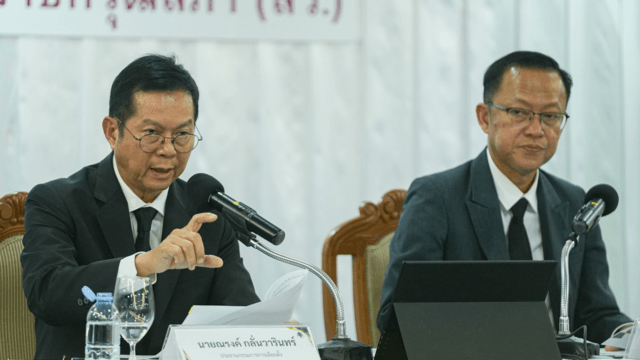
iLaw referred to EC Chairman Narong Klarnwarin’s explanation that some witnesses were considered unreliable, that their statements were inconsistent and that investigators had found no other evidence supporting their allegations.
The organisation said this should not have been a reason to stop pursuing the cases.
According to iLaw, by refusing to refer the remaining suspects, the EC had also denied the Supreme Court the opportunity to examine additional evidence and prevented the public from seeing how the cases would be handled in court.
iLaw said it would gradually release information from the investigation files concerning people who were not referred to court.
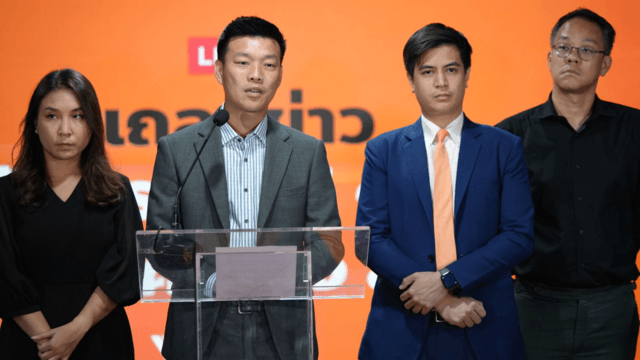
Main photo: iLaw director Yingcheep Atchanont (Centre)