


October 9, 2025: Diplomatic difficulties multiply when national dignities and territorial disputes featuring different maps are involved.
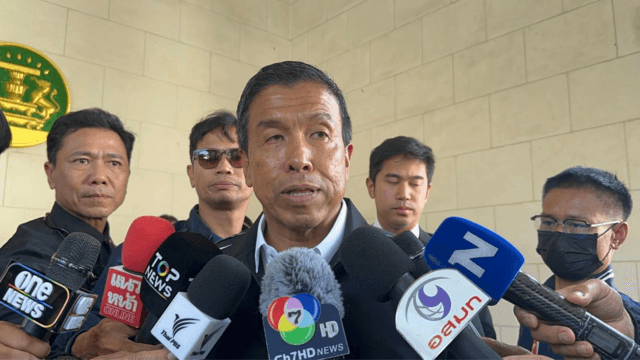
Bangkok primarily wants four things if a solid peace deal is to be struck with Cambodia. None of the four demands is easy to accept.
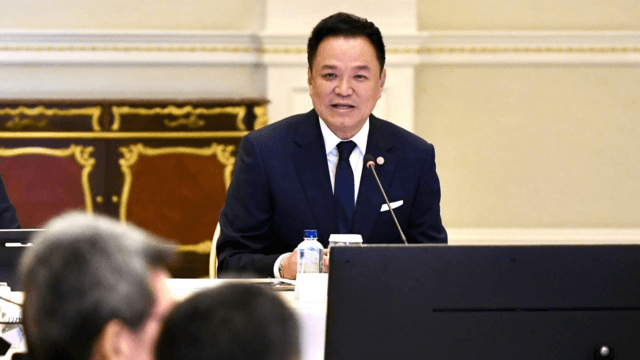
Thailand will inform US President Donald Trump, heavily presenting himself as a peace broker coincidentally with the Nobel Peace Prize announcement drawing very near, of the four preconditions, according to Thai Prime Minister Anutin Charnvirakul.
Let’s go over the Thai demands one by one.
First, Cambodia must withdraw all its troops from the border areas with Thailand. This is arguably the easiest of the four, but the Cambodian government can always ask “What’s wrong with placing our soldiers anywhere on our own land?”
Second, Cambodia must remove all Cambodian settlers from Thai territory. Doing that would mean Cambodia accepts that its people have been living illegally on Thai soil in blatant violation of the Thai sovereignty.
Third, Cambodia must earnestly suppress scamming operations on its land. Again, accepting this precondition would be tantamount to admitting that international scamming has existed on the Cambodian soil with Phnom Penh turning a blind eye.
Fourth, Cambodia must cooperate fully with Thailand in mine clearance along the shared border. Anyone who wrote this precondition probably didn’t read the news. Cambodia always vehemently denied that landmines were ever planted on the Thai soil. And, again, “What’s wrong with having landmines placed in our own territory?”
(All this doesn’t mean Thailand’s preconditions would negatively affect peace attempts. It only means the Cambodians would more or less put forth similar demands. In other words, “Admit your wrongdoings first and we can talk.”)
Trump’s real Nobel test
October 8, 2025: The US leader’s challenge isn’t about how to win the Nobel Prize. It’s how to react if he loses.
The world will see very soon. Knowing Donald Trump, everyone must be crossing his or her fingers. If he wins the Peace Prize, some may heave a sigh of relief, while others may scream, or laugh, or laugh and scream at the same time. If he misses it, well, nobody knows what is going to happen.
He can be gracious in defeat, or he can be a (relatively) subdued sour loser, or he can be a totally bad loser.
It’s anyone’s guess. What is a lot more predictable is what the Nobel Committee will decide. It’s true that some previous Peace Prize decisions were controversial, but they will definitely pale beside a Trump selection. In addition to the Gaza veto, he has sent warplanes into Iran without declaring a war, to start with.
Are those two things relevant and how? Trump is saying he’s brokering a peace deal between Israel and the Hamas, but critics are asking if it is too little and too late. Moreover, the crux of the matter is the “two-state” proposal that would give Palestine a lot greater independence and pride but which Trump has sidestepped while making the “peace” efforts.
As for Iran, he must be arguing that sometimes a little war is needed if the world is to get long-lasting peace. His critics say there is no way you use bombs to get a peaceful world, and that you can’t make threats to achieve a long-lasting harmony.
“Sustainability” is key. A prerequisite for the Nobel Peace Prize is sustainable peace. Anti-Trump critics are maintaining that nothing he has “achieved” will last.
How the Nobel judges see all these will be known this week. We will also know whether toys will fly out of the pram and possibly what kind of toys.
Danger of too many cooks
October 7, 2025: Sometimes “Democracy doesn’t work in the kitchen” applies to politics, too, but the French can’t help it.
Just when they need someone to bang the table and say “We are going to do it this way”, they instead send their latest chef packing. Sébastien Lecornu was their fifth prime minister in two years and he had not even started working yet.
To be fair, though, he, too, must share the blame for the spiraling political chaos following his record resignation this week. Every Cabinet line-up gets criticised. Threats of parliamentary parties torpedoing key bills are common even in the most stable politics. Anyone other than him, anyone in France, would face the same problems. He should have known that when he accepted the job with the support of President Emmanuel Macron. Lecornu could have said No. If he sincerely did not know what he was in for, probably France has dodged a bullet thanks to a very naïve man quitting early.
France is badly fractured politically, and a snap election, a likely alternative left for Macron, will very likely result in another hung Parliament, where everyone is eager to play a big role in the main course. There is a great possibility that what Lecornu has complained before the whole nation will materialise again.
In a brief speech outside the prime minister's residence which he had only stayed for less than a month, Lecornu bemoaned "partisan appetites" of political factions, who he said "are all behaving as if they had an absolute majority".
"I was ready for compromise but all parties wanted the other party to adopt their programmes in their entirety," he said.
Another alternative is Macron’s resignation that would trigger a presidential election and draw the curtain on the “Macronism”. (In France, the president appoints the prime minister, who answers to Parliament and who picks the Cabinet. In a rough analogy, the president is the chairman and the prime minister is the CEO, or the prime minister is the chef and the president is the restaurant owner.)
The third alternative is for Macron to appoint another chef. Problem is Lecornu was already largely considered his last resort, someone who can make the surging right and left-wing factions in Parliament work together while keeping ideologies in their lockers for a while.
Lecornu has failed. A lot of analysts are thinking Macron has failed, too. Many are calling for a snap election, which may give the chef more authority or, on the contrary, increase everyone’s temptation to cook.
That October 6 and this October 6
October 6, 2025: The difference is stark.
Thailand is marking one of its gloomiest days under totally ironic circumstances.
Half a century ago, political, social, economic and ideological factors divided the Thai public into the socialist-minded left on one side, and conservatives, the right, on the other. The former was anti-West and the latter looked for western support. Those were the days when capitalism was demonised by protesters and communism or Marxism were learning materials of young anti-state Thai activists, many of whom idolised China and the Soviet Union.
Both sides’ conflicts culminated in the tragic storming of the Thammasat University where many people died.
Today, capitalism is associated with democratic freedom whereas communism goes hand in hand with dictatorship. To think that many October 6, 1976 protesters went to the jungles to join communist “comrades” in order to seek “equality”, and life with the communists was once deeply romanticized is mind-blowing.
Absurdity aside, some universal truth never changes about October 6. It is the biggest evidence of how radicalism or extremism can tear social fabric apart. International politics played a significant role then and it still does now. At the time, analysts talked about such things as “the next domino to fall”, referring to an intense fight for global dominance, which led to absolute mistrust at all global levels. Now it is also about keeping the domino, and how Thailand marks October 6 must be watched internationally.
To mark October 6, 1976 is ironic in itself. While Thailand needs to remember one of its darkest days, it actually wants to lock October 6 up in the box of unwanted history. What happened was so repugnant that many are convinced that it can never take place again. Others, however, believe that its causes are great escape artists.
It could be tough guy vs gentleman in next election
October 5, 2025: The border dispute with Cambodia may shape Thai political parties’ election platforms.
The People’s Party versus Bhumjaithai is expected to be the highlight of the race, and both camps have significant differences when it comes to how aggressive Thailand should be regarding Cambodia.
Pheu Thai will be another big party torn between polite and bold treatments of the Cambodians. The second biggest party’s situation is further complicated by the controversial relationship between the Shinawatra and the Cambodian political elites.
Much will depend on the general sentiment in Thailand when the election is nearer. As of now, the Thai public seem to demand a “tough guy” approach, a situation that apparently favours Bhumjaithai, led by Prime Minister Anutin Charnvirakul.
If the situation calms down substantially, the People’s Party’s softer, albeit more accommodating, stance can reduce Bhumjaithai’s advantage on the issue.
So, as far as Anutin is concerned, he may be thinking four months is too long.
Bangkok named in bombshell 9/11 claims

October 4, 2025: Two alleged perpetrators of the biggest terrorist attack on American soil in 2001 travelled under CIA-facilitated visas from Kuala Lumpur to Bangkok and from there they entered America, before 9/11 happened, claimed one of the most influential media figures in the United States.
The Young Turks media group, with more than 6 million subscribers on YouTube, said Tucker Carlson’s claims were “huge” and must be investigated. Carlson is one of America’s most vocal and influential journalists with a tenacious hard-hitting style and widespread connections. Formerly plying his trade in the mainstream media, he is now more of a social media influencer with a massive following.
His 5-episode 9/11 docuseries is being released to mark the anniversary of the shocking event in which thousands of Americans died and which changed US personal privacy and world diplomatic affairs and measures almost beyond recognition. The docuseries also represented the first time that a well-rocognised journalist has addressed a taboo subject of who actually perpetrated 9/11.
Millions of people have watched the docuseries on his YouTube channel and The Young Turks newscasters’ clips summarising it and commenting on it. Calls for the US government to clear the air are getting louder. Liking the unfolding development are the 9/11 “Truthers” who had undergone much condemnation for promoting a “conspiracy theory” that the Al-Qaeda group was just a mere scapegoat.
Truthers’ claims were more shocking. They blame it directly on “insiders”, saying buildings were brought down by controlled demolitions that required weeks if not months of preparations. But the “conspiracy theorists” will now be satisfied with the 9/11 “mystery” getting bigger attention, reinvestigation, and a big-name media personality firmly on the issue instead of devalued little voices.
While Carlson shockingly declared that the world knew little about 9/11 and possibly had been lied to, his bombshell content in fact leaves open a slight possibility that it could be an honest mistake in which the CIA recruited wrong “informants” who turned completely against America and unleashed terror in the process. He also practically left a little room for the likelihood of the CIA not telling the FBI everything simply because the former was too cautious.
But his claims were a big bombshell all the same, partly because what should have been included in the official government report was not. Having a former FBI man as his main source, he said there was clear evidence two alleged 9/11 suspects got their US visas apparently with the help of the CIA and, after attending a gathering in Malaysia, they flew to Bangkok before heading to America.
The Young Turks newscasters support asking “legitimate questions” and call for an end to the official “knee-jerk reaction” of labelling anyone who do so a “conspiracy theorist”. They say the 9/11 incident has spawned countless questions that should be answered by the US authorities and those who asked them only wanted proper answers instead of being told to “shut up”.
Such a furious reaction only fueled skepticism, especially at a time when America’s reputation is under a tough scrutiny, The Young Turks pointed out.
One of the questions concern Building 7, a tall structure in the World Trade Centre complex that a lot of people did not know also collapsed to its footprints on that fateful day without getting hit by a plane.
A government report blamed office fire, caused by burnt objects from the Twin Towers. The 9/11 Commission report said very little about Building 7.
A small group of Israelis allegedly recording building collapses somewhere near the scene were also mentioned in the docuseries, and The Young Turks warned that failure to address Carlson’s questions would fuel doubts about the US-Israel relationship especially in the Gaza affair. Such failure would amplify the question why America steadfastly supported Israel no matter what, it is said.
Anutin on American tariffs and Thai divide
October 3, 2025: The new prime minister is subtle about US import taxes and clearer on local political polarisation.
Giving a speech at an economic seminar at the Queen Sirikit National Convention Centre today, Anutin Charnvirakul politely suggested that if America lowered the taxes even more, it would be easier for both countries to talk about “other things.”
He thanked the Paetongtarn administration for bringing it down to 19% after its “utmost efforts”, but subtly said that the lower the better.
“The United States wanted both of us to reach an agreement that was mutually beneficial, be it for the sake of the economy or security,” he said. “I think all conditions can be discussed. Whether we can accept all of them is another matter. To me, if the tariffs are lowered further, it will make our decisions easier on their other advices.”
He chose his words carefully. But what he meant by “other advices” sounded like it did not concern trade.
He was relatively less ambiguous when talking about political divide, saying if Thais really wanted to end the national polarization, politicians will get the message and act accordingly.
Thailand’s economic progress is less tied to politics than everyone thought, he said.
“Thailand does have a future,” he said. “In politics, there have been disruptions, but if only we could just let politics take care of itself. All Thais need is unity and politics will take care of them. When people in the country do not need conflicts, politicians will dare not have (cutthroat) conflicts. Don’t let politicians lead you. You must lead politicians.”
As for himself, “I must have done good things (in the past life) and I will use this opportunity to do my best.”
Not too bad. What remains is walk the talk.
Govt shutdown: Political infamy with hair combed

October 2, 2025: What do we creatively call holding the public hostage? Government shutdown, that is.
The US shutdown is nothing serious, but the action betrays prescribed obligations of politicians on both sides of the aisle all the same. If you are a politician, you give your enemy inconveniences, but any effort to disturb your enemy must not affect the public, period. For this, both Republicans and Democrats in the US Congress have utterly failed.
And the shameful irony is that what led to the shutdown were proclaimed attempts to help the people. Both sides have argued about healthcare spending, and the Democrats have refused to back a Republican plan that they claim would make it harder for Americans to afford healthcare.
On the surface, such showdown over Obamacare (Democrats want immediate assurance of substantial subsidies but cost-cutting Republicans are saying we will debate that later) is over public interests.
Truth is it’s an ego fight. Every advocacy and non-advocacy of any programme can be characterised as “for the people”. The bottom line is that a political clash between the disagreeing politicians shall never cause grievances to the public.
Imagine a conflict between the Thai government and the opposition over the Entertainment Complex plan results in many state services halting and many state employees not getting their much-needed salaries.
Imagine mom and dad fighting and the kid having to walk to school, getting hit by a car on the way.
US President Donald Trump has blamed his Democratic rivals for the current public misery stemming from unsettled healthcare disagreements affecting government spending bills. They are blaming him back.
Both sides should be blamed, anyway, because the American public have nothing to do with their conflicts and failures to bargain or who flex what muscles.
Both parties had come up with a nice name for the betrayal of public obligations, though. They have been calling it a government shutdown, which happens once in a while in what some call “the world’s largest democracy” where every right of the citizens “is respected.”
US at crossroads on Israel

October 1, 2025: America and Israel are being pulled away from each other by their own political gravities.
Their youths, who will grow up to control politics, are polarised on Gaza, polls unambiguously show. Signs of Washington getting increasingly restless over what’s happening in the territory are in response to that, as well as to the gradual change of heart in Europe and to the growing ambivalence among older American politicians themselves.
Politico, a media organization with an American root whose content is always indicative of how political winds blow in the United States, has said in an article this week that an “entire generation” of Americans is turning on Israel. Which is in the opposite direction of how the new Israeli generation is thinking, it added.
American and western media growing more and more critical of Israel is no surprise. The increasing isolation of Israel also explains why Donald Trump will say one thing today only to contradict himself tomorrow.
According to Politico, at an April 2024 rally, Trump joined in with a crowd that was chanting “Genocide Joe,” originally a left-wing chant aimed at protesting Biden, whereas a month earlier during a Fox interview he criticized Biden for being “soft” and urged Israel “to finish the problem” in Gaza.
Even Politico virtually admits that when it comes to Israel, the Democrats and Republicans are not that different. Both camps, however, will soon have to review their policies, and Israel will be an issue that could make or break presidential ambitions in their next electoral clash.
And while the Republicans and Democrats review their Israel policies, they will keep what Politico said in mind. “Young people — on the left and right — are growing increasingly skeptical of Israel.”
They will also have to keep in mind that a virtually entire young generation of Israelis is supporting Netanyahu, meaning that whatever Israel is, it will unlikely change anytime soon.
But to Trump, the first test will come very soon, as the United Nations is pushing on more proper independence for Palestine. What his government has to say about it will not escape the attention of young voters in America, anxious to see which one between the Republican and Democratic parties has a more acceptable Israel policy.
Trump moreover is having to deal with media prejudices in his country. Some outlets not critical of Joe Biden when he was the American president allowing Israel to do what it did in Gaza have highlighted Palestinian plights like never before.
This paragraph from Politico tells much about complications and hypocrisies arising from the controversial US-Israel relationship: “The nationwide campus protests that sprung up against the war in Gaza have been the most obvious signs of youth discontent with US support for Israel’s war, and that largely stemmed from energy on the left. But such sentiment has been bleeding into the right, in part spurred along by Trump, who has made real inroads with younger voters and who was happy to seize on disaffection with President Joe Biden’s Israel policy.”
Those young Americans may call themselves “liberals”, but it’s harder than ever to tell liberalism and conservatism apart these days.
For example, in America, supporting Israel and you can be considered a conservative. Charlie Kirk, the slain leading pro-Trump activist, sent a private letter to Israeli Prime Minister Benjamin Netanyahu shortly before he died, offering to help push back an “information war” that he (Kirk) thought Israel was losing.
It is safe to say that if you are an American and you support Palestine, you can call yourself a liberal.
Elsewhere, it is not necessarily the case. In Thailand, for instance, anti-Israel voices coming from the country’s “conservatives” are noticeably louder than those from among the so-called “liberals”. In other words, if those pro-Palestine young Americans come to Thailand, Thai conservatives will welcome them with open arms.
(That’s one thing. Another thing concerns how time affects the meanings of the words. While “liberal” gives out the sense of newness, a “liberal” idea can actually get old someday. A conservative idea, on the other hand, can be long forgotten and then re-emerge or become reborn and be considered a liberal view in the future.)
As to which doctrine is more open to different thinking, let’s just say both camps have similar degrees of tolerance and intolerance. We have seen both “conservatives” and “liberals” believing only they are right and others are wrong. (The term “liberalism” indicates more openness than “conservatism”, but constantly there is evidence to the contrary.)
What is a key difference between young people in America and young people elsewhere regarding Gaza. Rebellious American youngsters don’t need Washington’s help for their cause, but many of their foreign counterparts do. Attacking Israel and bemoaning the Gaza atrocity can hurt America too, so a lot of them (foreign “liberals”) have refrained from it. This kind of dilemma has affected the United States’ European allies as well but with the innocent death and injury tolls mounting in Gaza and famine worsening, more and more are finding that they have no choice but snap out of it.
Daily updates of, and opinions on, local and global developments by Tulsathit Taptim