May 2, 2025: It could go down to credibility of evidence and, rarely, how judges “feel” about it.
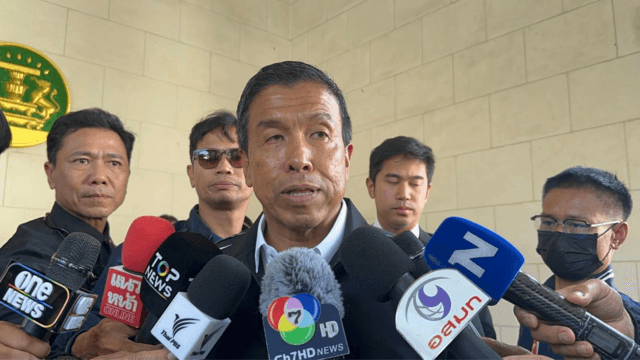
PM’s Office Minister Chusak Sirinil said the Paetongtarn government is not worried about potential trouble concerning the legal treatment of Thaksin Shinawatra, the prime minister’s father. According to Chusak, it was the Corrections Department’s full responsibility which was carried out through established procedures.
In other words, Chusak believes that even if it was decided that Thaksin was not actually jailed, political damage would not be widespread to the point of affecting the prime minister and her entire Cabinet.
“The court’s involvement is good, I think, because this matter can finally be put to rest,” he said. However, Chusak, responding to a reporter’s question, went on to admit that it would be a rare case of official documents versus public feelings.
There are those who think the stay at the 14th floor of the Police Hospital is a form of detention which took place while an inmate was ill, and there are others who believe that the stay was an illegal privilege given to Thaksin, Chusak admitted.
Reading between the lines, the inquiry could feature a showdown between documentary evidence, which is not hard to find to back the former argument, and prevalent feelings that while such evidence may look authentic, it was meant to help Thaksin evade real jail.
Judges often give importance to tangible evidence, and, normally, less attention is given to “feelings”. This case, however, involves overwhelming feelings that something was not quite right in the apparently-lawful creation of evidence.
What were those artefacts doing in US museum?
May 1, 2025: Make no mistake, the “return” was good. But how did they get there in the first place?
This is the news: “Four ancient statues of the Lord Buddha and his incarnation, which were smuggled out of Thailand more than 60 years ago and exhibited at the Asian Art Museum of San Francisco, are to be returned.”
The story, basically the official line reported similarly around the world, went on to describe the process of decision makings leading to the return to the country that owned them more than half a century ago.
It would seem like a noble process if we ignored the fact that something “smuggled” was equivalent to something “stolen” and its return to its rightful owner should not have involved such complicated layer-upon-layer agreements.
Yet it appeared that, in seeking their return, Thailand had to seek help from the US Department of Homeland Security. It’s like a thief broke into your house and your stolen valuables turned up inside the neighbour’s showcase and you have to humbly ask the neighbour to give them back to you.
The neighbour, who must have spent quite a lot of money acquiring the items, then will have two choices. First, the valuables will be immediately returned. No question asked.
Or he or she will go through a lengthy process of answering the following questions: Did we buy stolen goods and put them on display? How come we weren’t aware of that? Should we return them, since they are important to the owner’s religion and culture and we are Christian anyway, and the owner has been crying for its return for years already?
What is the right thing to do, and how quickly should we do it?
Daily updates of local and global events by Tulsathit Taptim