


The National Human Rights Commission (NHRC) says that a hotel project on Phuket’s Rawai Beach will impact the way of life of ethnic Moken people, often referred to as “sea gypsies”, who have been living on the land for generations, before it was recently claimed by a real estate company.
The NHRC also says that the environmental impact assessment (EIA), conducted by the real estate company Baron World Trade, is incomplete without the participation of the Moken people. The EIA was also undertaken before a permit was granted for the hotel project by local authorities.
The commission recommends that the Ministry of Culture and the Princess Maha Chakri Sirindhorn Anthropology Centre declare the disputed area on Rawai Beach to be a cultural protection area for ethnic Moken people.
Wasan Paileeklee, a member of the NHRC, told a press conference today that there is evidence that ethnic Moken people have been settled on Rawai Beach for more than 100 years, as indicated by the birth certificate of a Moken woman.
Moken children also enrolled at Wat Sawang Arom School in 1939 and Moken villagers took part in welcoming the late King Bhumibol when he visited Phuket in 1959, said Wasan, adding that remains of ancestors linked to today’s Moken villagers have also been uncovered on the land where they are now settled.
Lawsuits have been filed against several Moken villagers, demanding their eviction and accusing them of encroaching on land for which the real estate company claims to have acquired land title deeds legally.
In 2017, the Phuket provincial court ruled that the land in dispute, covering 5.28 hectares, belongs to Baron World Trade and is not public land. It ordered the Moken villagers not to obstruct construction of the hotel.
Wasant said the NHRC wants the real estate company and the provincial authorities to hold a public hearing over the disputed land and the hotel project.
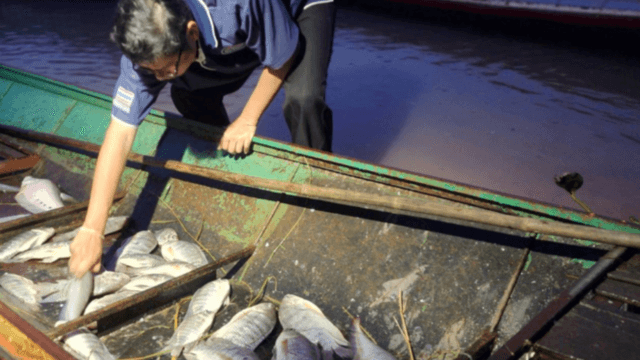
There are more than 300 Moken households on Rawai Beach, most of whom make a living by engaging in small-scale fishing.