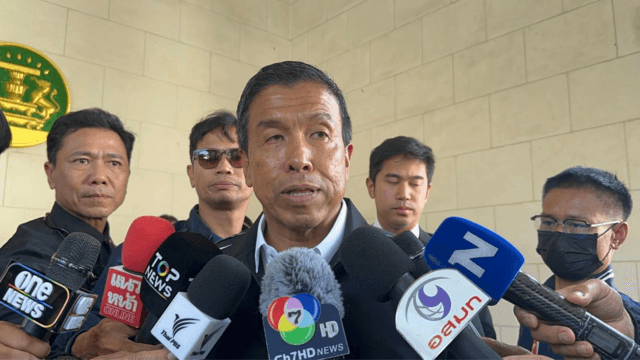



Have you ever wondered how generative AI responds to ‘grey’ questions, like how to cheat money out of a friend? It may respond by saying that this action is unethical and that it cannot provide you with advice on committing such acts, according to Chatchawal Sangkeettrakarn, a researcher for Abdul, a Thai generative AI product being developed at NECTEC.
“There is a guard system in place, to protect against answering unethical questions,” he added.
He said this protection begins when they train the AI with a specific dataset. Usually, the data used is neutral and has been filtered to some extent. It is not certain, though, that all data is clean, given the enormous quantity used to train AI Abdul. Some of it may not be ethical.
The more intelligent the AI is, the greater the risk of generating unethical content,” he noted.
Chatchawal said that, to make AI aware of ‘grey’ areas, they need to feed it a set of problematic data, so that it learns to recognise and avoid generating such content.
He also explained that AI developers typically set up two teams, a blue team, which creates the AI, and a red team, which act as hackers, adding “I try to protect it very well, while the other team tries to penetrate the system, finding ways to make the AI say things it shouldn’t. If they succeed, then I have to fix it.”
It is impossible to completely protect AI from generating less than ethical answers, but they do their best to ensure that Abdul is safe and beneficial for users, he said.
The important thing is that users must also protect themselves, by developing their own AI literacy, the researcher concluded.
Abdul is a Thai generative AI platform, which distinguishes itself from others through its localised insights into Thai culture, soft power, regulations and much more. It is due for public release by the end of this year.