In a major step towards increased engagement on the global stage, the government is seeking full membership for Thailand in the BRICS group.
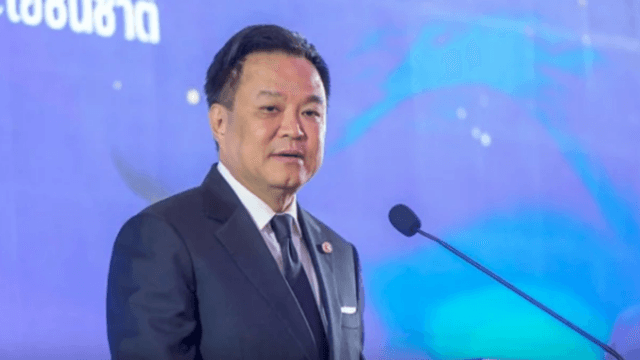
Foreign Minister Maris Sangiampongsa attended the BRICS Summit on October 24 in Kazan, Russia, representing Thailand as a partner country.
The theme of this year’s summit was: "BRICS and the Global South: Building a Better World Together". The three-day summit from October 22-24 was attended by leaders or representatives of 36 countries.
The evolution of BRICS
BRICS was initially an acronym for Brazil, Russia, India, China, and South Africa, an informal grouping of emerging economies hoping to increase their say in the global order, according to the Council on Foreign Relations, the United States-based think-tank.
Established in 2009, BRICS was founded on the premise that international institutions were overly dominated by Western powers and had ceased to serve developing countries.
The bloc has sought to coordinate its members’ economic and diplomatic policies, found new financial institutions, and reduce dependence on the US dollar.
Analysts argue that BRICS has struggled with internal divisions on a range of issues, including relations with the United States and Russia’s invasion of Ukraine. Meanwhile, its growing membership is expanding its clout but also introducing new tensions.
Some analysts warn that the bloc could undermine the Western-led international order, but there is a lot of skepticism about its ambitions to have its own currency and develop a workable alternative to existing institutions.
These face potentially insurmountable challenges, according to the think-tank.
BRICS versus the West
This year’s summit got greater attention as the meeting was held in the third year of Russia’s invasion of Ukraine.
Many analysts saw the summit as an opportunity for Putin to showcase to the West that he was not isolated despite the West imposing heavy sanctions on Russia.
Putin himself has been accused of war crimes and faces an arrest warrant issued by the International Criminal Court.
“The countries in our association are essentially the drivers of global economic growth. In the foreseeable future, BRICS will generate the main increase in global GDP,” Putin told officials and businessmen at the BRICS business forum in Moscow a few days before the summit, according to Reuters news agency.
Putin boasted that the contribution of BRICS countries to the global economy was already higher than the share of the so-called G7, and it keeps growing.
"In 1992, the G7 accounted for 45.5% of global GDP, while in 2022 it accounted for 30.5%. The forecast for 2028 is 27.9%. The share of BRICS countries in global GDP was 31.4% in 2022.
Meanwhile BRICS nations’ GDP growth is expected to reach 33.8% in 2028,” Tass, a Russian state-owned news agency, quoted him as saying.
A statement by Thailand’s Ministry of Foreign Affairs said that Maris was assigned by Prime Minister Paetongtarn Shinawatra to attend the Leaders’.
Meeting of the BRICS Member Countries in the Outreach/BRICS Plus Format or BRICS Plus Summit on October 24 on the invitation of President Putin.
Thailand has reaffirmed its determination to elevate the engagement with BRICS as stressed in a June 2024 letter, expressing its interest in joining BRICS as a full member, according the Foreign Ministry statement.
Maris said that Thailand hoped to join the group in August next year. And Thailand could help forge a link between BRICS and other groups, such as Asean and Asia Cooperation Dialogue.
In 2017, China held the first BRICS Plus mechanism to serve as the highest-level platform for BRICS countries and key developing countries to discuss ways to promote South-South Cooperation and strengthen multilateralism.
Thailand has participated in all three editions of BRICS Plus — in 2017 (Xiamen, China), in 2022 (via video conference hosted by China), and in 2023 (Johannesburg, South Africa), according to the ministry.
Thailand's balancing act in New World Order
“To join BRICS has been Thailand’s strategy since the previous Srettha Thavisin government, aiming to increase economic cooperation,” said General Nipat Thonglek, a former permanent secretary for defence and former adviser to Srettha.
Anusorn Tamajai, dean of the Faculty of Economics at the University of Thai Chamber of Commerce, expressed his support for the government move, saying that joining BRICS would be beneficial on the economic front.
He, however, said that while BRICS wants to balance economic power with the West, it would also have implications for global politics.
The group wants to reform the global economic order and increase the role of developing economies.
The group is also promoting the use of local currencies for trade in order to lower dependence on the US dollar. It plans an alternative financial system and fund raising for country development.
BRICS has even launched its own bank. The New Development Bank, formerly known as the BRICS Development Bank, aims to “support public or private projects through loans, guarantees, equity participation and other financial instruments".
“Regarding foreign policy, it would be in the best interest of Thailand to maintain strategic autonomy,” Anusorn said, adding the country needs to balance its interests in a multi-polar world where US domination has diminished.
This strategy would encourage the US to implement policies that would benefit Thailand, as it does not want Bangkok getting too close with BRICS.
“This would improve Thailand's bargaining powers in negotiating with Europe and the US, leading to a more just globalization,” he said.
Geopolitical risks
Many economists, however, warn of the geopolitical risk for the Thai economy going forward.
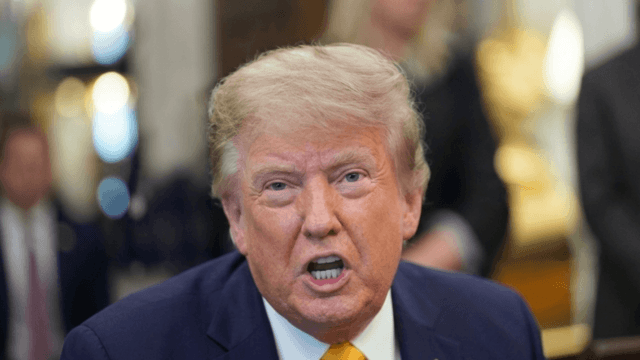
All eyes are now focused on the US presidential election. Many worry about the impact on global trade from a fresh term in office for Donald Trump because of his “America First” approach.
Trump has vowed to increase universal tariff rates by 10-20 per cent and 60 per cent or more on Chinese-made products imported into the US in particular.
The International Monetary Fund has urged global leaders to avoid trade wars. Nobel laureate Paul Krugman warned that high tariff rates as suggested by Trump could trigger retaliation from other countries and then the world would go back to 90 years ago when tariff rates were high globally.
If that happens, he predicted economic chaos that would hurt even big, rich economies like the US and European Union.
“But it could prove catastrophic for smaller, poorer economies,” he wrote recently in The New York Times.
Given such a scenario, Thailand and other Asian countries that have relied heavily on exports for their growth would not be spared. The US is currently Thailand’s largest market, accounting for 18.1 per cent of total exports, according to the Commerce Ministry.
Thailand enjoys a trade surplus with the US but has a large trade deficit with China.
If Thailand becomes a member of BRICS, it would deepen trade and investment with China. But currently, local industries are alarmed by a flooding of cheaper products from China, threatening their survival.
In response to the issue, Anusorn suggested that free trade should benefit all concerned parties based on fair practice.
“The Thai government has to prevent trade partners from dumping their products by selling below production cost, which will hurt local small and medium-sized enterprises,” he said.
The government has to put in place good safety standards, but not erect tax barriers or import quotas because that would make the economy less competitive and hurt consumers though some local industries stand to gain from protectionism, he added.
The BRICS bloc has added four new members: Egypt, Ethiopia, Iran, and the United Arab Emirates. Saudi Arabia, which has been offered BRICS membership, but has not yet formally joined, prompting speculation that it does not want to antagonize its Western allies — mainly the United States.
By Thai PBS World’s Business Desk