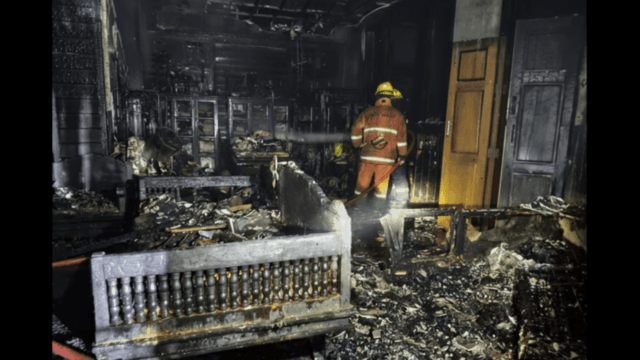



This month’s horrific school bus blaze, which claimed the lives of 20 children and three adults, has once again highlighted the safety crisis on Thai roads, ranked among the most dangerous in the world.
On October 1, a bus carrying 44 passengers on a school trip from Uthai Thani to Ayutthaya and Nonthaburi caught fire on the outskirts Bangkok.
The resulting inferno killed 20 primary school students and three teachers, while leaving three other passengers with severe injuries. This is not the first time that a bus has erupted in flames, causing mass fatalities in Thailand.
Back in 2018, 20 Myanmar migrant workers were killed when their bus caught fire. The frequent occurrence of such deadly accidents has raised concerns about the government’s efforts in enforcing vehicle inspection, curbing risky driver behaviour, and raising public awareness on how respond to emergencies.
Bus safety in Thailand
Sumet Ongkittikul, research director for Transportation and Logistics Policy at the Thailand Development Research Institute (TDRI), said that of the 10,000 buses plying irregular routes, only 5% meet the new standard on non-flammable materials.
“This standard was imposed in 2022, but without any retroactive effect on buses registered before its introduction.”
Sumet explained that the Land Transport Department had been pushing for the new fire safety standard since 2016 but faced stiff opposition from bus operators.
The bus companies complained that fitting their old vehicles with fire-retardant material would be too expensive.
“This is why the standard only applies to new buses or buses that have recently been overhauled,” Sumet said. He warned that hundreds of buses on Thai roads fail to meet the standard and are “ticking time bombs”.
“In other countries, similar standards are applied retroactively to both old and new buses,” Sumet noted.
He suggested that to bring Thailand into line with international best practices, the government could provide subsidies or soft loans for bus owners to upgrade their fleets.
“If buses are equipped with fire-retardant materials, it delays the spread of flames, giving passengers more time to escape.”
Flaws abound
The bus at the centre of last week’s tragedy was an old vehicle registered 54 years ago. Sumet explained that a bus chassis has a life of about 70 or 80 years, but its body usually only lasts for eight to 10 years.
“The body refers to components like the roof, doors and seats,” Sumet explained. “Such parts should be replaced regularly, but in Thailand, this is left entirely up to the owners.”
The Land Transport Department requires buses to be inspected for safety twice a year. However, the quality of inspections is reportedly often poor.
The latest tragedy is a glaring example of this loophole – the bus that caught fire was found to be equipped with no less than 11 compressed natural gas (CNG) cylinders, despite being registered with just six.
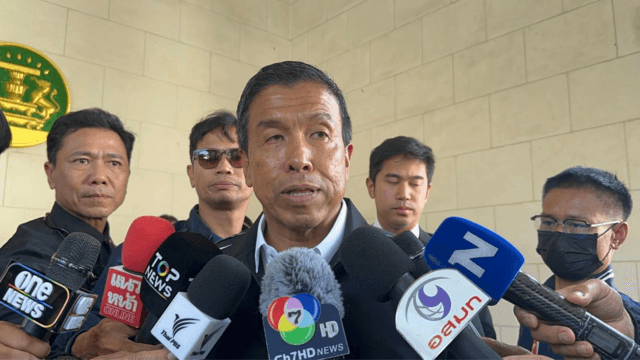
“The bus had been modified well beyond its capacity, putting it at risk of a gas leak,” said Land Transport Department director-general Chirute Visalachitra.
The investigation found that a leaking gas cylinder had indeed contributed to the tragic loss of life. The driver, who initially fled the scene, has now confessed to driving recklessly and causing death.
Response from authorities
Prime Minister Paetongtarn Shinawatra convened an urgent meeting with agencies one day after the accident to discuss road safety.
The Transport Ministry, meanwhile, has ordered inspections of all 13,425 buses running on compressed natural gas (CNG) within 60 days.
It has also pledged to raise safety standards for all non-regular service buses. “We will use this tragedy as an opportunity to revise regulations on safety,” said Transport Minister Suriya Jungrungreagkit, who doubles as deputy prime minister.
The Transport Ministry has also advised the Education Ministry to employ qualified officials to inspect buses for safety before they are chartered by educational institutes for field trips.
“We will also issue a new regulation requiring bus staff to be trained in how to respond to emergencies, so that they can aid passengers in case of accidents,” it stated.
Also in the pipeline is a new rule requiring bus operators to provide passengers with guidance on the bus’s safety features and emergency procedures.
Suriya vowed his ministry would overhaul the entire bus system over the next couple of months to ensure there are no repeats of the October 1 tragedy. Among his first steps was to appoint a committee on safety measures for public buses.
The safety panel consists of experts from various organisations, including the Engineering Institute of Thailand.
‘No accountability’
Dr Thanapong Jinwong, manager of the Center for Road Safety (SEDP), said that while the Transport Ministry has previously set up multiple committees aimed at improving Thailand’s appalling record for road safety, none had led to systematic action or accountability from officials.
“The government should establish an independent organisation with members that have professional knowledge in setting up proper standards and assigning relevant agencies to implement them,” he said.
Thailand ranks ninth in the world for road deaths per capita, with up to 20,000 fatalities reported annually.
On average, 17,914 people are killed on Thai roads each year, with another 10,000 severely injured or disabled. In the past five years alone, 228,740 people have sustained serious injuries in road accidents.
Thanapong said the high rate of road accidents, particularly fatal ones, showed the root causes of the safety crisis remain unaddressed.
He recommended that schools draw up careful plans for study trips, especially those involving young children. “If students out on a school trip are very young, the ratio of students to teachers should be 10:1.
Each teacher should also know what to do in the event of their bus catching fire,” he said.
Three adults also lost their lives in the October 1 tragedy. Observers argue that their deaths highlight Thailand's ongoing failure to adequately educate its citizens on how to respond during emergencies.
The tragedy has sparked a wave of concern from parents over letting their children go on future field trips. The Education Ministry, meanwhile, has suspended all study trips pending bus safety inspections.