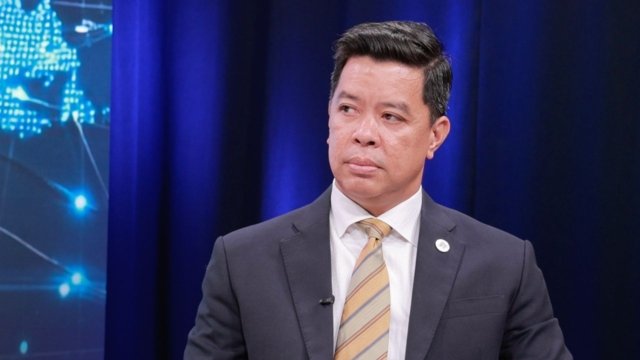



While employees face increasing stress in the modern era, many remain reluctant to seek support, since a stigma surrounding psychological issues lingers. Now, a Malaysian start-up is combining digitalisation and mental health services to enhance well-being and productivity in the workplace.
With more than 200 corporations utilising the platform’s employee assistance programme, CEO of Naluri, Azran Osman-Rani, told Thai PBS World that every market in Southeast Asia is different, but the Thai market is unique.
“We decided to expand into Singapore and Indonesia by ourselves, but this approach is not applicable to the Thai market, because a team with Thai proficiency is pretty critical. The corporate culture is also very tight-knit. So, we have partnered with a Thai real estate developer to develop credibility,” Osman-Rani said.
The platform shows that 63% of employees are at risk of developing mental health issues, but only 3% are thriving in the workplace. As employees struggle to cope with stress, the CEO said the remaining stigma in Southeast Asia has dissuaded many from seeking help, but the culture is now gradually changing.
As mental health issues can lead to physical illness, the CEO noted that people have more awareness about their health, but it takes time for them to feel comfortable to reveal their pressures to doctors.
Despite initial hurdles, the platform has established a standard of data privacy, security and trust with its partners, since 40 thousand employees of its largest client have utilised their mental health services, according to Osman-Rani.
The concept began with his father’s illness
When his father suffered from and passed away due to diabetes and cancer, the CEO discovered that the health system in his country had major issues, emphasising medication and surgery to address physical pain without anything to alleviate mental issues.
“The treatment was focused on the physical condition. Medication, surgery and chemotherapy indeed eased physical pain, but the depression and anxiety finally led him to skip chemo sessions and miss medications,” the CEO explained.
In addition, he pointed out that the healthcare system is reactive, with intervention typically occurring only when individuals are severely ill. The CEO said that his platform has changed the mental health service into a proactive response.
COVID-19 hastened the need for mental health services
Regardless of impediments in the initial phase, the platform gained a foothold during the COVID-19 pandemic, as companies were facing a large number of employees disengaging, resigning and even self-harming, according to the CEO.
Osman-Rani said that the growth of Naluri accelerated, since many corporations, including banks, airlines and energy companies, decided to partner with them for digital health solutions for their remote-working employees, assisted by the platform’s 24/7 crisis hotline and its extensive range of mental health professionals.
Vision leads to creation of new business
Before founding Naluri, Osman-Rani had spearheaded various types of businesses, from launch to stable revenue generation. One notable achievement was leading budget airline, AirAsia X, to become a billion US dollar public listed company.
While other CEOs might prefer stability after success, he said that the initial creation phase of a company always fascinates him, adding that his decision to leave a Malaysian over-the-top television service, once it had reached 20 million users across 20 countries, including Africa, has underscored his focus on the early creation phase.
With just one intern in Naluri’s early days, Osman-Rani says that challenges can be overcome through courage, vision and curiosity. He also noted that an established record and a dedication to winning over investors can help to attain initial funding.
“The earlier you prepare, the more opportunities you have to secure the first investment. I started conversations with investors a year in advance, so you can have a clear plan for short- and long-term goals,” the CEO said.
By Franc Han Shih, Thai PBS World
Full interview: