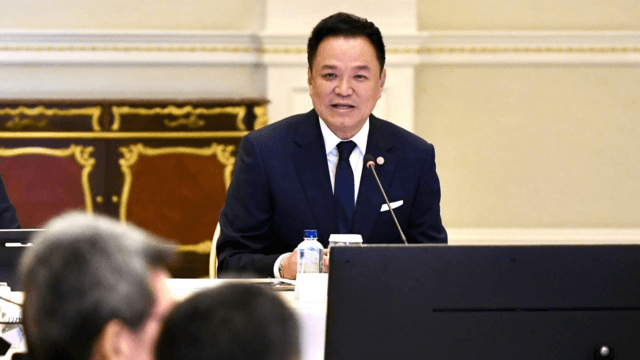
As Thailand grapples with multiple diplomatic challenges, newly appointed Foreign Minister Sihasak Phuangketkeow steps into office with two pressing crises likely taking precedence: the protracted, anachronistic border dispute with Cambodia and the destabilizing consequences of Myanmar’s civil war.
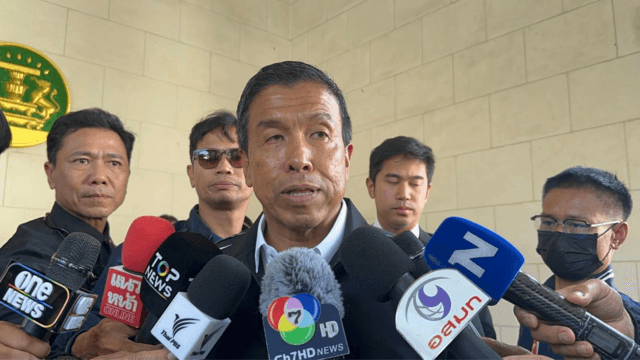
The new minister told reporters that he was in the process of consultation with Prime Minister Anutin Charnvirakul to formulate the government’s foreign policy, which would be aimed at not only fixing tensions with neighboring countries but also propel Thailand back into the international spotlight.
Career diplomat Sihasak's tasks are complicated by the political situation at home. The Anutin administration is a minority government, which was spawned by a military maneuver and accompanying nationalist sentiment.
Anutin’s Bhumjaithai Party has only 68 members of Parliament but managed to win 311 votes in the House of Representatives, 143 votes coming from the opposition People’s Party, which has leant conditional support. This makes the coalition extremely fragile.
Anutin took office following the ouster of Paetongtarn Shinawatra on August 29 by a Constitutional Court verdict for violation of ethical standards after her controversial phone conversation with former Cambodian prime minister Hun Sen was leaked, raising a furore.
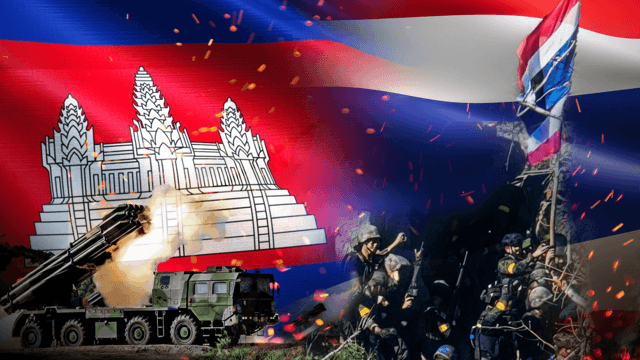
Border tensions and armed conflicts with Cambodia since late May this year have highlighted the crucial role and primacy of the military in security matters, as well as the nationalist movement.
Tackling the border closure issue
Sihasak was visibly uncomfortable responding to questions from journalists on whether Thailand should reopen its border to facilitate trade and travel with Cambodia.
The military and nationalist opinion on social media has consistently demanded that the border remain closed.
Thailand has enforced border restrictions since June 7 and completely closed its border gates to Cambodia on July 23 when the situation got worse. Thailand then downgraded diplomatic relations with Cambodia, precipitating the military showdown. The lockdown has severely disrupted cross-border trade and labor flows.
In Sihasak’s view, the special meeting of the General Border Committee (GBC) co-chaired by Thailand's Defense Minister Nattaphon Narkphanit and his Cambodian counterpart Tea Seiha on September 10 in Koh Kong likely produced many positive outcomes for fixing the disputes.
On the border closure, “both sides agreed to consider the feasibility of reopening the border crossings between Chanthaburi and Trat provinces in Thailand and Battambang province in Cambodia, for the import and export of products or goods, except materials intended for military purposes, to facilitate trade and economic activities necessary for the maintenance of critical regional supply chains. Further details are to be discussed by both sides at the Regional Border Committee [RBC] Meeting.”
Speaking of the GBC outcome, Sihasak told reporters: “We must first see whether what has been discussed will actually be carried out. It must be acknowledged that there are several constructive points, and ultimately it is about the safety of the people in the area.”
The reaction from the military establishment, however, was totally different. Manas Chandee, the military chief of staff, set a condition that the border closure be maintained until Cambodia withdraws its troops and heavy weapons from the border areas.
Second Army Region Commander Lt Gen Boonsin Padklang argued that the border closure would help cut supplies to the Cambodian military. There are casinos and cyber scam operations all along the border. Some goods, such as cement and fuel, end up harming Thai soldiers, he said.
“By ensuring that they can live without trouble, without fighting with Thailand, they can sustain themselves because they always have enough to live on. This is the reason why the border crossings must be closed,” he said in a public lecture at a Yala university recently.
Commanders of all branches espoused the same policy during their meeting on September 19: that the Thai armed forces would maintain the current state of closure until the situation eases or Cambodia is no longer considered a threat to Thailand.
ASEAN observer team
It was unclear whether Sihasak had explained to his Cambodian counterpart the reasons behind the tough stance of the Thai military. The minister would face another major challenge in dealing with Cambodia and ASEAN chair Malaysia regarding the establishment of an ASEAN Observer Team (AOT), a source said.
Thailand and Cambodia had agreed earlier that they would allow the AOT to oversee and verify implementation of the ASEAN-brokered ceasefire agreement.
The GBC meeting in Koh Kong made clear that both sides agreed in principle to the Terms of Reference (TOR) for the establishment of the AOT, but the arrival of the team remained unclear, as there would be a long process of negotiations and approval, the sources said.
Both sides will proceed in accordance with their respective domestic laws and regulations, he said. After both sides receive approval from their respective authorities, Malaysia will be informed of the agreed TOR to assist with the formation of the AOT.
While Cambodia and Malaysia are likely to accelerate the process, Thailand is reluctant, as the military and many security agencies do not want to have the AOT on Thai soil, the source said.
“This would be a great challenge for FM Sihasak to compromise on the ASEAN initiative while making Thailand look good in international eyes,” he said.
Myanmar crisis
Before assuming the current ministerial post, Sihasak had played a key role in helping Myanmar ease domestic tensions following the civil war that erupted after a military coup ousted the civilian government in early 2021.
As the vice foreign minister in Srettha Thavisin's administration, he initiated a humanitarian corridor project to provide assistance and relief to strife-torn Myanmar in March last year.
While the project was phased out when he stepped down from the position after then foreign minister Parnpree Bahiddha-nukara’s resignation, Sihasak continued his self-assigned mission to restore peace in neighboring Myanmar for the sake of Thai interests and roles in the international arenas.
Sihasak, together with many ex-diplomats, retired military officers, academics, and ex-journalists, set up the Institute for Strategic Policy as a think tank late last year to research and architect strategies and policies for Thailand and ASEAN to engage with Myanmar.
He maintained his linkage to the office of Myanmar's paramount leader, Min Aung Hlaing, and participated in the junta-hosted Peace Forum in Naypyitaw in June, with the hope of connecting the military-ruled country to the outside world.
It was widely expected that the new minister would place the Myanmar crisis as a key item on the new government’s foreign policy agenda, prioritizing the planned December 28 election as an urgent task, according to a source close to the minister.
Sihasak’s personal perspective, as expressed in public several times, is to see an inclusive, free and fair election in Myanmar, at the level of ASEAN regional acceptance.
Amid the ongoing violence in the middle of a civil war, it is estimated that the military government in Naypyitaw might be able to hold voting in only 20 per cent of areas throughout the nation, with low participation, as many opposition parties are banned from the poll, and dissident organizations have been outlawed.
A diplomat, speaking on condition of anonymity, observed that the challenge lay in how Thailand could engage in Myanmar’s election process without conferring legitimacy on the junta.