


The Thai economy is heading for a prolonged slowdown, with the National Economic and Social Development Council (NESDC) forecasting growth of just 1.7 per cent next year.
Growth in 2025 is estimated at 2 per cent, but the third quarter has revealed signs of weakness with a year-on-year expansion of only 1.2 per cent.
Of greater concern is the 0.6 per cent quarter-on-quarter contraction, the first quarterly decline in 11 quarters.
US trade restrictions a major threat
Thailand, as a small and export-oriented economy, faces its most significant risk from escalating US trade restrictions. US President Donald Trump had earlier threatened to impose a steep 36 per cent tariff on Thai exports.
This was later reduced to 19 per cent after Thailand and Cambodia agreed to a ceasefire brokered by Trump and Malaysian Prime Minister Anwar Ibrahim, acting as ASEAN chair for 2025.
However, border skirmishes erupted recently when some Thai soldiers were injured by anti-personnel mines believed to have been laid by Cambodia.
In response to these developments, Thailand announced the suspension of a peace declaration with Cambodia, which had been signed in Kuala Lumpur on October 26, in a ceremony presided over by Trump.
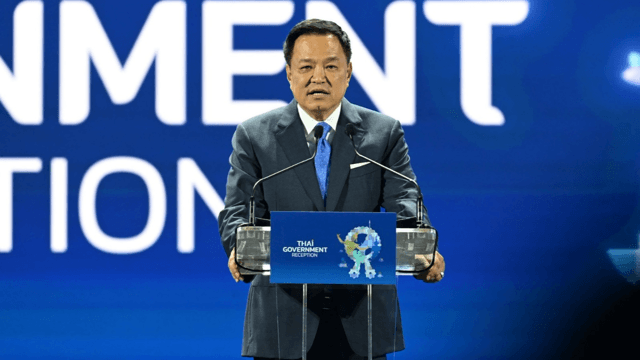
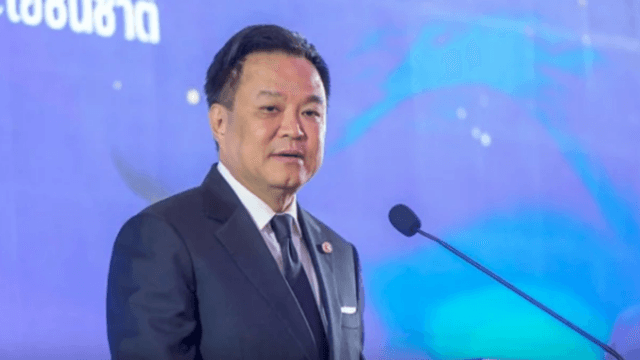
Following the government’s decision to halt the peace process, Prime Minister Anutin Charnvirakul made a controversial statement suggesting that Thailand was unconcerned about the US ending trade talks and imposing high tariffs, as the country could seek alternative export markets.
Diplomatic fallout and political backlash
Thailand’s move apparently did not go down well with the Trump administration, leading to a suspension of trade and tariff negotiations and a demand that Thailand return to the peace agreement.
Prime Minister Anutin attempted to mitigate the fallout, claiming that Malaysian Prime Minister Anwar Ibrahim had assured him that Trump would not tie trade negotiations to the peace process. Anwar confirmed this, but the US side remained silent on whether the two issues would be treated separately.
Critics in Thailand sharply criticized Anutin for carelessly fueling nationalist sentiment at the expense of the country’s substantial economic interests. Under pressure, Anutin softened his stance but did not clarify whether the government would return to the peace agreement.
“No, the US will not separate the two issues as it could use tariff as leverage... and Trump wants to show that he is a peace marker and deserves to be awarded the Nobel Peace Prize,” said Somjai Phagaphasvivat, political economist.
Titipol Phakdeewanich, political scientist at Ubon Ratchathani University, shares a similar view, saying Trump will not treat the two issues separately. He blamed Anutin for making a provocative statement that riled the US.
“Anutin indulged in domestic political rhetoric, reflecting he did not fully understand US foreign policy,” said Titipol. He also believed that Anutin did not want to sever trade ties with the US.
Meanwhile, some ultra-nationalist groups have urged the government to adopt a tougher stance toward Cambodia and the US, arguing that Thailand could find alternative export markets in China and Russia if the US imposes trade restrictions.
Economists warn that such a move would be unproductive and could seriously harm Thailand’s interests, as the US is Thailand’s largest export destination and the country maintains a large trade surplus with the US, in contrast to a significant trade deficit with China.
Anusorn Tamajai, dean of the University of the Thai Chamber of Commerce University’s School of Economics, emphasized that “Thailand cannot find alternative markets like China and Russia to replace the US, at least in the short run.”
According to the Commerce Ministry, Thailand’s exports to the US last year were valued at $54.9 billion, accounting for 18.3 per cent of total exports. Imports from the US stood at $19.5 billion, resulting in a substantial trade surplus. In contrast, Thai exports to China were valued at $35.2 billion, but imports from China reached $80.6 billion, leading to a significant trade deficit.
What Is Thailand’s leverage?
Rare earth elements may offer Thailand some leverage in trade negotiations with the US. Trump is seeking to catch up with China, which dominates rare earth production, accounting for roughly 70 per cent of global mining. At the same event in Kuala Lumpur, Thailand and the US signed a non-binding memorandum of understanding on rare earth cooperation.
Additionally, the US aims to strengthen alliances in the region to counter China’s rising influence, making it reluctant to push Thailand further toward China’s orbit.
Since the 2014 military coup, Thailand has developed closer ties with China. The recent visit by the Thai king and China’s announcement to purchase 500,000 tonnes of Thai rice mark new milestones in their relationship.
Following the coup, Western countries, including the European Union, suspended some cooperation, with the EU ending free trade talks.
Now, both parties are working to accelerate discussions to conclude an overdue trade agreement, especially amid increasing US trade restrictions.
With these points of leverage, and if Thailand returns to the peace agreement, it could potentially secure tariff reductions from Trump—possibly less than 19 per cent. However, US policy could also reverse course and result in much higher tariff rates.
“Trump acts emotionally, he is unpredictable,” warned Somjai, urging the Thai government to exercise caution in dealing with the Trump administration.
The Thai trade negotiation team led by Commerce Minister Suphajee Suthumpun was in Washington recently for trade and tariff negotiations.
She assured that talks with the US are on track. Nevertheless, it remains uncertain how events will unfold, as border tensions with Cambodia show no sign of resolution and nationalism remains strong in both countries.
Critics suggest both governments are seeking to capitalize on local political sentiments.
Thai exports to US at risk
The NESDC has warned that Thai exports may contract next year. The value of goods exported in US dollar terms is projected to decline by 0.3 per cent, following robust growth of 11.2 per cent in 2025.
This downturn is attributed to the global economic slowdown and intensified trade protection measures, according to the state think tank.
To address these challenges, the NESDC recommends that Thailand focus on reducing production costs in key manufacturing sectors to maintain the competitiveness of its products on the global stage.
The country needs to mitigate the impact of US trade restrictions by accelerating trade agreement negotiations, enhancing production efficiency—especially among SMEs—and raising awareness among Thai exporters regarding compliance with US regulations and proper management of import tax burdens and related fees.
The NESDC is also emphasizing the importance of strengthening inspection processes and enforcing rules related to the Rules of Origin.
This includes expediting improvements to verification processes and establishing clear operational guidelines, particularly improving the issuance of Certificates of Origin and verifying Regional Value Content for key products.
These actions are necessary, as the US may increase tariff rates on Thai goods. The US had warned previously that it may also impose significantly higher tariffs on goods from third countries that are exported to the US via Thailand.