As Laos concludes its ASEAN Chairmanship, the crisis in Myanmar remains a No 1, challenge, with expectations mounting for breakthroughs during the 19–20 December meetings in Bangkok.
Countries bordering Myanmar, deeply affected by the ongoing conflict, will gather to address pressing concerns, highlighting the importance of regional collaboration and ASEAN's role in resolving the quagmire.
It must be emphasized that the ASEAN Five-Point Consensus (5PC), the 2021 framework for the Myanmar crisis, remains front and center of this weekend’s discussions.
While some progress has been made, significant gaps persist, particularly in achieving a ceasefire, initiating inclusive dialogue, and ensuring humanitarian assistance.
The upcoming Bangkok meeting will revisit these issues, aiming to build a much needed consensus on the path forward.
Thailand, hosting the meeting at a five-star hotel, highlights its interest in the stability of its neighbor. Bordering countries, including China, India and Bangladesh share similar concerns about how the conflict spills over into their territories.
Key topics include border management, trade disruptions, cybercrime, and the humanitarian crises caused by the prolonged conflict in Myanmar.
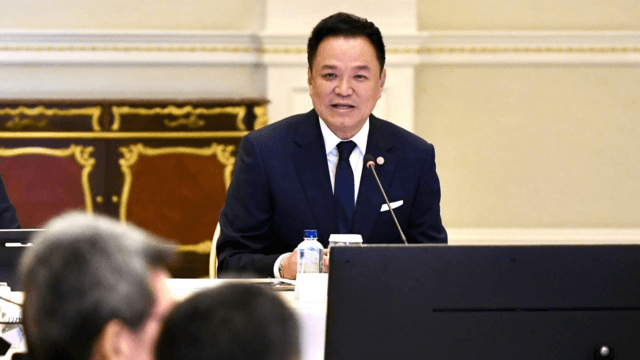
The presence of Than Swe, a representative from Myanmar's current administration, is expected to bring direct engagement to the discussions.
One of the most debated issues is Myanmar’s planned elections later next year. The international community has voiced concerns about the inclusiveness and legitimacy of the process.
They fear it could serve as an exit strategy for the military regime rather than a genuine step toward national reconciliation, peace and people.centered governance.
The experiences of Myanmar's previous elections, such as during Thein Sein's presidency, could offer some lessons about whether the polls can pave the way for a meaningful transition.
The possibility of shifting from the battlefield to the negotiating table remains uncertain.
Many stakeholders, including the National Unity Government (NUG) and Ethnic Armed Organizations (EAOs), have been bolstered either increased territorial controls since the 1027 operation.
The EAOs tend to guard their interests with territories without compromises.
In the future they have to coordinate their positions if they want to step up additional pressure off battlefields. In the case of the NUG, it does not represent all factions within Myanmar, which complicates efforts toward a comprehensive negotiation.
China's influence in Myanmar is growing as Beijing is zero in on stability along its border and secure its economic interests in the region. Connectivities and infrastructure projects have pushed China to play a mediating role, including urging the Kokang soldiers to halt violence.
Beijing sees the elections as an opportunity to stabilize the region and integrate more stakeholders into the process.
China's approach aligns with the interests of other regional players like Thailand, India, and Bangladesh who share concerns about the spillover effects of instability.
Together, these nations aim to promote a Myanmar-led and Myanmar-owned solution, reducing external pressures while ensuring the country’s path forward is both inclusive and peaceful.
Thailand is at a crossroad. It can,shape and influence the solution of the Myanmar crisis. As a host and neighbor, Thailand is uniquely positioned to foster dialogue and reduce violence along the border. But the current government must be more anctive and acts in timely ways.
The Bangkok meeting offers a chance to expand humanitarian space, support inclusive elections, and create an environment conducive to peace talks.
Thailand's role is pivotal given its history of mediating regional conflicts and its own recent election experience. By providing a platform for dialogue, Bangkok can encourage stakeholders to work toward national reconciliation.
The Bangkok meeting also comes at a critical time for ASEAN, as Malaysia is taking up the Chairmanship in January 2025.
It is an opportunity to reevaluate ASEAN’s strategy, including the future of the 5PC and the role of the special envoy for Myanmar
ASEAN leaders will meet again at the ASEAN retreat in Langkawi mid-January to further discuss their collective approach.
Key questions include what stance ASEAN should take toward Myanmar’s elections, how to encourage all parties to engage in negotiations, and how to support a credible and inclusive political process.
For Myanmar’s elections to lead to lasting peace, all stakeholders—internal and external—must collaborate. While ASEAN plays a central role, neighboring countries like Thailand, China India and Bangladesh must work in tandem to ensure a coordinated approach.
The US, Europe and Russia must join in. Myanmar’s stability a regional priority that impacts trade, security, and humanitarian conditions across borders.
In the final analysis, ASEAN’s collective voice, combined with the support of neighboring countries, could help Myanmar move closer to a solution that reflects the aspirations of all its people.
One question remains: Can ASEAN and its partners turn conflict to collaboration, and from division to unity?