


The Social Security Office (SSO) is facing major calls for reform amid criticism that lavish spending, poor budgeting, and a lack of transparency have pushed Thailand’s social security system to the brink of collapse.
Critics say the SSO requires a complete overhaul to enhance efficiency and safeguard health, pension and other welfare benefits it provides for some 24 million Thais.
Many also want it removed from bureaucratic control under the Labour Ministry and transformed into an independent agency with professional oversight and auditing.
The SSO came under fire earlier this month when the House budget committee scrutinized its fiscal management and raised concerns over inefficiency and extravagant spending.
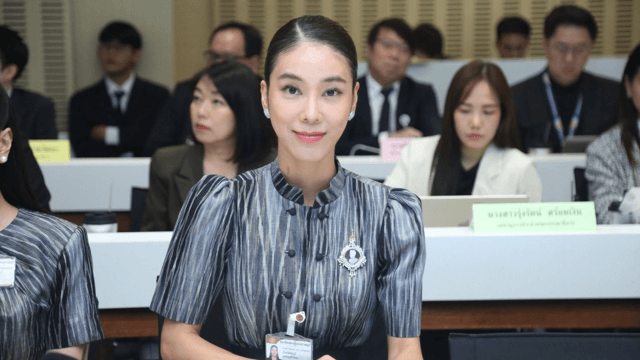
Committee spokesperson Rukchanok Srinork, an MP from the People’s Party, questioned the need to spend 2.2 million baht on an overseas study trip that featured first-class air travel and five-star accommodation for SSO executives.
She also pointed to the huge development budget for applications and IT services that still performed poorly. The SSO+ application cost 276 million baht to develop, yet SSO subscribers have given it a rating of just 1.5 points out of five. Rukchanok also highlighted the sizeable calendar budget as more evidence of SSO mismanagement.
Untransparent?
The SSO’s operating budget has ballooned from 4 billion baht in 2020 to 6.61 billion baht in 2023. Its 1506 hotline call centre sucks up at least 100 million baht annually – about half of which goes on rent – yet callers complain of long wait times to receive help or advice.
The SSO also spent 336 million baht on public relations in the past fiscal year. However, surveys show that Bangkokians feel they are poorly informed about SSO activities while young people find its information difficult to understand.
Concerns over transparency grew further when it was revealed that the SSO’s annual contract for calendars, valued at 50 million to 70 million baht, is seldom put up for bidding.
“The social security scheme is the final safety net for people who can’t afford other insurance policies and those not born into rich families,” Rugchanok observed. “Therefore, we need to pay attention to the Social Security Fund’s management and transparency.”
SSO explains
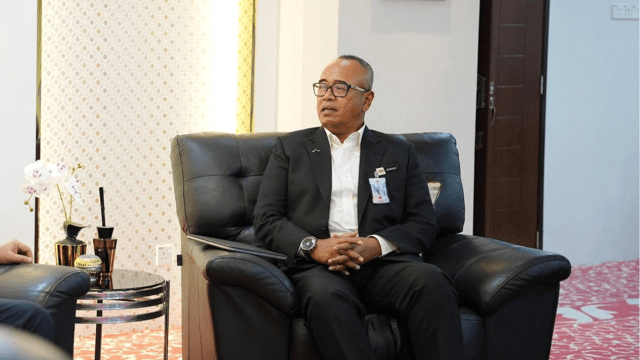
SSO is a department-level agency under the Labour Ministry, and the ministry’s permanent secretary, Boonsong Thapchaiyut, has thus stepped forward to defend it.
“We can assure you that SSO, whether in procurements or overseas trips, always proceeds in line with the law. We are ready to provide explanations [on any SSO issue],” he said.
SSO secretary-general Marasri Jairangsri echoed that commitment to probity and transparency in a message posted on her office’s Facebook page. She also highlighted that the SSO was permitted to use up to 10% of the total annual contributions received for management expenses but had never fully utilised this allocation.
“Our management expenses have never been more than 3% of the total contributions,” she said.
She added that procurement guidelines used by the SSO were based on rates and criteria set by the Finance Ministry.
Insufficient scrutiny
Assoc Prof Dr Sustarum Thammaboosadee, a subscriber representative on the SSO board, pointed out that since the SSO is funded by subscribers rather than taxpayers, it does not undergo parliamentary scrutiny during budget debates.
“So, its budget is not under the spotlight despite its massive size, which increases the risk of incautious spending,” he said. He gave as an example the delayed 800-million-baht project to change the SSO’s mainframe system into a web-based application.
“To date, I have not heard anything about the developer being fined [for the delay],” he said.
He believes the SSO should adopt the open data concept embraced by the Bangkok Metropolitan Administration (BMA), emphasising that data disclosure would encourage public scrutiny and foster transparency.
The role of SSO
The SSO manages the Social Security Fund (SSF), which covers over 24 million subscribers. The fund has now grown to over 2.6 trillion baht, fed by contributions from subscribers, their employers, and the government.
Sustarum noted that the SSF covers three separate schemes.
The first is allocated about 160 million baht per year to manage the 2.2-trillion-baht child allowance and pension scheme.
The second receives about 80 million baht for annual management expenses but always struggles to make ends meet because its coverage encompasses medical care, disabilities, death benefits, and child benefits.
The third covers unemployment benefits and enjoys the highest liquidity of all three funds, even after shouldering huge burdens during the COVID-19 crisis.
Surasit Srikaew, deputy secretary general of the SSO, insists the SSF is large enough to continue providing welfare benefits to its subscribers for at least 30 more years.
“We are also pushing for a law amendment that would allow subscribers to make larger contributions and enable more people to join the social security scheme,” he said.
The scheme now covers not just employees but also freelancers. But some groups are still left out, so the SSO has set its sights on covering street vendors, farmers and fishermen.
The proposed change would also raise the wage ceiling for calculating contributions to the social security fund.
Emeritus Professor Lae Dilokwitharat said the ceiling indeed should be increased as the current level of 15,000 baht was adopted more than 30 years ago.
Recommendations
Lae recommended that the SSF should also be extended to migrant workers from neighbouring countries, adding that budget control should be tightened to prevent financial leakages.
Sustarum, meanwhile, said public pressure is growing for the SSO board to broadcast its meetings, release the minutes, and reform human resources.
“We will also propose a draft law next month to push for the SSO’s split from the bureaucracy,” he said, adding that this would result in the recruitment of professionals rather than bureaucrats to manage the SSF.
Asst Prof Thorn Pitidol of Thammasat University said bureaucratic regulations restrict SSO operations and cause the SSF to fall short of its founding objectives.
“I hope the SSO will at least involve subscribers more in the management of the SSF and scheme in order to boost their flexibility and sustainability,” he said.
Thorn also believes the SSO should hand responsibility for its medical insurance scheme to the National Health Security Office (NHSO), which successfully manages the universal healthcare scheme.