


The German envoy stood outside the family home of Myanmar’s ousted president and delivered a blunt message.
“U Win Myint is not a free man,” Mathias Licharz said in a video on the German Embassy's social media in Yangon, marking the detained leader’s 75th birthday on November 8, and asked for the president and State Counselor Aung San Suu Kyi to be released.
Two days later, Naypyidaw summoned him for a warning: if he chose to recognize Win Myint, not Min Aung Hlaing, as president and “wish to discontinue the service in Myanmar,” it would have “no objection to the decision.”

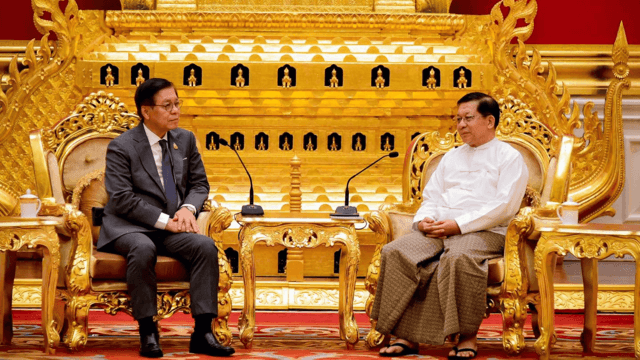
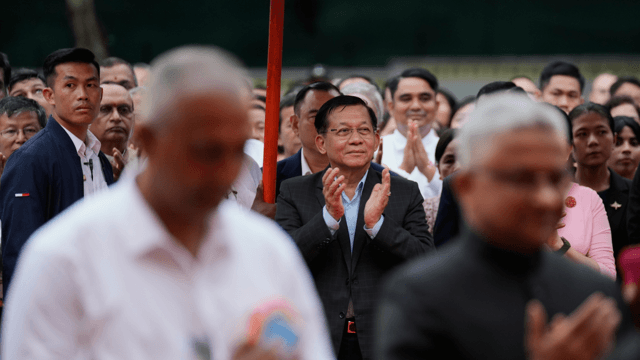
The general who seized power in a coup now claims a mandate from the ballot box. Min Aung Hlaing assumed the presidency in April following military-run elections and a parliamentary vote. Neighboring Thailand has received him as president, while China and Russia remain familiar stops on his diplomatic itinerary.
Washington is now pulling up a chair. The U.S. Mission to Burma’s strategy, made public in October, sets out its ambitions for renewed engagement.
Staying away risks leaving others to shape the agenda. Taking a seat means dealing with a president Washington has sanctioned twice: over serious human rights abuses in 2019 and following the 2021 coup. Diplomacy has resumed; those sanctions remain.

Washington’s return to Naypyidaw comes with a clear shopping list: security cooperation, rare earths and opportunities for American businesses. Questions about the administration’s democratic legitimacy remain unresolved, but American interests are spelled out.
The Mission to Burma’s strategy even puts a date on its peace ambitions: July 2030. It then lays out what a settlement could deliver for the United States. Peace is the goal; commercial opportunity is an openly advertised dividend.
Put plainly, Washington’s ambition is loud and clear: help end Myanmar’s war within four years, after more than seven decades of fighting that have uprooted millions and left much of the country struggling to eat.
The U.S.‘s strategy gets down to the nuts and bolts: at least three multi-stakeholder forums on sharing revenues, dividing fiscal powers and drawing territorial boundaries.
It stops short of naming the next government or deciding who governs which state. A little something left for Myanmar to sort out. Phew!
Then comes the sales pitch, delivered at full volume: those discussions “will create opportunities to access Burma’s bountiful rare earth resources and combat scam centers.”
No need to read between the lines: Washington wants access to Myanmar’s minerals. The strategy even puts numbers on its commercial ambitions—at least three major deals for U.S. companies, each worth more than $5 million.
And the conversations were already underway. Before the strategy attracted public attention, U.S. officials had been discussing rare-earth access with Naypyidaw, Reuters reported. Most of that output currently heads to China.

Naypyidaw’s representatives have been quick to promote the commercial opening.
“Ultimately, the United States should treat Myanmar as a critical minerals priority, not simply a diplomatic challenge,” Washington lobbying firm DCI Group said in a newsletter issued on behalf of Myanmar’s information ministry, several media reported.
But the investment pitch faces a basic problem: the government does not control the resource it promotes.
Myanmar’s main rare-earth production sites are held by the Kachin Independence Army (KIA), which is fighting the military.
Opposition organizations have expressed interest in American involvement, accompanied by warnings about the kind of peace it might produce.
David Gum Awng, deputy foreign minister of the National Unity Government, said that international engagement “should not prolong the military dictatorship.”
The Karen National Union(KNU) has called for an end to attacks on civilians, the release of political prisoners, and an agreement on a framework for dialogue.
“Without these actions, I believe that any dialogue will be extremely difficult,” said KNU spokesperson Saw Kler Say.
Yet the group holding a key to Washington’s mineral ambitions is keeping its thoughts to itself.
The KIA told the media it was not ready to comment. I contacted its spokesperson, Colonel Nau Bu. No answer followed.
Skepticism about Washington’s intentions? A negotiating position best kept under wraps? For now, neither explanation can be confirmed.
What needs no interpretation is the KIA’s leverage: it controls the mines.
Closing the scam centers that cost Americans billions will take more than a handshake in Naypyidaw. It also requires cooperation from those controlling the places where they operate—from Karen armed groups, the MNDAA, and Ta’ang forces in Shan State to the authorities in Yangon. I contacted one of these groups. My questions made it through. The answers have yet to make the return journey.
In the country with more than 20 established ethnic armed organizations, over 600 post-coup resistance armed groups commonly described as People’s Defense Forces, an array of military-aligned militias, and the remaining Border Guard Force units, Myanmar has become one of the world's most fragmented conflict landscapes.
Organizing a stakeholder forum that leaves everyone satisfied is an adventure in itself.
Washington’s diplomats now have targets to meet. The international community will have to see who gets a seat at the table, what goes on it, and who has the final say before judging whether peace is any closer.
With both Naypyidaw and several ethnic armed groups maintaining deep ties to China, Washington may find that drawing up the guest list is its first diplomatic headache. Who can it afford to invite—and who can it afford to leave out?
Washington is also hardly arriving at an empty table. China buys most of Myanmar’s rare-earth output, its oil and gas pipelines have crossed the country for more than a decade, and Chinese businesses operate from the borderlands to downtown Yangon.
Russia, a longstanding military partner, is also expanding into energy, with a proposed 110-megawatt nuclear power plant that could eventually grow to 330 MW.
Washington has drawn up the plan and marked the calendar. Myanmar’s rival powers and competing armed groups have yet to agree to either.
Banya Khung Aung, the 2nd Secretary of the Interim Executive Council of Karenni State (IEC), the provisional governing body administering resistance-controlled territories in Karenni State, told me he has spent his whole life craving peace.

That could offer more than 150,000 people—almost half his state’s population—a chance to rebuild their lives after being displaced by conflict. Scattered across more than 500 displacement camps, they face hunger and airstrikes while waiting for the safety and dignity they deserve.
“But we have the right to administer the territory we control. Ending the fighting does not mean laying down our arms—do not jump to that conclusion. We have a duty to protect our people from all threats, and we expect no interference in our operations on the ground.”
For Thailand, Myanmar’s troubles have a habit of crossing the border. Fighting and scam compounds make progress an immediate concern—and promises matter only if those making them can deliver.
As Myanmar’s neighbor, Thailand should know better than Washington how far Naypyidaw’s authority reaches—and where it ends.
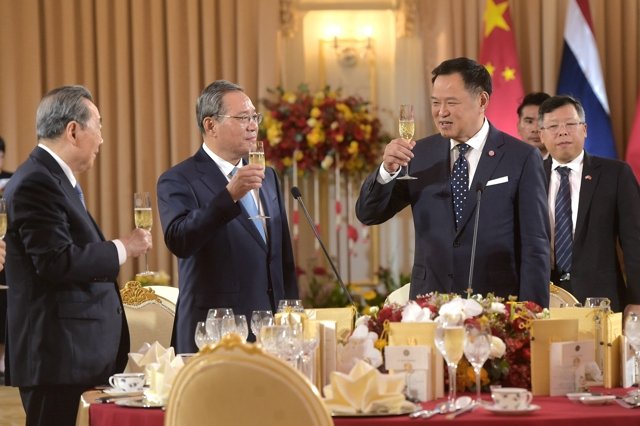
After his November 12 day trip to Naypyidaw, Thailand’s Foreign Minister and Deputy Prime Minister Sihasak Phuangketkeow said Bangkok is willing to facilitate dialogue between Myanmar’s government and the Karen National Union (KNU) and Karenni National Progressive Party (KNPP).

In July 2026, he and ASEAN Special Envoy Maria Theresa Lazaro held consultations in Pattaya with six ethnic armed organizations: the KNU, KNPP, Kachin Independence Organization (KIO), Restoration Council of Shan State/Shan State Army (RCSS/SSA), Chin National Front (CNF), and New Mon State Party (NMSP).
With shelling, disrupted trade, and displacement spilling across its border, Thailand has every reason to build on those contacts.
While Washington still speaks of “stakeholders,” Bangkok has already been saying their names aloud.
The task now is to ensure they have a meaningful say in shaping the peace.