


The S&P global credit rating agency has set Thailand’s sovereign credit rating at BBB+, with a stable economic outlook and growth rate projections of 2.3% and 2.0% for 2025 and 2026 respectively, thanks to the government’s supportive fiscal policies amidst external risks and domestic political uncertainty.
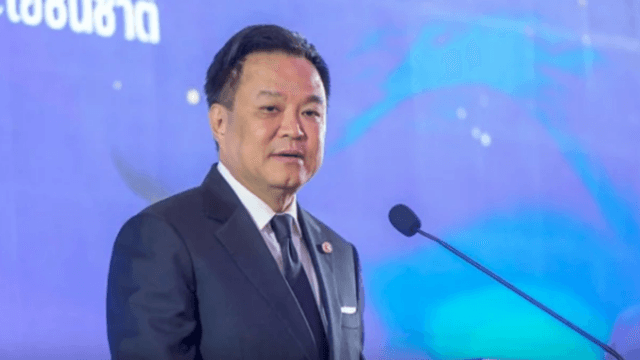
Finance Minister Ekniti Nitithanprapas said today that Thailand’s real GDP growth for this year through 2028 is forecast to average 2.3% per annum, while income per capita this year will increase from US$8,000 to US$9,000, partially due to the stronger baht.
S&P has the view that the Thai government has attached importance to the Eastern Economic Corridor (EEC) and transport infrastructure development projects, as reflected in increased public investment since the middle of last year. Public-Private Partnerships are expected to play a key role in the driving of investment in infrastructure projects and will ease the government’s investment burden in this area.
Although tourist arrivals in Thailand from January until September this year have dropped by 7.6% to about 24.1 million, compared to the same period last year, S&P believes that the tourism sector, supported by government’s measures to promote tourism, especially regarding safety, will remain an important driving force for Thailand’s economic growth next year.
Regarding government’s net general debt to GDP this year and next, S&P predicts an average rate of 3%, thanks to the government’s pursuance of a deficit fiscal policy to recover from the economic slowdown. The co-payment scheme, for instance, will help stimulate domestic consumption.
Thailand’s external finances remain strong, due to a current account surplus, with the current account for this year through 2028 to average about 2.5% of GDP, according to S&P.
Ekniti claims that S&P’s rating of Thailand’s economic performance is a clear indication of the agency’s confidence in the government’s transparency, accountability and strict fiscal discipline in the implementation of economic policy.
He said that Thailand has strong foreign reserves, low external debt and a strong banking system, adding that the government has set a fiscal framework aimed at enhancing its credibility in the eyes of global credit rating agencies and the public.