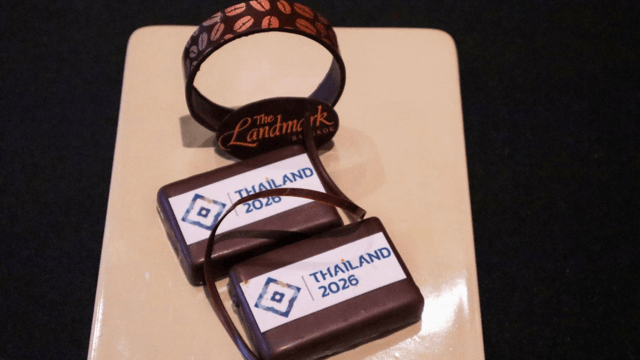
Thirty-five years after it last hosted the landmark event, Thailand is positioning the upcoming 2026 IMF–World Bank Group Annual Meetings as a pivotal catalyst to attract global investment, drive technology transfer, and unveil the “Bangkok Blueprint” for digital financial infrastructure.
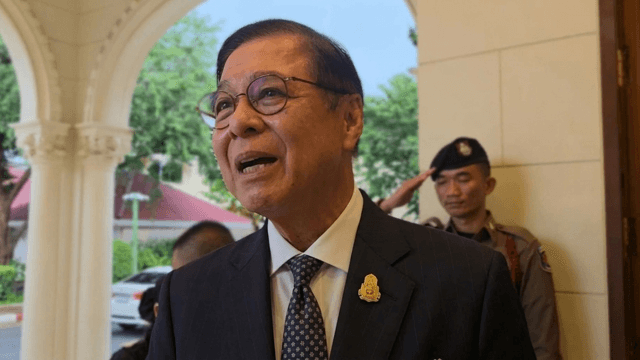
Deputy Prime Minister and Finance Minister Ekniti Nitithanprapas said in an exclusive interview that hosting the October 12–18 meetings offers a historic economic turning point, echoing the transformative impact of the 1991 meetings that successfully drew waves of manufacturing and export capital into the country.
"This is a major opportunity to connect top global corporate executives with Thai businesses, helping local SMEs integrate into global supply chains," Ekniti said.
“Under current policy, incoming foreign direct investment (FDI) must prioritise technology transfer in advanced fields such as artificial intelligence and integrate local suppliers into global networks,” he stated.
As host, Thailand will set the discussion agenda around three main themes: navigating geopolitical and trade conflicts, empowering workers through upskilling, and building economic resilience against climate disasters.
In partnership with the World Bank, Thailand will push key initiatives in water management, clean energy transition, and "Low Carbon City" projects aimed at reducing reliance on volatile fossil fuels.
A core highlight of the summit will be the introduction of the “Bangkok Blueprint,” developed collaboratively by the Ministry of Finance, the Bank of Thailand, and the IMF.
The framework draws on Thailand's pioneering digital public infrastructure, including PromptPay, the "Paotang" and "Tung Ngern" platforms, to establish secure, inclusive financial systems while sharing strategies to combat financial crimes, deepfakes, and mule accounts.
Thailand will also share insights on tackling mule accounts, online scams, and emerging threats like deepfakes, alongside innovative AI tools such as the "Nok Krasip" feature on the Tung Ngern app, which helps small merchants analyse customer behavior and optimise sales.
Describing the summit as a "Financial Olympics," Ekniti noted that top leaders, finance ministers, central bank governors, and CEOs will put Thailand under a global spotlight.
Amid global geopolitical fragmentation, Ekniti emphasised that Thailand’s status as a neutral middle power allows it to act as a "Trusted Connector" bridging diverse economic blocs.
“Backed by robust infrastructure, medical capabilities, and OECD membership ambitions, the country is well-positioned to cement its role as ASEAN's premier financial hub,” he said.
To highlight sustainable growth, the event will feature a special "Royal Pavilion" exhibition demonstrating the Sufficiency Economy Philosophy, royal water management projects, and local SME creative products to over 15,000 visiting delegates.
Thailand joins Japan and Turkey as one of only three countries, among 191 member nations, to host the prestigious gathering twice.
According to World Bank data, since 1991 Thailand has created nearly 11 million formal jobs, while GDP per capita increased from roughly 57,400 baht to 261,800 baht in 2025, with total GDP rising to approximately 18.75 trillion baht. Net FDI stood at around 618,700 million baht, accounting for 3.3% of GDP.