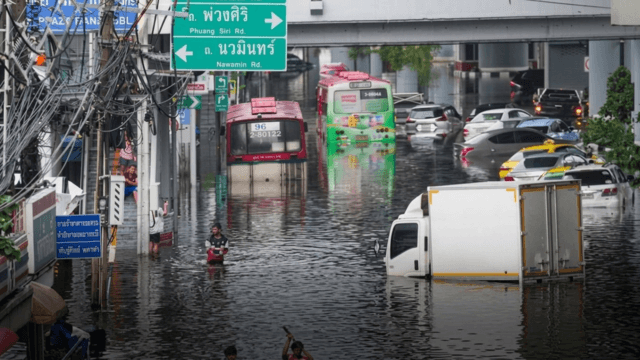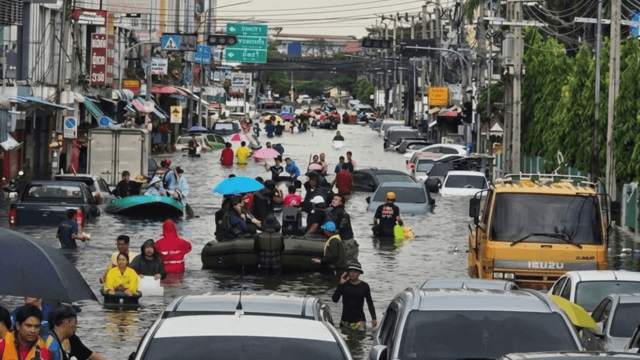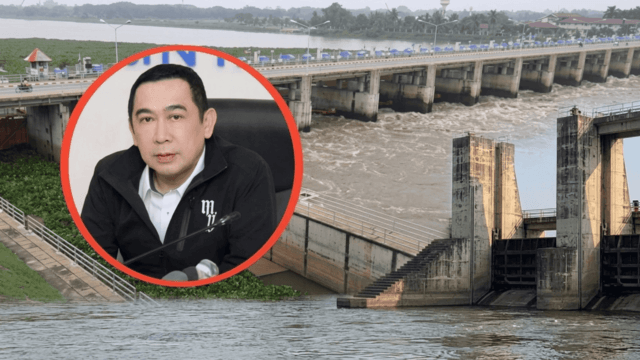



The Federation of Thai SME Association is urging the government and the Bangkok Metropolitan Administration (BMA) to launch immediate assistance for micro, small and medium enterprises (MSMEs) battered by recent citywide flooding, warning that waiting for floodwaters to recede could force vulnerable businesses to close permanently.
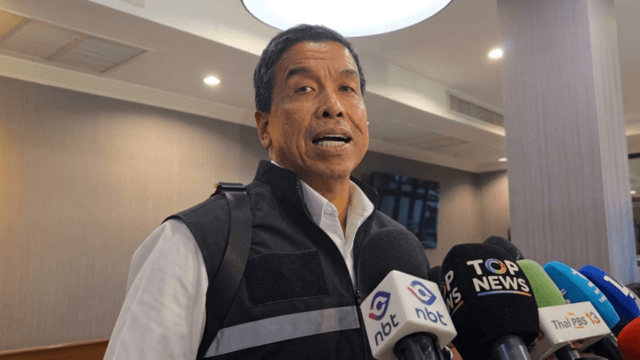
Dr. Noppong Teeravorn, President of the Federation of Thai SME Association, stressed that small operators cannot afford delays, stating: "Do not wait for the water to recede before helping small operators. For SMEs, every minute counts."
Unlike the massive industrial inundation seen in 2011, the current crisis is characterised by sudden, heavy urban flash floods that directly hit the capital's "mobility economy."
Dr. Noppong noted that even brief surface flooding disrupts shopfront retail, service sectors, commuter transit and local logistics. Although business stops and income drops to zero instantly, fixed overheads, such as rents, wages, loan instalments and interest, continue to accrue daily.
With all 50 districts of Bangkok now declared disaster zones, the federation warned that SMEs are operating on extremely thin financial buffers. Halting operations for just three to four days can completely wipe out revenue.
Citing lessons from the major flooding in Hat Yai in late 2025, small merchants took three to six months to recover, a timeline many current operators cannot survive without intervention.
The federation called on authorities to shift from basic flood prevention to a "flood resilience" strategy, focused on early warnings, rapid drainage, maintaining transit networks, minimising business downtime and accelerating recovery.
To prevent widespread business failures, the federation called for 6-month to 1-year debt and interest moratoria, to give affected businesses breathing room to recover.
They urge the immediate provision of soft loans with flexible conditions so operators can repair machinery, restore inventory and reopen quickly.
Authorities are asked to cut red tape and streamline document requirements to speed up cash relief payouts for illiquid SMEs and residents.
The federation proposed subsidies for operational overheads, alongside tax incentives for landlords and shopping centres that reduce rent for struggling tenants.
Finally, they recommended measures to stimulate local spending, the opening of temporary trading spaces, and the connection of offline-online channels to restore cash flow to small operators.
"Power exists not just to administer, but to solve people's problems," Dr. Noppong said. "Every day a business stops, income vanishes. Every day capital is delayed, opportunities are lost."
"We urge the government and the BMA to act, issue orders, and mobilise all agencies to help small businesses immediately, without waiting for the water to drain," he added.