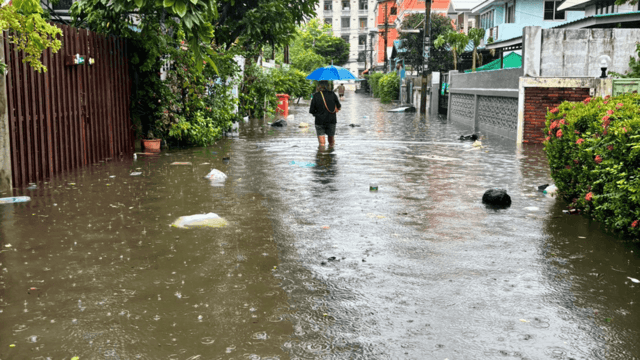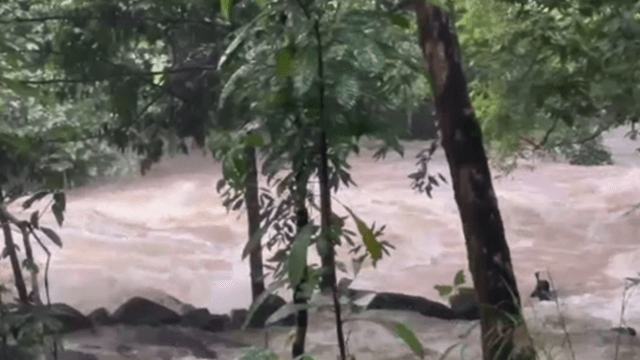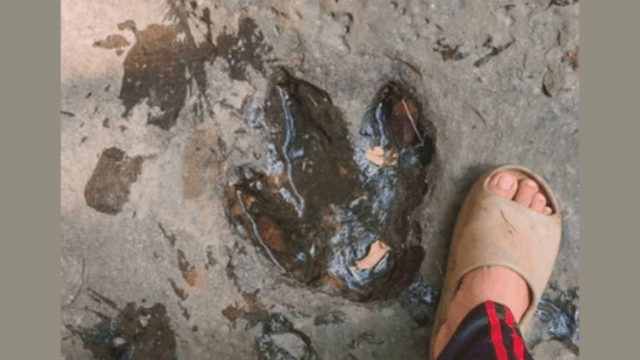



Environmental authorities have launched a multi-agency effort to contain an oil slick discovered in Prachin Buri province, acting swiftly to prevent toxic runoff from contaminating local waterways as floodwaters recede.
Natural Resources and Environment Minister Suchart Chomklin stated on Sunday that he has received briefings from Surin Worakijthamrong, Director-General of the Pollution Control Department (PCD), regarding the appearance of a film of oil across parts of the province.
Suchart has instructed the PCD to collaborate closely with provincial bodies and relevant agencies in tracking water quality, restricting the spread of the oil and blocking any potential seepage into the Prachin Buri River, which could pose significant risks to public health and the local ecosystem.
The response follows field inspections launched on October 17th by PCD officials, alongside the Region 7 Environmental and Pollution Control Office (Saraburi) and local administrative leaders in Si Maha Phot district. While recent floods have begun to subside, anxiety remains high among local residents over surface oil film and potential hazardous contamination.
Joint inspection teams from the PCD, the provincial natural resources office and the industrial sector have expanded their surveys across Si Maha Phot and Si Mahosot districts.
Officials have instructed Green Environment and Technology Co., Ltd. to step up internal site surveys and implement stricter preventative measures to stop wastewater from leaking from factory premises.
Furthermore, the Marine Department has been enlisted to provide oil booms to shield natural drainage systems from hydrocarbon spread.
To bolster containment, booms and absorbent pads have been deployed at three key locations along the Bang Phluang Canal, namely at the Kham Phak Chi, Muang Khao and Hua Phai Thes bridges.
Any oil film detected is being systematically scooped up using absorbent materials and disposed of in accordance with environmental standards.
Minister Suchart emphasised that continuous water monitoring will remain in place, as authorities analyse laboratory samples to shape long-term corrective actions, reiterating that pollution control and community safety remain the top priorities.”