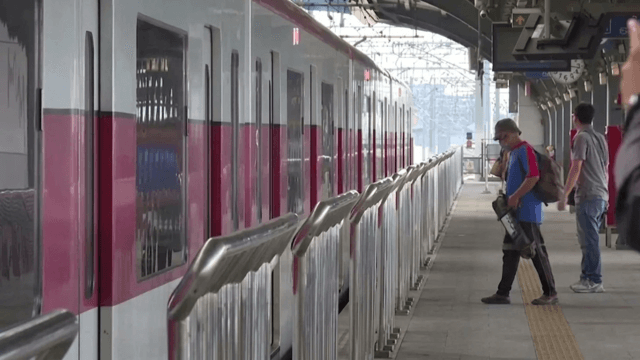



The Thai government has announced plans to revolutionize urban transportation by offering rides at just 20 baht per trip on the mass transit rail system.
The sharp reduction in fares is a bold initiative aimed at enhancing affordability, easing congestion and encouraging greater use of public transportation. While the proposal has been met with excitement, questions loom over its feasibility, implementation, and long-term sustainability.
The plan and rollout
Scheduled to launch fully on September 30, the 20-baht initiative will initially cover all eight lines. Registration for the scheme, exclusively for Thai nationals, will be facilitated via the state-owned “Thang Rath” application starting in August.
Passengers will need to use their 13-digit national ID number for registration.
Different ticket systems will be used to accommodate the diverse transit lines, such as Rabbit tickets for the Green, Gold, Pink, and Yellow lines; EMV Contactless tickets for the Red, Blue, Purple, Pink, and Yellow lines; and ARL tickets for the Airport Rail Link line.
The government also plans to introduce QR codes as a replacement for traditional train tickets in the coming year, to further modernize transit infrastructure.
The flat 20-baht fare for mass rail transit in Bangkok is one of the government’s flagship policies.
The Pheu Thai Party, leader of the ruling coalition government, had made the promise during the 2023 general election campaign. People have long complained about the high fares. A single trip across two lines could cost well over 100 baht, making it unaffordable for low-income earners.
Transport Minister Suriya Jungrungreangkit said that the ongoing pilot projects, such as the Purple Line between Taopoon and Klong Bangphai stations and the Red Line connecting Bang Sue to Rangsit and Bang Sue to Taling Chan, are being well received by passengers, reflecting in record-high daily ridership.
He assured that the registration process would be simple, as the government aims to make user authentication seamless.
The annual cost to compensate private operators is estimated at around 8 billion baht. According to Suriya, the government plans to utilize the available 16-billion-baht fund of the Mass Transit Authority of Thailand to subsidise the scheme.
Some laws and regulations would be changed to facilitate the use of funds.
“The Transport Ministry aims to help reduce the cost of living, incentivize commuters to use public transport, tackle PM2.5 pollution, and promote equality for various groups to access rail services,” Suriya said, unveiling a broad vision.
Critics have raised concerns that the government would be using tax revenue to disproportionately benefit Bangkok residents through massive transit investments, while other cities across Thailand still lack rail services.
Opportunities and challenges
Sumet Ongkittikul, a researcher director at the Thailand Development Research Institute (TDRI), commends the initiative but highlights several critical areas requiring attention.
He notes that while the reduced fare could significantly increase ridership—potentially by 15-20 per cent from the current 1.2 million daily users—the scheme’s success hinges on resolving logistical and infrastructural gaps.
One of the primary concerns relates to the registration process. Sumet, who specializes in transport and logistics policy, suggests simplifying the procedure to encourage widespread participation, as overly bureaucratic methods could deter potential users.
He advocates the introduction of a single-ticket system instead of requiring passengers to juggle multiple tickets for different lines.
This requires substantial investment to make existing systems compatible, while upgrading hardware across various transit lines.
Connectivity between rail lines is another critical issue.
Passengers often face challenges when transferring from one line to another due to limited escalators, lifts and accessible footpaths. Improving walking areas and adding feeder transport systems to help commuters reach train stations conveniently would address these issues.
Without seamless connectivity and last-mile transport options, commuters might remain reliant on personal vehicles, undermining the project’s goals.
Sumet emphasises the importance of imposing traffic fees in inner-city areas where congestion is most severe. Such measures could incentivize car users to use public transit and reduce the environmental and economic burdens of urban traffic.
Is the initiative financially viable?
While the project’s social and environmental benefits are clear, its financial sustainability remains a major concern. Will the 20-baht per trip model endure, given Thailand’s current high public debt levels, Sumet poses.
The cost of subsidies for the initiative is estimated at between 5 billion and 10 billion baht annually, an amount that could strain government finances.
To mitigate financial risks, the government plans to review the project annually, allowing adjustments as necessary.
However, this raises questions about the scheme's longevity and whether it can survive beyond its initial phase.
Transparent reporting and consistent evaluations will be essential to build public trust and ensure informed decision-making regarding the program’s continuation.
Potential impact on urban mobility
If implemented effectively, the 20-baht mass transit initiative could transform the urban transportation landscape in Bangkok and beyond.
Affordable train travel could alter commuter habits, reduce reliance on personal vehicles, and alleviate traffic congestion, in the process reducing air pollution, particularly PM2.5.
Sumet’s estimates a substantial 15-20 per cent increase in daily ridership.
The extent of this impact will depend on complementary measures. Improved feeder transport systems, better connectivity between rail lines, and better walking infrastructure are all necessary to ensure convenience and affordability for commuters.
Additionally, introducing traffic fees for cars entering congested inner-city areas could further encourage public transit use, amplifying the initiative’s success. Many critics have suggested that Thailand could learn from other countries such as
Singapore and other big cities across the world which collect traffic fees for cars entering the inner-city areas.
Ambitious journey into the unknown
The 20-baht initiative represents an ambitious step toward making urban transportation more accessible and equitable. While the reduced fare will likely attract more passengers, its success depends on addressing structural challenges, such as simplifying registration, integrating ticket systems, and improving connectivity between transit lines.
Financial sustainability remains the core issue, due to the high subsidy costs. The government’s commitment to annual reviews provides some reassurance, but the program’s future will require careful planning and transparent communication to navigate fiscal pressures.
The initiative’s long-term viability will depend not just on affordable fares but on a holistic approach to improving urban mobility.
“The big question is whether it would be financially sustainable,” says Sumet, emphasizing concerns about the long-term viability of these measures as they strive to balance public benefits with the nation's limited financial resources.