


For more than five decades, ASEAN has been a symbol of regional cooperation and diplomacy. The central part of this success is its rotational chairmanship model, where each country in the bloc takes turns as the Chair according to alphabetical order.
This rotational model reflects ASEAN’s principle of sovereign equality, strengthening the sense of shared responsibility and unity within the organization. It also reinforces solidarity among its members by preventing dominance by larger or more powerful countries.
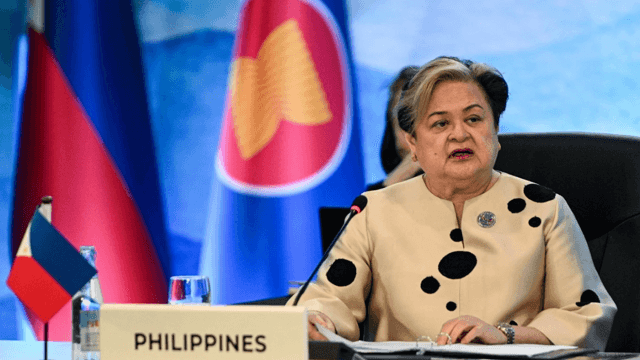
Recently, Malaysia concluded its role as the Chair of the 47th ASEAN Summit and passed the baton to the Philippines, which will host next year’s edition. With the theme of “Inclusivity and Sustainability,” Malaysia, under the leadership of Prime Minister Anwar Ibrahim, sought to guide the members through a period of complex geopolitical challenges ranging from economic issues to climate concerns and intra-regional tensions.
Key takeaways from the 47th ASEAN Summit
Before we discuss ASEAN’s rotational model, let’s take a look at several historic moments from this year’s summit — from the accession of East Timor into the bloc to the signing of a peace deal between Cambodia and Thailand. Here’s the breakdown:
Timor-Leste has been accepted as the 11th member of the ASEAN family after a 14-year wait, marking the bloc’s first enlargement since 1997, when Cambodia joined the regional body.
This aligns with this year’s summit theme of ensuring no member is left behind and broadening participation.
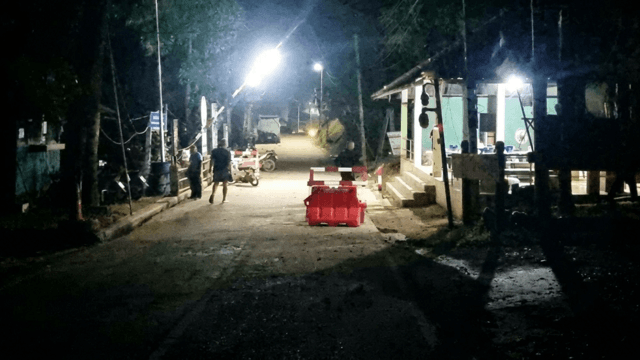
A landmark peace agreement known as the Kuala Lumpur Peace Accord was signed between Thai Prime Minister Anutin Charnvirakul and his Cambodian counterpart Hun Manet, witnessed by US President Donald Trump and Malaysian Prime Minister Anwar Ibrahim.
This accord demonstrated ASEAN’s convening role in managing internal conflict. Nevertheless, the preferred term differs slightly, the US calls it a ‘peace plan’, the Thai and Cambodian governments use the term ‘joint declaration’.
During the summit, the United States granted zero percent import tariffs on selected products from Thailand, Malaysia, and Cambodia — reversing earlier retaliatory tariffs — and signed new trade agreements to strengthen economic ties with ASEAN nations.
Thailand and the US also agreed on a Reciprocal Trade Framework with commitments exceeding $20 billion USD in trade.
China and ASEAN signed an upgraded free trade pact aimed at expanding cooperation in infrastructure, digital transition, sustainable development, and trade facilitation.
Trade between China and ASEAN reached $785 billion USD in the first nine months of 2025, up 9.6% year-on-year.
Understanding ASEAN chairmanship
The ASEAN Chairmanship is the highest coordinating role within the organization, where each year, one member state serves as the Chair of ASEAN — guiding the bloc’s activities, hosting key meetings, and setting the policy agenda for the year.
The Chair leads ASEAN’s major events, including the ASEAN Summit, various ministerial and economic meetings, and dialogues with major global partners such as the United States, China, Japan, and Australia.
The position is far from ceremonial — the Chair becomes the face of ASEAN and plays a vital role in shaping the bloc’s direction for the year, facilitating consensus among members, and representing the region’s collective voice on the global stage.
How it works
ASEAN’s leadership rotates annually in alphabetical order among its member states. With the latest addition of Timor-Leste as its 11th member, each country will now have the opportunity to assume the role of Chair once every 11 years, instead of 10 previously.
This system ensures that leadership responsibilities are distributed fairly.
The Chair country not only hosts the year’s summits but also selects an annual theme that reflects its national priorities while aligning with ASEAN’s shared vision. For example, Malaysia’s 2025 theme — “Inclusivity and Sustainability” — emphasized regional unity, equitable growth, and environmental stewardship.
To maintain consistency between annual transitions, ASEAN also employs the Troika system, involving the past, current, and next Chairs.
This mechanism ensures smoother policy continuity and helps carry forward unfinished initiatives.
For example, Laos, which chaired the 2024 Summit; Malaysia, the current Chair; and the Philippines, which will host next year’s summit, coordinate through regular consultations to ensure that the bloc’s priorities are not interrupted by leadership changes.
Purpose of rotational leadership
The rotational model embodies the core principles of the “ASEAN Way” — a diplomatic style that emphasizes non-interference in the internal affairs of member states, consensus-based decision-making, and the use of informal, non-confrontational consultation to resolve disputes.
This approach prioritizes state sovereignty, peaceful settlement, and quiet diplomacy to maintain regional peace and cooperation.
This rotational model provides equality and inclusivity, giving every member — from the largest economies like Indonesia to smaller nations like Brunei and Laos — an equal say in shaping ASEAN’s direction.
It also promotes a sense of shared ownership, reinforcing the idea that ASEAN’s achievements and challenges belong to all members and fostering collective responsibility.
By rotating leadership, ASEAN avoids overrepresentation of powerful states and maintains regional balance and neutrality amid global power rivalries and camp-based politics.
The chairmanship also provides countries with valuable diplomatic experience, global visibility, and an opportunity to lead regional discourse, promoting bilateral maturity among its members.
Conclusion
The ASEAN Chairmanship Rotational Model is the cornerstone of the region’s unity and resilience. It demonstrates how diversity can coexist with cooperation — a lesson that continues to define Southeast Asia’s collective identity.
By giving every member a voice and a turn to lead, ASEAN has created a leadership model rooted not in dominance, but in diplomacy. However, as regional and global challenges grow more complex, ASEAN must strengthen its institutions to match its ideals.
The future of ASEAN’s success will depend not only on who chairs the bloc next, but on how each Chair builds on the shared foundation and vision of stability, inclusivity, and sustainable progress for the region.