


The World Bank is calling for a more “productive geography”, with greater investment in secondary cities across Thailand to unlock their economic potential and complement Bangkok as the country’s national anchor. In other words, Thailand needs a stronger network of cities to achieve its goal of becoming a high-income country.
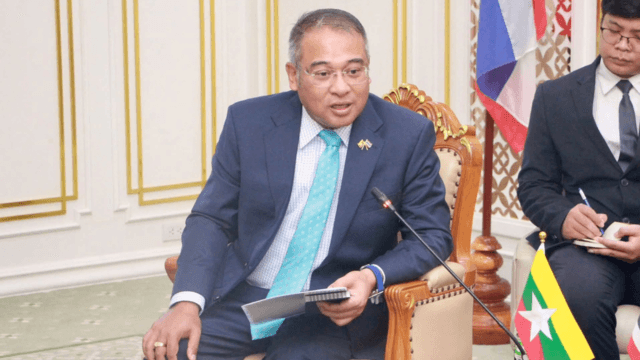
“Thailand is well positioned, in the sense that each of the cities has its own comparative advantage, and that needs to be drawn out more,” Steven Rubinyi, World Bank’s Senior Disaster Risk Management Specialist, explains.
He also thinks that more investment is needed in specialised areas across secondary cities, as well as stronger connections between them and the broader system that runs through Bangkok.
-Potential beyond Bangkok-
Thailand aims to become a high-income country by 2037. The World Bank says, however, that the country needs to reach 5.4% of GDP per capita growth rate each year over the next decade. Key enabling factors identified include building industries, firms, workforce and cities of the future.
Thailand’s urban system, however, remains heavily concentrated in Bangkok.
Although the capital has been the key driver of the country’s economic growth, that level of concentration is getting more costly, from congestion and infrastructure pressures to climate risks.
According to its latest report, “Thailand: Cities of the Future”, around 89% of Thailand’s GDP growth between 2010 and 2020 came from urban districts. At the same time, 60% of Thais live in cities, and 75% of them are of working age.
Bangkok generates close to half of Thailand’s national output and it is nearly 27 times larger than Chiang Mai, the country’s second-largest city, highlighting the nation’s highly concentrated urban system.
“This is quite unique for a country the size of Thailand,” Steven says, adding that congestion costs 7-10% of Bangkok’s Gross Regional Product (GRP) each year.
“For secondary cities, it's the opposite end of the spectrum, where you haven't invested quite enough to get the benefits of agglomeration that you have so abundantly in Bangkok.”
The World Bank highlighted a handful of cities with high potential. They include Songkhla, unique for its trade links with neighbouring Malaysia, Bangkok’s surrounding provinces, where its strength lies in the industrial sector, and even Chiang Mai and Phuket for their rich culture attracting international tourism.
Still, Steven suggests that Thailand should strategically identify which cities have the strongest potential for further investment and development.
“The key is really to look at where these cities are located, which comparative strengths they have based on their location, the natural assets that they have, the skill sets of the local communities and what they bring to the table - invest in those areas so that it can contribute to the growth potential of the country,” Steven explains.
-Barriers to growth-
While the Thai government has established economic corridors to attract investment to different regions, Chanakod Chasidpon, Director of the Urban Development Strategy Division at NESDC, says private investment has yet to follow at the scale needed in many secondary cities.
As she explains, limited investment in secondary cities also means fewer high-quality jobs in their hometowns, leaving people with fewer options but to seek work and higher incomes in major urban cities such as Bangkok.
“It is a bit of a chicken-and-egg situation”, Chanakod explains. “If companies set up operations there, people will move there for work, right? So, it’s difficult to say which should come first. Another factor is public investment, like railway lines with train stations at different locations. If there is more investment in transit-oriented development, these areas could create more jobs and provide more places for people to live and work.”
Investment incentives alone, though, may not be enough. As Chanakod says, a more integrated approach is needed to expand economic opportunities beyond major cities, which requires several relevant agencies working together to unlock the potential of other cities.
“Different agencies are already working within their respective mandates, but there may need to be more coordination and meetings to encourage them to report their progress more frequently. That could help ensure that everyone’s progress becomes clearer,” she says.
-Beyond urbanisation-
Urbanisation is not simply about more buildings, technology or sky trains. Most importantly, it does not automatically translate into higher productivity.
Assoc. Prof. Dr. Niramon Serisakul, Director of the Urban Design and Development Centre (UDDC), says Thailand’s urban planning is struggling to keep pace with intensifying challenges, from climate change to demographic shifts.
One key issue is productivity. As Niramon explains, productivity is also about accessibility, particularly how many jobs people can reach within a given travel time.
“So, if it takes less time to travel to work, let’s say within 15 minutes, productivity should be higher, right? But if it takes two hours, as it does for many people in Bangkok, productivity would be much lower,” she explains.
“The role of city planning is to help increase productivity by improving the physical environment and reducing travel time. If you look at a map, an office may appear to be just 300 metres away, but in reality, it could take an hour to get there due to dead-end streets, superblocks or other barriers to access, as the urban structure simply doesn’t support easy movement.”
Other aspects that are yet to be developed include walkable streets and infrastructure that is accessible for all, particularly for elders, as Thailand has become a ‘super-aging’ society.
Thailand, however, lacks mechanisms to recapture some of the value created by public investment in basic infrastructure and reinvest it in the surrounding area. As Niramon explains, when infrastructure is developed, land values in nearby areas often rise.
“When an area is being developed, there are requirements to consider what will be given back to the community. A portion of the additional value generated can be reinvested in pavements, walkways, skywalks and other infrastructure. There may even be programmes, such as those in the UK, where part of that value is used to provide affordable housing in the area,” she says.
Similarly, Assoc. Prof. Dr. Poon Thiengburanathum, Deputy Director for Planning and Strategic Development, PMU-A, says that investment in secondary cities should focus on the right infrastructure. From his perspective, the key to successful urban development is creating jobs, building strong infrastructure and making cities liveable enough to attract people and investment.
“If we invest in the right things, people will eventually come to these cities - that's what we call a liveable city,” he says.
Building a city is not just about the people or the buildings. The city is a combination of the infrastructure, location and many other things. We decide how we live together. So, this is the city that we have to design. If we make the right decision, that's going to be a fruitful space for us and our kids to grow together.”
-What makes a ‘multi-nodal urban system’?-
In fact, building cities of the future is not only about identifying secondary cities with high potential or moving economic activities away from Bangkok.
The World Bank identifies five ‘ingredients’ for a multi-nodal urban system: complementary specialisation, productive density, stronger connectivity between and beyond cities, resilient infrastructure and strong institutions.
These involve developing cities as well as their complementary economic roles, concentrating people and economic activity to expand labour and consumer markets, improving connectivity, strengthening resilience and building institutions to support the system.
Experts also say that Thailand needs a stronger urban network, in which Bangkok remains the “national anchor”, with secondary cities taking on greater economic roles. They say this could spread jobs, investment and productivity gains more widely across the country, strengthening the economy in the long run.
“To achieve the benefits that you get for productivity gains, you need to concentrate much more investment in these secondary cities and in the interconnectivity of these secondary cities to Bangkok as a hub, and to each other as part of a wider region,” Steven concluded.